
The Shelf · Books

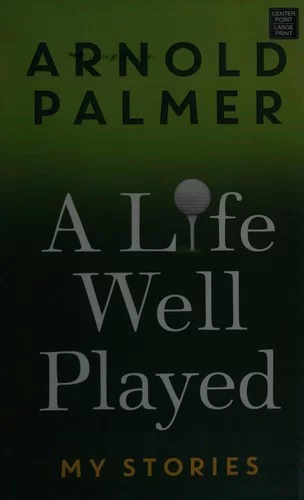
A Life Well Played

By Arnold PalmerReleased 2016Curated by SPMA Hub because sport culture lives beyond the field.

A Life Well Played presents Arnold Palmer through the stories he chooses to pass on about golf and the life around it. The book's interest lies in the relationship between competitive achievement and everyday conduct, especially for an athlete whose public identity extends far beyond the scorecard.

Alex Bennett
Covered by Alex Bennett
The Shelf
A Life Well Played
A Life Well Played
The Gist Of A Life Well Played

The Gist

Why it caught our attention

Published in 2016, the book gathers Palmer's reflections on experiences, relationships and decisions across a long career. Its subtitle, My Stories, accurately signals the approach. This is a personal collection shaped by recollection, with later editions adding their own commemorative material.

The short, anecdotal form invites a different reading pace from a chronological biography. Individual episodes can be considered separately, while their accumulated emphasis reveals what Palmer wants readers to understand about his character and the responsibilities accompanying recognition.


At A Glance

A Life Well Played presents Arnold Palmer through the stories he chooses to pass on about golf and the life around it. The book's interest lies in the relationship between competitive achievement and everyday conduct, especially for an athlete whose public identity extends far beyond the scorecard.

About This Shelf Item

About A Life Well Played

Golf gives the stories a shared setting, but Palmer's attention extends to how people behave around the game. Competitive ability creates opportunities to meet supporters, work with partners and influence younger players. What happens in those encounters can become part of an athlete's reputation just as persistently as a famous result.

The relationship with his father provides an important foundation for the account. Palmer's introduction to golf was connected to someone who worked within the sport, making the game a setting for instruction and everyday standards as well as ambition. The personal inheritance matters to the way he presents his later choices.

The book's reflections on business and relationships also show how an athletic career can develop into a wider public role. A recognisable name creates possibilities, but it also becomes attached to the treatment of other people and the commitments made in that name. Sporting fame does not leave those decisions without consequences.

Because the author is selecting his own stories, the collection is also a form of self-portraiture. Its warmth and accessibility do not make it an independent assessment of every part of Palmer's life. The useful question is what these recollections reveal about the values he wants associated with his career and how convincingly particular episodes express them.

Why It Belongs

The Sport Connection

A Life Well Played is relevant to sport management through the relationship between reputation and repeated conduct. An athlete's image is often discussed as though it were created mainly through campaigns and appearances. Palmer's anecdotal approach directs attention towards smaller interactions that can strengthen or weaken what the public image claims.

The book also encourages a broader view of legacy. Tournament achievements remain fixed in a record, while relationships continue to develop through the way a former player participates in the sporting community. Retirement changes the role without necessarily ending the responsibilities attached to recognition.

For readers interested in athlete endorsements or public representation, that distinction is useful. A name can carry commercial value precisely because audiences associate it with something beyond performance. Maintaining that association requires decisions about how the person behaves and which activities become attached to the name, not simply continued visibility.

Our Recommendation

Why Read A Life Well Played

Read A Life Well Played if you prefer a collection of personal reflections to a technical golf manual. The format allows Palmer's voice and priorities to emerge through particular memories, with room to consider one story before moving to another.

Its accessible wisdom is best assessed at the level of the example. A lesson that feels convincing in Palmer's circumstances may need adaptation elsewhere, and admiration for his career need not require accepting every recollection as a universal rule. The book becomes more useful when readers ask what makes an episode persuasive rather than collecting only its most quotable conclusion.

Final Thoughts

Alex's Final Thoughts

A Life Well Played gives sporting reputation an everyday scale. Palmer's public achievements create the setting, but the stories return attention to relationships and choices made away from the most celebrated shots. That emphasis makes the book a worthwhile account of how an athlete understands the conduct surrounding a career, and what he hopes will remain meaningful after the competition ends.