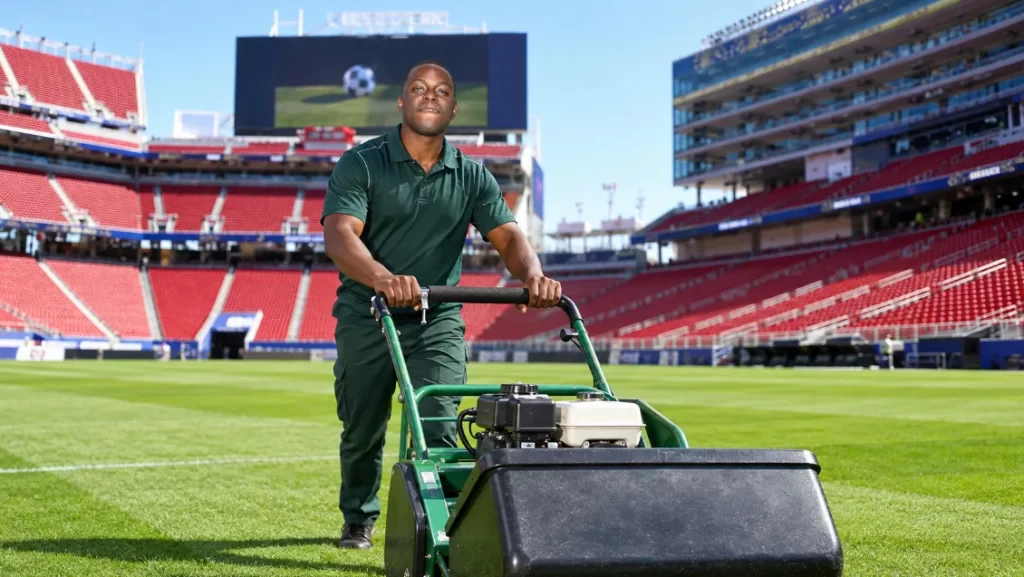
A World Cup is not simply a series of soccer matches. It is a temporary multinational organization that has to move teams, control access, support broadcasters, secure venues, manage guests, operate technology and serve spectators across an enormous footprint. For anyone studying sports careers, the tournament is a living org chart.
FIFA’s operational summary for the 2026 World Cup shows the scale. The tournament ran for 39 days across three host countries, 16 stadiums, 48 team base camps and 645 official sites. FIFA reports more than 43,000 volunteers and a workforce of 2,530 personnel representing more than 100 nationalities.
Venue management
Venue teams coordinate the building as an operating system. They work across readiness, access, crowd movement, cleaning, food and beverage, signage, staffing, field-of-play needs and hundreds of temporary spaces. The venue manager does not personally perform every task. The role is to make sure the functions come together on time.
This is why experience at smaller arenas, festivals, university events and professional clubs can transfer to a World Cup. The scale is different, but the underlying habits of planning, escalation and communication are familiar.
Competition management and team services
Competition management protects the integrity and schedule of the tournament itself. Staff coordinate match procedures, team requirements, officials and competition spaces. Team services works directly with participating teams to solve operational needs around training, information and logistics.
These roles require strong knowledge of tournament rules and calm communication. A last-minute operational problem can affect a team preparing for a match, so reliability matters as much as enthusiasm.
Transport and logistics
A global tournament moves teams, officials, staff, media and guests between airports, hotels, training sites and stadiums. Transport teams build schedules, routes, vehicle plans, parking systems and contingencies for traffic or delays.

The 2026 tournament’s three-country footprint made transport especially complex. Careers in this area can draw on logistics, fleet management, event planning and local transportation experience.
Accreditation and access management
Not everyone with a tournament credential can enter every area. Accreditation systems verify identities and assign access privileges. Access-management teams then help enforce those permissions at venues.
The work combines customer service with security. Credentials have to be accurate, produced on time and understood by staff at checkpoints. Errors can delay a journalist, vendor, official or workforce member from doing their job.
Safety and security
FIFA reports 1.18 million security shifts across the 2026 World Cup. Security planning spans screening, restricted areas, crowd management, emergency procedures, command centers and coordination with public authorities.
Many roles are filled by specialized contractors or agencies, while organizing staff coordinate standards and venue integration. People entering this field may come from event security, emergency management, law enforcement, venue operations or risk management.
Broadcast and media operations
A World Cup is one of the largest media productions in sport. Broadcasters need camera positions, technical compounds, commentary locations, connectivity and access. Journalists and photographers need workspaces, credentials, mixed-zone access and schedules.
Media operations staff are the bridge between the event organizer and the people distributing the tournament to the world. The job rewards people who understand deadlines, production needs and the difference between editorial access and broadcast rights.
Technology
Modern tournaments depend on networks, devices, timing systems, ticketing, digital platforms, communication tools and match technology. Technology teams test systems before competition and support them when the venue is full.
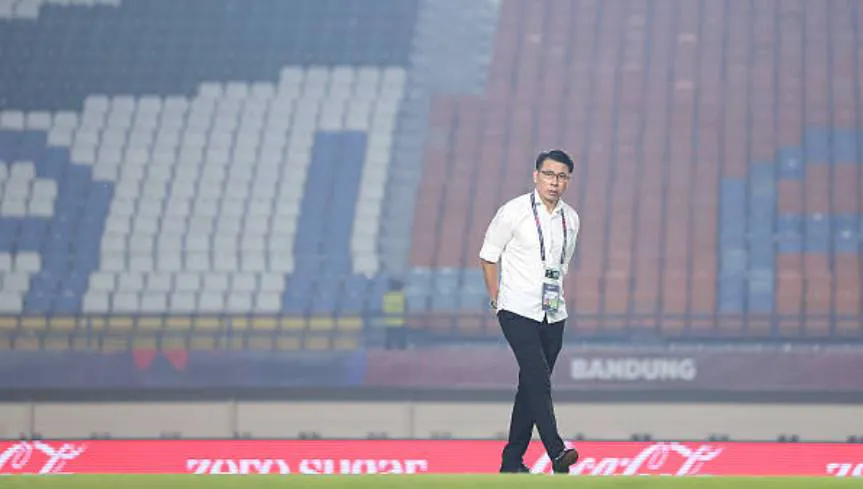
The career options range from help-desk and network support to cybersecurity, systems engineering, product management and football technology. Not all technology jobs require a sports degree. Many require strong technical training plus an ability to operate under event pressure.
Commercial partnerships and hospitality
Sponsors and guests are also part of tournament operations. Partnership teams ensure contracted rights are delivered, while hospitality teams manage premium experiences. Brand protection staff monitor unauthorized commercial activity and counterfeit products.
These functions show how business and operations overlap. A sponsorship agreement has no value if the promised asset is not delivered correctly at the venue.
Workforce and volunteer management
Recruiting thousands of temporary people is its own operation. Workforce teams plan headcount, training, uniforms, scheduling, welfare and communication. The 2026 World Cup’s volunteer count shows why this cannot be treated as a side task.
Professionals with backgrounds in human resources, training, event staffing and volunteer management can build careers in this area across major events.
How do you build toward a World Cup job?
Start with the function, then build event experience. If you want accreditation, work credentials at a local tournament. If you want transport, join venue logistics. If you want media operations, support a smaller championship or broadcast event. Mega-events hire people who can show they already understand the work at a smaller scale.
Language skills, mobility and availability can help because tournaments are temporary and international. But specialized competence remains the foundation.
What mega-event experience teaches
Mega-events compress years of normal operations into a short delivery window. Staff learn how to work from detailed plans, communicate across functions and make decisions when thousands of people are affected by a delay. That experience can transfer to leagues, venues, agencies, federations and other major events. The strongest takeaway for a career seeker is that “World Cup experience” is not one skill. The value comes from the specific function you performed, the scale you handled and the operational judgment you developed.
When documenting that experience, quantify what you supported: venues, shifts, participants, credentials, vehicles, media requests or spectators. Scale makes the responsibility easier for future employers to understand.
Frequently asked questions
Are all World Cup jobs permanent FIFA jobs?
No. Major tournaments rely on a mix of FIFA employees, local organizing structures, fixed-term staff, contractors, vendors and volunteers.
Do volunteers get paid?
Volunteer roles are unpaid by definition, although programs may provide uniforms, meals, training and other benefits. Paid workforce roles are separate.
What is the best first job for a mega-event career?
There is no single best role. Choose a function and gain experience at local events, venues, universities, governing bodies or professional clubs where you can learn comparable operations.
Have experience with this topic?
Help make this SPMA resource better with a first-hand perspective, practical addition, or question. Use your SPMA account or contribute as a guest.