The Shelf · Movies

Breaking Away

Released 1979Curated by SPMA Hub because sport culture lives beyond the field.

Breaking Away gives a young cyclist an unusual way to escape his surroundings: Dave imagines himself Italian. His devotion to European racing is funny, but it also reveals how difficult he finds it to imagine an attractive future as the person he already is in Bloomington, Indiana.

Alex Bennett
Covered by Alex Bennett
The Shelf
Breaking Away
Breaking Away
The Gist Of Breaking Away

The Gist

Why it caught our attention

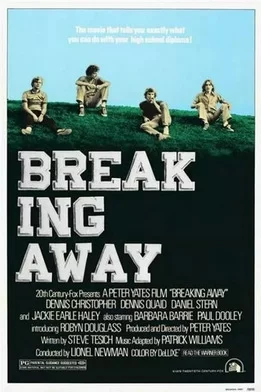
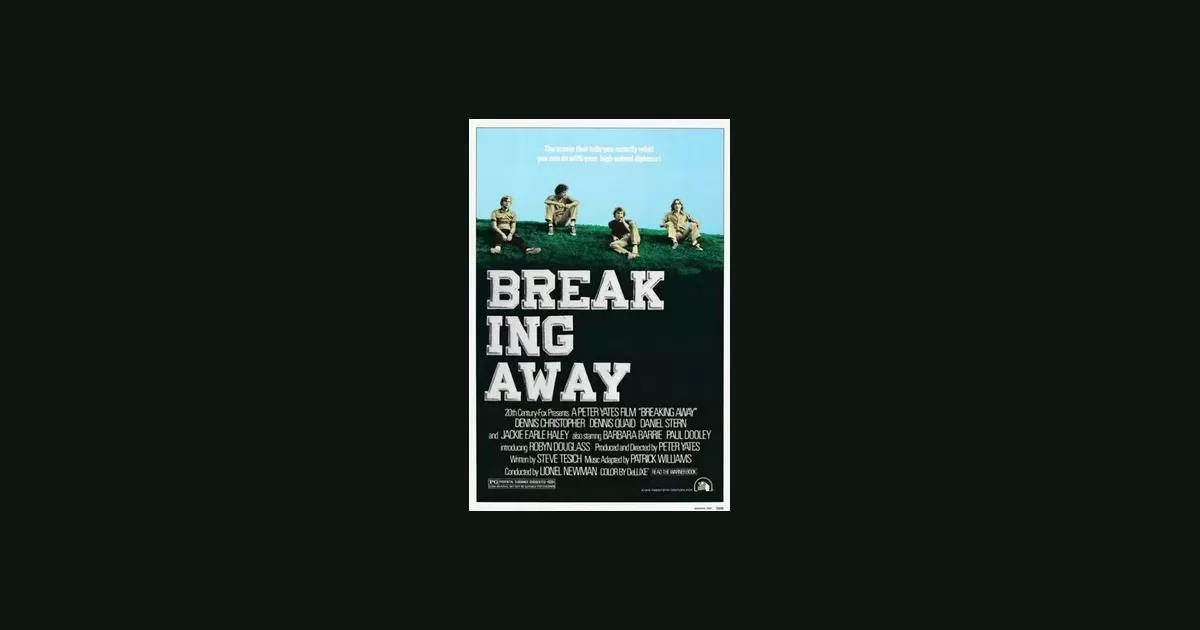
Peter Yates's 1979 film, written by Steve Tesich, follows Dave and three friends after high school. Dennis Christopher plays Dave, with Dennis Quaid, Daniel Stern and Jackie Earle Haley as Mike, Cyril and Moocher. Their town contains Indiana University, yet the institution can feel socially distant from the working-class families living around it.

Cycling gives Dave a language for aspiration. It also becomes a way for the four friends to contest the assumption that the university's opportunities and public spaces belong naturally to other people.

At A Glance

Breaking Away gives a young cyclist an unusual way to escape his surroundings: Dave imagines himself Italian. His devotion to European racing is funny, but it also reveals how difficult he finds it to imagine an attractive future as the person he already is in Bloomington, Indiana.

About This Shelf Item

About Breaking Away

Dave's fascination with Italian racers extends into music, speech and the identity he presents to a student he wants to impress. The performance is comic because it is so elaborate, but its purpose is understandable: he is trying to become someone whose presence will be interpreted differently.

His father, Ray, played by Paul Dooley, is both exasperated by the fantasy and connected to the class history behind it. The local limestone industry has helped build the university's physical world without necessarily making its workers feel welcome within that world. The nickname given to the local young men, cutters, carries that tension.

Dave's encounter with visiting Italian cyclists tests the ideal he has created. Admiration has allowed him to imagine a generous sporting world elsewhere; competition makes that image harder to maintain. The disappointment forces him to reconsider whether belonging must always be found by pretending to come from somewhere different.

The Little 500 race then gives the friends a shared project. Dave's ability is essential, but the event is also about whether the group can enter a setting in which they have been treated as outsiders. The race connects his individual enthusiasm with the pride and insecurity of people who do not all share his cycling skill.

Why It Belongs

The Sport Connection

Breaking Away is particularly perceptive about the difference between physical proximity and access. The university is nearby, but its presence does not automatically make its future feel available to the local boys. Sport provides an entry point into that unequal relationship without pretending the relationship began at the starting line.

The film also questions what sporting aspiration asks a young person to reject. Dave's invented identity initially seems to offer freedom, yet it depends on treating his actual background as something insufficient. His development becomes more interesting when cycling can connect him to his friends and father rather than merely provide a route away from them.

Mike's experience adds another dimension. A former high-school athlete can lose a clear source of status when the school years end. The friends are facing different versions of the same transition, and their uncertainty makes the race matter as more than an afternoon's entertainment.

Our Recommendation

Why Watch Breaking Away

Watch Breaking Away for its balance of affection and social observation. The comedy does not require Dave's ambition to be foolish, even when his adopted persona plainly is. The film can laugh at his behaviour while taking seriously the desire that produces it.

Cycling enthusiasts will recognise the appeal of a sport that gives an individual room to dream expansively. Viewers less interested in racing can still follow the more immediate question: how do young people imagine a future when the most prestigious institution in their town appears to be designed for somebody else?

Final Thoughts

Alex's Final Thoughts

Breaking Away finds its emotional force in returning ambition to a specific place. Dave's love of cycling does not have to disappear when his fantasy about Italy is challenged. It can become part of a more honest relationship with Bloomington and the people already beside him. That movement gives the race a meaning that an uncomplicated escape story would miss.