The Shelf · Movies

Surviving Ohio State

Released 2025Curated by SPMA Hub because sport culture lives beyond the field.

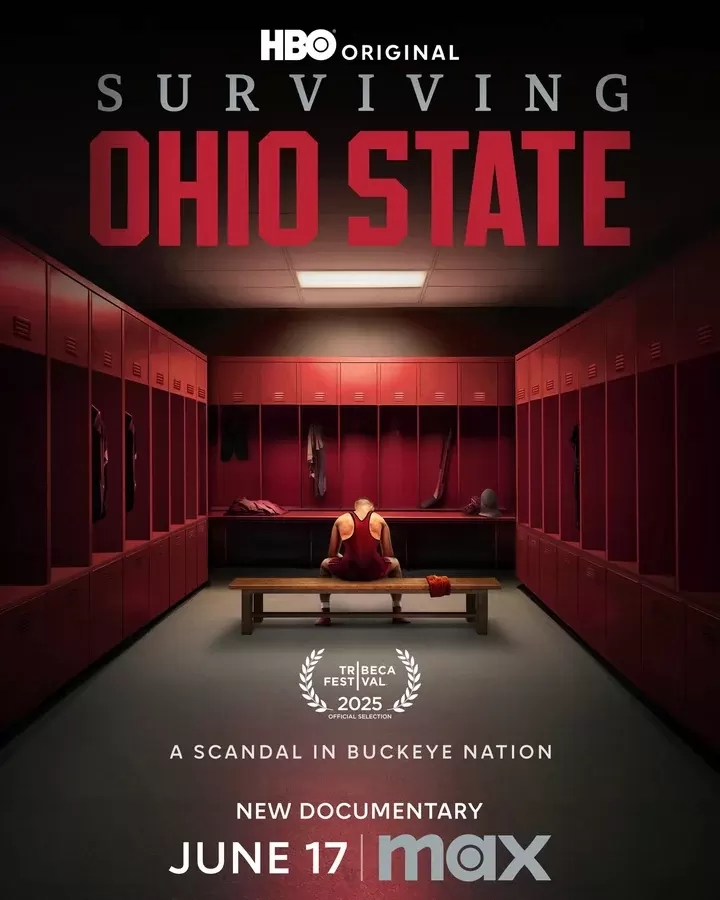
Surviving Ohio State listens to men whose sporting careers placed them in the care of a doctor who abused them. Eva Orner's documentary examines the authority Richard Strauss held, the complaints that failed to stop him and the work survivors later undertook to make the university answer for what happened.

Arash Sayed
Covered by Arash Sayed
The Shelf
Surviving Ohio State
The Gist Of Surviving Ohio State

The Gist

Why it caught our attention

The 2025 HBO film draws on Jon Wertheim's Sports Illustrated reporting and interviews with former Ohio State athletes and other survivors. Strauss worked at the university from 1978 to 1998. His medical position gave him access to students who had been taught to trust the adults responsible for their health and sporting opportunities.

Former wrestlers Mark Coleman, Mike Schyck and the DiSabato brothers are among the men who speak. Their accounts make the distance between physical strength and institutional power painfully clear. Being able to defeat an opponent offered no protection against a doctor whose authority was reinforced by the university around him.


At A Glance

Surviving Ohio State listens to men whose sporting careers placed them in the care of a doctor who abused them. Eva Orner's documentary examines the authority Richard Strauss held, the complaints that failed to stop him and the work survivors later undertook to make the university answer for what happened.

About This Shelf Item

About Surviving Ohio State

Orner builds the film around testimony from men looking back at experiences they struggled to name or discuss. That passage of time is part of the subject. A person can recognise that something is wrong while lacking a safe way to challenge it, particularly when the surrounding adults minimise the behaviour or allow it to continue.

Coleman's history gives that problem a concrete sporting dimension. He won an NCAA wrestling title and competed at the Olympics before becoming a prominent mixed martial artist. In Wertheim's reporting, he describes Strauss's ability to clear him to compete. The physician therefore occupied a position between the athlete and the future he had spent years pursuing.

The film also brings the survivors' recollections into contact with the record of institutional failure. Ohio State's 2019 independent investigation found abuse of at least 177 former students and concluded that personnel knew of complaints and concerns as early as 1979 without taking meaningful action. Those findings establish a history that cannot be dismissed as one person's belated recollection.

The inclusion of alumnus Stephen Snyder-Hill broadens that account beyond wrestling. Strauss's university role gave him access to the general student population as well as athletes. The sporting focus is therefore one part of a wider history of abuse within the institution.

Why It Belongs

The Sport Connection

The central issue is how sporting dependence can narrow an athlete's choices. Medical clearance, selection and a place within a programme matter intensely to someone whose education and ambitions have become bound up with competing. Strauss's position allowed him to exploit that dependence. The responsibility for stopping him rested with the adults and institution entrusted with the students' welfare.

Ohio State's findings also make the word silence inadequate on its own. Complaints existed. The failure involved what happened after concerns reached people with authority. Asking only why more athletes did not speak sooner places scrutiny back on those who were harmed and leaves the response to earlier complaints insufficiently examined.

The documentary follows the survivors' subsequent pursuit of accountability, including disputes with the university. Its legal circumstances belong to the period the film covers. The enduring question is what an acknowledgement means to people who have already spent years trying to have their experiences taken seriously.

Our Recommendation

Why Watch Surviving Ohio State

Surviving Ohio State warrants attention for the space it gives these men to explain their own histories. The university is a powerful collective identity, but the people speaking have individual relationships to it: sporting pride, lost trust and memories they can no longer separate neatly from their achievements.

The film's interviews are difficult because the harm persists beyond the dates of Strauss's employment. Competitive success does not supply a clean ending. Nor does public attention recover the years in which a survivor carried an experience privately. Orner's focus keeps those human consequences in view while examining the decisions that permitted the abuse.

Final Thoughts

Arash's Final Thoughts

A university can celebrate what an athlete achieved while failing to account for what he endured within its programme. Surviving Ohio State holds those two histories together. Coleman's achievements and the testimony of his fellow survivors belong to the same institution's record. Listening to one history cannot be conditional on protecting the more flattering version of the other.