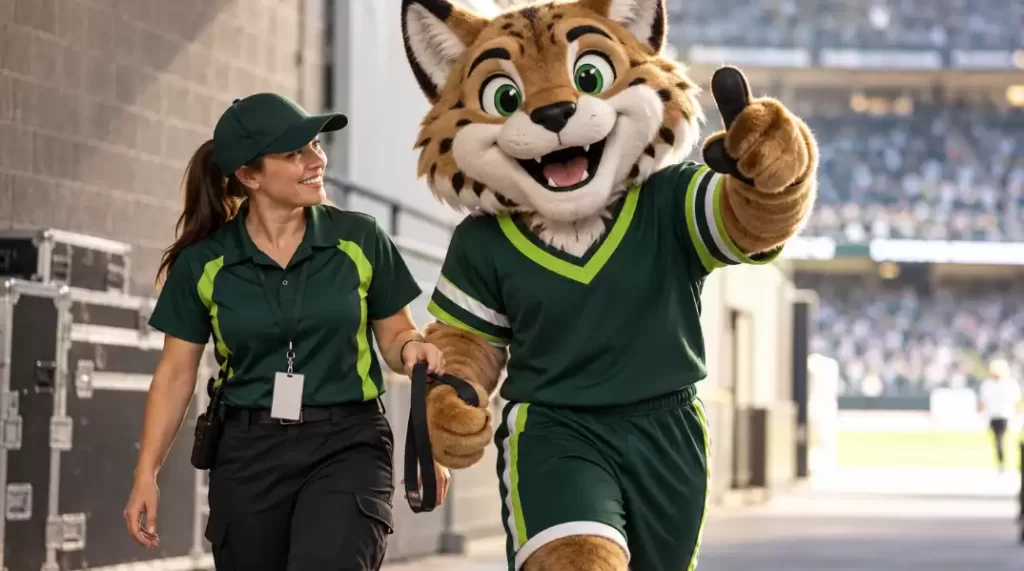
A mascot handler is the person who makes it possible for a costumed performer to interact with a crowd safely and on time. The work combines crowd awareness, event coordination, communication and practical assistance, particularly because the performer may have restricted visibility and mobility inside the costume.
What a handler watches that a fan does not
A performer in a large character head cannot see every step, stray cable, moving cart or person approaching from behind. The handler spots hazards, creates space and knows when to end an interaction. During appearances, they can also carry props, maintain a schedule, guide the performer between locations and coordinate with security when fans become too excited or an interaction becomes unsafe.
One mascot visit, several jobs
Before an arena appearance, the handler checks the route, costume needs and timing. During introductions, they stay close enough to guide the character without becoming the focus. If a sponsor is recording a promotion, they make sure props are ready and the performer knows the cue. After the visit, they escort the performer backstage, where breaks, hydration and costume maintenance are possible.
The work is not confined to sports. Theme parks and live entertainment use similar support roles, but sports events add unpredictable crowd movement, play-related cues and frequent last-minute schedule changes.
Is a handler the mascot's manager?
Not automatically. A team may have a mascot programme manager overseeing appearances, bookings and sponsorship obligations, while an event-day handler provides close on-site support. The job titles and staffing differ by organization. The best way to understand the role is to ask what the handler is responsible for during the actual fan interaction: sightlines, safety, timing and communication, rather than ownership of the mascot character.