The Shelf · Books

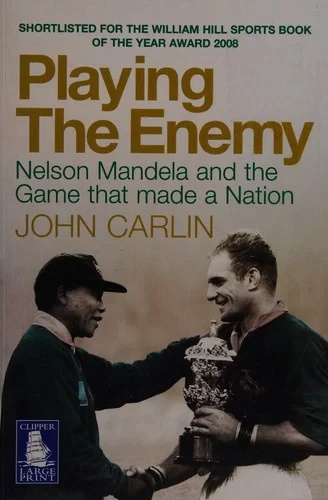
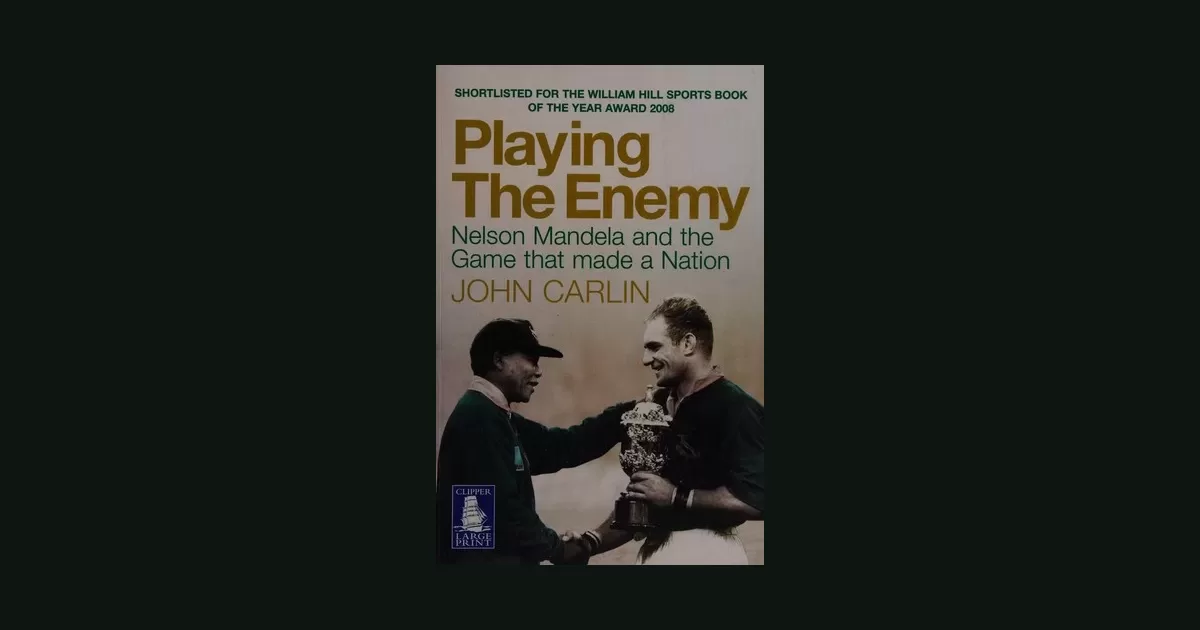
Playing the Enemy

By John CarlinReleased 2008Curated by SPMA Hub because sport culture lives beyond the field.

Playing the Enemy examines a rugby tournament as an opportunity for political imagination. John Carlin follows Nelson Mandela's effort to make the Springboks part of a different story about South Africa. The sporting campaign matters because the national team carried meanings that reached far beyond the score of any match.

Alex Bennett
Covered by Alex Bennett
The Shelf
Playing the Enemy
Playing the Enemy
The Gist Of Playing the Enemy

The Gist

Why it caught our attention

Published in 2008, the book centres on the period leading to the 1995 Rugby World Cup in South Africa. Mandela had become president after the country's first democratic election, but formal political change had not dissolved the divisions produced by apartheid.

The Springboks presented a particularly difficult symbol. A team associated with white power could easily remain a focus of separation. Carlin's narrative explores Mandela's attempt to use that very difficulty, asking whether a symbol with a divisive history could become a point of encounter rather than simply being rejected or preserved unchanged.

At A Glance

Playing the Enemy examines a rugby tournament as an opportunity for political imagination. John Carlin follows Nelson Mandela's effort to make the Springboks part of a different story about South Africa. The sporting campaign matters because the national team carried meanings that reached far beyond the score of any match.

About This Shelf Item

About Playing the Enemy

The title captures the logic of engagement. Reconciliation requires dealing with people whose fears, loyalties and memories are not one's own. Mandela's approach, as Carlin presents it, involves understanding what the team means to others and using that understanding in a deliberate political strategy.

Rugby supplies a public occasion on which the strategy can become visible. The World Cup brings repeated attention, shared anticipation and the emotional uncertainty of competition. Those qualities distinguish a sporting event from a ceremonial statement whose outcome has already been arranged.

The tournament's progress and the final against New Zealand give the narrative a clear sporting arc. Yet the deeper question concerns how people interpret the team they are watching. A supporter can experience the same jersey differently if the political meaning around it begins to change.

The book inspired the film Invictus, but its subject should not be reduced to a reassuring message that sport automatically heals division. Carlin describes purposeful work in a specific historical setting. A moment of shared celebration can be significant without proving that the structural consequences of apartheid disappeared when the match ended.

Why It Belongs

The Sport Connection

For sport management, Playing the Enemy offers a demanding account of what is often called the unifying power of sport. Unity does not arrive simply because an event is popular. Symbols carry histories, and different communities may have good reasons to experience the same institution differently.

That makes listening and historical understanding essential to any claim of inclusion. An organization cannot assume that inviting everyone to support an unchanged symbol is enough. The meaning of the invitation depends on who is making it, what has changed and whether those previously excluded can recognize themselves in the proposed future.

The book also helps distinguish an event's emotional impact from its long-term effects. A compelling public moment can create an opening, but evaluating legacy requires looking beyond the celebration. Carlin's story is useful precisely because it can prompt both appreciation of the moment and questions about the work that must continue after it.

Our Recommendation

Why Read Playing the Enemy

This is a strong choice for readers interested in the relationship between political leadership and sport. The rugby narrative provides momentum, while the historical context gives ordinary sporting gestures an unusual weight.

Readers should keep the particular South African setting in view. The story offers questions for other events and institutions, but its power comes from the specific meanings of Mandela, the Springboks and the transition from apartheid. Turning those details into a generic leadership parable would remove much of what makes the book worth reading.

Alex Bennett

Final Thoughts

Alex's Final Thoughts

Playing the Enemy shows how a leader can recognize a sporting institution as a place where public identity is being negotiated. Carlin's account is compelling because the opportunity was neither obvious nor automatic. Rugby did not solve South Africa's divisions, but the attempt to change what its national team could mean reveals the political importance of who feels entitled to belong.