
The Shelf · Books

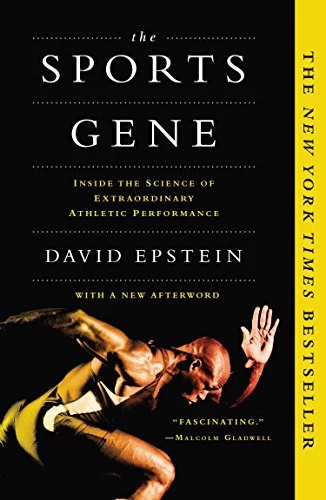
The Sports Gene

By David EpsteinReleased 2013Curated by SPMA Hub because sport culture lives beyond the field.

The Sports Gene challenges the easy choice between calling an athlete naturally gifted and crediting everything to practice. David Epstein investigates how inherited characteristics, learning and sporting environments interact, making the search for one universal explanation of excellence increasingly difficult to sustain.

Alex Bennett
Covered by Alex Bennett
The Shelf
The Sports Gene
The Sports Gene
The Gist Of The Sports Gene

The Gist

Why it caught our attention

First published in 2013, the book combines reporting with discussions of research and unusual athletic cases. Epstein examines the popular appeal of the 10,000-hour rule alongside examples that complicate a simple equation between time spent practising and eventual achievement.

The title is deliberately provocative, but the inquiry does not become more useful when reduced to a search for one decisive gene. Its interest lies in differences between people, sports and development paths, including differences that a broad argument about talent can easily obscure.
At A Glance

The Sports Gene challenges the easy choice between calling an athlete naturally gifted and crediting everything to practice. David Epstein investigates how inherited characteristics, learning and sporting environments interact, making the search for one universal explanation of excellence increasingly difficult to sustain.

About This Shelf Item

About The Sports Gene

One of the book's important distinctions concerns skills that appear instantaneous. An expert can seem to possess extraordinary reactions when experience is helping that person recognise relevant information earlier. That possibility changes the question from how quickly a body responds to what a trained athlete has learned to notice.

Other sporting characteristics are less easily explained through accumulated practice alone. The relevance of physical traits depends on the event and the way it is organised. A feature that creates an advantage in one task may be less useful elsewhere, so even the meaning of athletic potential is partly defined by the sport asking the question.

Epstein's reporting moves among athletes and researchers rather than relying on a single exemplary career. That range is essential to the argument. A famous champion can supply a memorable story, but the route taken by one successful person cannot establish what every other person would achieve under similar conditions.

The book also makes room for variation in development. People do not necessarily begin from the same point or respond identically to the same work. Recognising that possibility complicates selection and coaching, especially when an organisation wants a straightforward formula for predicting who will eventually succeed.

Why It Belongs

The Sport Connection

The Sports Gene is particularly relevant to talent identification because early performance is often treated as a transparent measure of future capacity. Epstein's broader inquiry gives reasons to ask what a result actually reflects: prior experience, the suitability of the task, physical characteristics or access to a productive learning environment.

That does not make selection impossible. It makes the uncertainty worth acknowledging. A programme can evaluate current ability while remaining cautious about turning a temporary ranking into a complete account of a young athlete's ceiling. The cost of certainty may fall on people whose development does not match the preferred timetable.

The genetic dimension also demands careful interpretation. Discussing population patterns or unusual traits is not the same as predicting an individual from a broad social category. The book's sporting interest is strongest when it leads to more precise questions about evidence, rather than encouraging crude assumptions about race, sex or who naturally belongs in a particular event.

Our Recommendation

Why Read The Sports Gene

Read The Sports Gene for its challenge to explanations that feel fair or motivating because they are simple. The claim that anyone can reach any level through enough work may sound generous while ignoring meaningful differences in opportunity and response. The opposite claim, that achievement is already determined, discards the work and environment through which ability becomes useful.

Epstein's examples give readers a way to remain between those oversimplifications without becoming vague. The task is to ask what matters in this sport, for this performance and under these conditions. That is a more useful starting point for coaching or programme design than adopting a slogan about either talent or effort.

Final Thoughts

Alex's Final Thoughts

The Sports Gene earns its place on the Shelf by making uncertainty productive. Epstein does not need to deny the importance of practice to question a universal formula, or deny biological differences to recognise the force of learning. The book encourages a more demanding explanation of excellence, one that gives the athlete, the task and the development environment proper attention together.