
The Shelf · Books

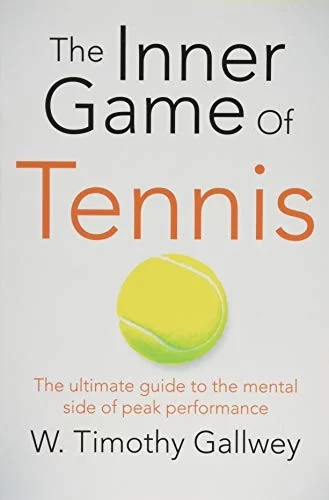
The Inner Game of Tennis

By W. Timothy GallweyReleased 1974Curated by SPMA Hub because sport culture lives beyond the field.

The Inner Game of Tennis starts with a familiar contradiction: a player can know what a good stroke should look like and still interfere with the act of producing it. W. Timothy Gallwey examines the running commentary that turns practice and competition into an argument inside the player's own head.

Alex Bennett
Covered by Alex Bennett
The Shelf
The Inner Game of Tennis
The Gist Of The Inner Game of Tennis

The Gist

Why it caught our attention

First published in 1974, the book approaches tennis through attention, learning and self-judgement. Gallwey's distinction between Self 1 and Self 2 gives readers a way to discuss the difference between the voice issuing instructions and the capacities involved in actually performing and learning a skill.

Those labels work as a coaching model, not as a literal anatomical division. Their usefulness lies in making a common experience easier to notice: the player who responds to one mistake by adding so many instructions that the next attempt becomes more difficult.


At A Glance

The Inner Game of Tennis starts with a familiar contradiction: a player can know what a good stroke should look like and still interfere with the act of producing it. W. Timothy Gallwey examines the running commentary that turns practice and competition into an argument inside the player's own head.

About This Shelf Item

About The Inner Game of Tennis

Gallwey challenges the assumption that every error needs another verbal correction. Information can help, but its delivery and timing matter. A learner may become preoccupied with monitoring the instruction rather than observing what is happening to the ball, racquet or movement.

The book's emphasis on less judgemental attention changes the question asked after a shot. Calling an outcome bad provides little detail. Observing what occurred can supply information without immediately turning the result into a verdict on the player. That shift is central to the approach, because learning requires something more useful than repeated self-criticism.

Trust is another important idea, but it is easy to misunderstand if separated from practice. Gallwey is interested in allowing learned and developing capacities room to operate. The book does not become more useful when its message is reduced to an instruction to stop thinking about everything or to assume that technical knowledge has no role.

The tennis setting keeps the argument concrete. A stroke has a visible result, and the player can notice changes in attention while attempting the task again. The book's wider influence grows from that recognisable setting, but the court remains the clearest place to examine what the model is trying to explain.

Why It Belongs

The Sport Connection

For coaches, The Inner Game of Tennis raises a specific question about communication: does an instruction increase the learner's useful attention or merely increase the amount of commentary occupying it? That is a more demanding standard than judging coaching by how much advice is delivered.

The approach also changes how mistakes can be discussed. An error is an event to investigate, while shame or a broad judgement about ability can make investigation harder. The distinction is particularly useful when a player appears to understand a correction intellectually but cannot apply it under pressure.

The book should be read as an influential coaching perspective with a particular vocabulary. Its lasting popularity does not make every broader claim about performance automatically established science. Readers can examine where the model clarifies their experience and where a different explanation or more specific instruction is needed, without treating the choice as all or nothing.

Our Recommendation

Why Read The Inner Game of Tennis

Read The Inner Game of Tennis slowly enough to connect its ideas with an actual skill. The language can sound simple until a reader notices how frequently judgement intrudes on observation. That recognition gives the book more practical substance than a collection of reassuring statements about confidence.

It is especially valuable alongside conventional instruction because it asks how advice is received and used. A coach may possess accurate technical knowledge while still delivering it in a way that overwhelms the learner. Gallwey's contribution is to make that interaction part of the coaching task rather than treating every difficulty as resistance or insufficient effort.

Final Thoughts

Alex's Final Thoughts

The Inner Game of Tennis remains worth discussing because it redirects attention from wanting a better result to understanding the activity of learning. The player is still responsible for practising and competing. What changes is the possibility of doing that work with less unhelpful interference, leaving more room to notice, respond and develop the skill itself.