
The Shelf · Books

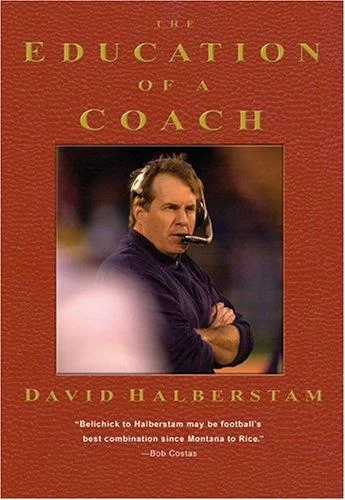
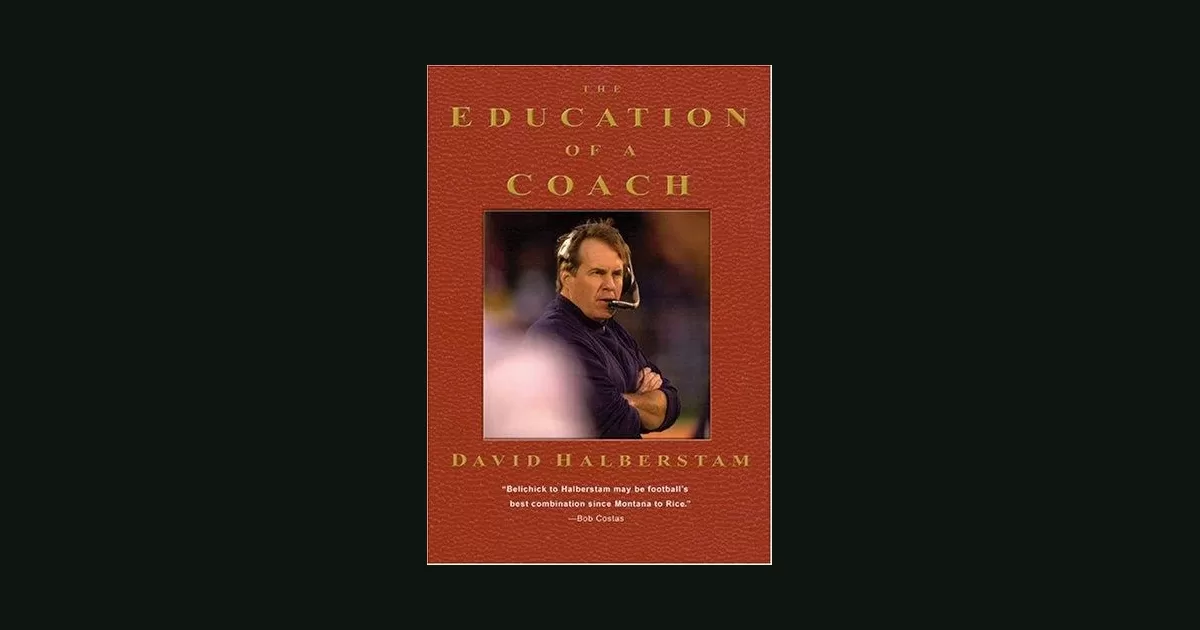
The Education of a Coach

By David HalberstamReleased 2005Curated by SPMA Hub because sport culture lives beyond the field.

The Education of a Coach treats Bill Belichick's football knowledge as something learned over time rather than an inexplicable gift. David Halberstam's interest is in the influences, habits and professional experiences that make a coach capable of seeing what others miss.

Alex Bennett
Covered by Alex Bennett
The Shelf
The Education of a Coach
The Gist Of The Education of a Coach

The Gist

Why it caught our attention

Published in 2005, the book examines Belichick's formation and rise through the early period of his success with the New England Patriots. Its date matters. This is a portrait written at a particular point in his career, not a retrospective covering everything that happened afterwards.

The word education in the title supplies the organising idea. Halberstam looks beyond the public figure on the sideline towards the people and working environments through which a method develops. That emphasis makes the book more useful than a simple catalogue of victories or a collection of leadership maxims.


At A Glance

The Education of a Coach treats Bill Belichick's football knowledge as something learned over time rather than an inexplicable gift. David Halberstam's interest is in the influences, habits and professional experiences that make a coach capable of seeing what others miss.

About This Shelf Item

About The Education of a Coach

Belichick's father, Steve, is an important early influence, connecting football to careful observation and the work of understanding an opponent. That background gives the later coach's reputation for preparation a history. What can look like instinct from a distance is connected to accumulated practice in noticing and interpreting details.

The professional years add further instruction. Working inside coaching staffs means learning through responsibilities, relationships and the consequences of decisions. Knowledge has to become usable under the constraints of a real team, where an accurate observation is only valuable if it can inform preparation and performance.

Halberstam is interested in the person formed by that process rather than only the public image of a terse, successful coach. The biographical approach allows habits to be considered as responses to experience. It asks where they came from and why they endured, instead of assuming that any behaviour associated with a winner must itself explain the winning.

The book's historical boundary also creates a useful reading discipline. Later developments can affect how readers interpret Belichick, but they should not be silently folded into Halberstam's account. The portrait captures how the coach's formation and achievements appeared at the time of writing, which is part of its value and part of its limit.

Why It Belongs

The Sport Connection

The Education of a Coach makes a strong case for treating coaching expertise as a craft. Studying opponents, evaluating players and choosing what to emphasise require more than commanding presence. They involve sustained attention to information and the ability to connect it with a particular competitive problem.

That distinction is useful when discussing leadership in sport. Public communication is visible and easy to imitate, while the less visible work behind decisions is harder to reproduce. Copying a successful coach's manner does not provide the experience or judgement that gives the manner its context.

The book also raises questions about how organisations develop coaches. If expertise grows through meaningful responsibilities and contact with experienced colleagues, then a staff is a learning environment as well as a hierarchy. The quality of that environment can affect what younger coaches notice, what they are allowed to test and how they learn from being wrong.

Those questions do not turn Belichick's career into a universal management formula. Football presents particular demands, and another organisation may require different methods. The transferable value lies in examining how judgement is formed, not assuming that every successful practice can be lifted intact into another setting.

Our Recommendation

Why Read The Education of a Coach

Read Halberstam's book if you are interested in the work preceding a coach's public reputation. It encourages attention to preparation and apprenticeship without reducing achievement to a mysterious personality trait. Readers seeking a tactical manual will find a biographical explanation rather than a system they can install directly.

It also works well alongside later accounts of Belichick, provided the publication dates remain clear. Comparing perspectives can reveal how the meaning of a career changes as further evidence accumulates. That comparison is more useful than faulting a 2005 book for not anticipating the decades that followed.

Final Thoughts

Alex's Final Thoughts

The Education of a Coach belongs on the Shelf because it makes expertise legible as a history of learning. Halberstam's subject is not simply a man who makes good decisions on Sundays. It is the formation of a way of looking at football, developed through instruction, repetition and responsibility long before the public sees the result.