


Published in 2010, the book addresses the NFL, Major League Baseball, the NBA, the NHL and NASCAR as parts of an entertainment industry. Tuohy argues that public accounts of fair competition can conceal commercial conflicts and misconduct. His approach is polemical, and the distinction between that approach and a neutral institutional history matters. The book is making a case. It gathers material about athletes, owners, gambling and broadcasting in support of a highly distrustful view of professional sport. Readers need to distinguish the incidents it describes from the wider explanations the author builds around them, particularly when a proposed motive becomes the basis for an accusation.
The Shelf · Books
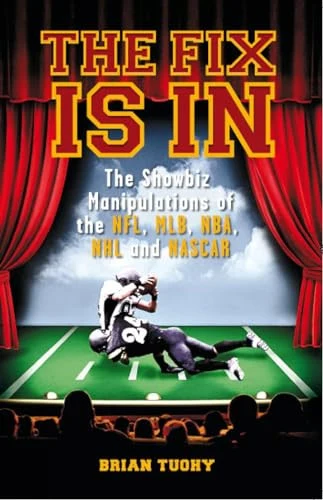
The Fix Is In: The Showbiz Manipulations of the NFL, MLB, NBA, NHL and NASCAR
By Brian TuohyReleased 2010Curated by SPMA Hub because sport culture lives beyond the field.
Brian Tuohy asks readers to look at professional sport through the interests of the businesses selling it. The Fix Is In combines sports history with a confrontational argument about money, media and manipulation. Its value as a discussion book depends on taking those questions seriously while examining the evidence behind its more sweeping allegations.
The Shelf
The Gist
Why it caught our attention
At A Glance
Brian Tuohy asks readers to look at professional sport through the interests of the businesses selling it. The Fix Is In combines sports history with a confrontational argument about money, media and manipulation. Its value as a discussion book depends on taking those questions seriously while examining the evidence behind its more sweeping allegations.
About This Shelf Item
About The Fix Is In: The Showbiz Manipulations of the NFL, MLB, NBA, NHL and NASCAR
The opening discussion turns towards fans themselves. Tuohy considers team identification, loyalty and the time and money people devote to sporting outcomes in which they have no direct role. That choice gives the book a personal edge. The argument is not only that institutions may misbehave, but that attachment can make their audiences reluctant to reconsider what they are buying into.
Later sections address athletes, gambling and television before a substantial section devoted to alleged manipulation. The progression links consumer emotion to the financial structures around competition. It also creates the book's central analytical challenge. Commercial incentives can help explain why misconduct might occur, but establishing an incentive does not establish that a particular contest was arranged. Tuohy's argument is most usefully read with that distinction kept active, separating documented events, interpretations of those events and claims that require further corroboration.
Why It Belongs
The Sport Connection
The subject has direct relevance to governance and sport media. A league's credibility depends partly on whether audiences believe that rules and results are administered honestly. Tuohy's suspicion of broadcaster relationships also raises a legitimate question about organisations that report on a competition while benefiting from its commercial success. Those relationships deserve scrutiny without assuming that every shared interest proves collusion. For a sport management seminar, the book could support an exercise in tracing claims back to sources: identify the allegation, the evidence offered, the alternative explanations and what information would actually distinguish among them. That approach turns a provocative publication into a practical discussion of institutional accountability and responsible investigation.
Our Recommendation
Why Read The Fix Is In: The Showbiz Manipulations of the NFL, MLB, NBA, NHL and NASCAR
The Fix Is In will interest readers of sports controversy, gambling history and criticism of commercial entertainment. It is likely to generate disagreement, and that is a reason to read it actively. A reader who wants a straightforward account of a single proven scandal may find its breadth and argumentative tone less satisfying. Someone studying how distrust develops around large sporting institutions may find that same tone revealing. The strongest discussion will avoid both easy dismissal and automatic acceptance. Tuohy's criticism of unquestioning fandom is more convincing when the same demand for evidence is also applied to the critic's own conclusions.
Final Thoughts
Arash's Final Thoughts
The book's lasting subject is the relationship between belief and the business of sport. Fans invest emotion in uncertainty, while commercial organisations seek dependable revenue from that investment. Tuohy presses hard on the tension between those aims. His broad allegations should not be treated as established findings merely because the incentives he identifies are plausible. Read with care, The Fix Is In can sharpen questions about evidence, transparency and trust, leaving the reader better equipped to examine a claim instead of simply exchanging one certainty for another.
Keep Exploring
More On The Shelf

Copied
