The Shelf · Movies

Ford v Ferrari

Released 2019Curated by SPMA Hub because sport culture lives beyond the field.

Ford v Ferrari turns a factory racing programme into a struggle over who gets to make the important decisions. Carroll Shelby and Ken Miles can build and drive a winning car, but Ford's executives want a victory that belongs to the company on its own terms.

Alex Bennett
Covered by Alex Bennett
The Shelf
Ford v Ferrari
Ford v Ferrari
The Gist Of Ford v Ferrari

The Gist

Why it caught our attention

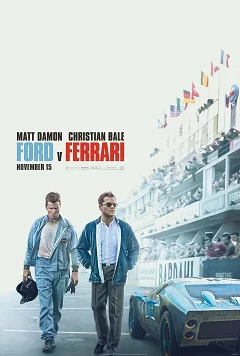
James Mangold's 2019 film follows Ford's challenge to Ferrari at the 1966 24 Hours of Le Mans. Matt Damon plays Shelby, the former racer translating between the workshop and the boardroom; Christian Bale plays Miles, a driver whose mechanical understanding is inseparable from his abrasive independence. Their partnership gives the film its appeal. Shelby understands the language required to keep money coming. Miles would rather tell someone exactly why a car is wrong.

That difference makes them useful to each other. It also leaves Shelby in an uncomfortable position: protecting his driver sometimes means bargaining with people who would prefer a more manageable representative of the Ford name.


At A Glance

Ford v Ferrari turns a factory racing programme into a struggle over who gets to make the important decisions. Carroll Shelby and Ken Miles can build and drive a winning car, but Ford's executives want a victory that belongs to the company on its own terms.

About This Shelf Item

About Ford v Ferrari

The project begins with a corporate ambition, but the film makes its progress tangible through testing, breakdowns and adjustments. The Ford GT40 becomes more than a prestigious object. It is an unstable collection of decisions that must survive speed, heat and exhaustion. Miles's value lies in feeling problems that cannot be solved with a confident presentation.

Le Mans is an especially effective setting for this conflict. A car has to remain competitive for an entire day and night, while the people around it make decisions with incomplete information. The spectacle depends on less glamorous work: preparation, communication, repairs and knowing when a machine is being pushed beyond what it can tolerate. Mangold keeps that practical work close to the larger question of who receives credit.

Bale's Miles is difficult without being reduced to a collection of angry outbursts. His impatience follows from a precise understanding of the job. Damon gives Shelby a different kind of pressure, making persuasion feel like work rather than effortless charm. The film's account is a dramatization, so its sharply drawn corporate antagonists should not be mistaken for a complete history of Ford's racing operation.

Why It Belongs

The Sport Connection

The most revealing sport-business issue is the distance between financing performance and understanding it. Ford has resources that Shelby's team needs. Those resources bring authority, reporting relationships and brand priorities into a space where a driver's judgement can matter more than an executive's rank.

Miles exposes the weakness in treating an athlete as an interchangeable promotional asset. His behaviour can be inconvenient, yet the knowledge behind it is part of the competitive advantage Ford is buying. Removing the inconvenience may mean removing the advantage as well. Shelby's job becomes an exercise in preserving useful disagreement inside a hierarchy that does not always welcome it.

The film also distinguishes a sporting result from the story a sponsor wants to tell about that result. At Le Mans, visibility and recognition have consequences beyond the finishing order. That tension gives the race meaning even for viewers who arrive knowing its historical outcome.

Our Recommendation

Why Watch Ford v Ferrari

Watch Ford v Ferrari for the relationship between two specialists who respect each other without becoming alike. The racing provides urgency, but the quieter negotiations explain why that urgency exists. A test lap, a funding decision and a conversation about driver selection are all part of the same contest.

It is particularly rewarding for viewers interested in motorsport's human infrastructure. The driver is the most visible participant, yet the film keeps returning to the people and decisions that allow him to perform. Its treatment of corporate politics is broad, but its central dilemma is specific: can a large company create room for expertise that refuses to behave politely?

Final Thoughts

Alex's Final Thoughts

Ford v Ferrari earns its place on the Shelf through the friction between ownership and craft. Shelby and Miles are not simply chasing a fast lap; they are trying to protect the conditions that make one possible. The lasting question is how much of a team's achievement survives when its sponsor insists on controlling the meaning of the victory.