The Shelf · Movies

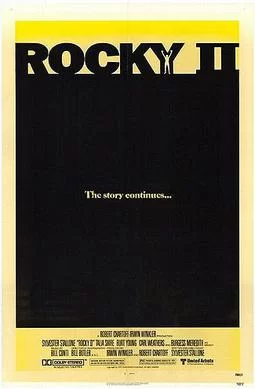
Rocky II

Released 1979Curated by SPMA Hub because sport culture lives beyond the field.

Rocky II asks what happens after a career-defining performance fails to provide a workable everyday life. Rocky Balboa has become famous for lasting against Apollo Creed, but fame does not tell him how to earn a living, protect his health or support the family he is beginning.

Alex Bennett
Covered by Alex Bennett
The Shelf
Rocky II
Rocky II
The Gist Of Rocky II

The Gist

Why it caught our attention

Sylvester Stallone writes, directs and stars in this 1979 sequel, which starts in the aftermath of Rocky's first championship fight. Talia Shire returns as Adrian, Carl Weathers as Apollo and Burgess Meredith as trainer Mickey. The rematch grows from problems left unresolved by the original film's emotional victory.

For Rocky, the new attention appears to promise options beyond boxing. For Apollo, the narrow result has damaged the public certainty surrounding his superiority. Both men have reasons to fight again, but those reasons are different enough to make the same event carry conflicting meanings.

At A Glance

Rocky II asks what happens after a career-defining performance fails to provide a workable everyday life. Rocky Balboa has become famous for lasting against Apollo Creed, but fame does not tell him how to earn a living, protect his health or support the family he is beginning.

About This Shelf Item

About Rocky II

Rocky's difficulty outside the ring is central to the story. Endorsement work expects abilities that his boxing success has not supplied, and ordinary employment does not readily convert his new celebrity into security. The film shows how quickly a celebrated athlete can discover that public recognition is an unreliable source of income.

Marriage and the prospect of parenthood make the decision more consequential. Adrian's concern about returning to boxing is grounded in the physical damage already sustained, including the risk to Rocky's eyesight. Her reluctance is not simply a narrative obstacle to his courage. She is being asked to share consequences that he will experience first through his own body.

Apollo's dissatisfaction has another source. Winning officially has not ended the argument about what the first fight proved. He wants a decisive result that will restore the image of complete control. The champion's problem is therefore partly reputational, demonstrating that even victory can feel insufficient when an athlete cannot determine how it is interpreted.

Mickey's involvement connects technical preparation with these emotional pressures. Rocky cannot train effectively while his commitment is divided, and changes intended to protect him introduce competitive difficulties of their own. The film makes preparation a response to a damaged body and unsettled household, not a simple reset.

Why It Belongs

The Sport Connection

Rocky II offers a focused discussion of the unstable transition from sporting attention to livelihood. An athlete may become marketable for a moment without gaining durable skills, advice or support for managing the opportunity. Rocky's vulnerability is intensified by the assumption that celebrity itself should have solved his problems.

The rematch also shows how public pressure can shape risk. Apollo's need to silence doubt and Rocky's need to provide for his family bring them back to a contest that carries obvious physical costs. Neither motive makes those costs disappear, even when the film gives the return an exhilarating emotional form.

Adrian's position is especially important to a balanced reading. Support for an athlete need not mean immediate approval of every decision to compete. The story becomes richer when her objections are understood as a serious assessment of shared stakes rather than a temporary failure to believe in Rocky.

Our Recommendation

Why Watch Rocky II

Watch Rocky II as an examination of the morning after an underdog story. The original achievement remains meaningful, but it has not created a stable future by itself. That premise gives the sequel an emotional purpose beyond arranging another meeting between familiar opponents.

Its final contest is built for dramatic intensity rather than realistic restraint, and its training should not be treated as a model of medical decision-making. The film's enduring interest lies in why the characters accept the risk, particularly when the audience can see how much each has attached to the result.

Final Thoughts

Alex's Final Thoughts

Rocky II gives the rematch weight by showing the pressures outside the arena. Rocky and Apollo return because the first fight changed their lives without resolving their needs. The sequel's strongest question is whether another result can provide the security, respect or peace each man believes is waiting on the other side.