
The Shelf · TV Series

Break Point

Released 2023Curated by SPMA Hub because sport culture lives beyond the field.

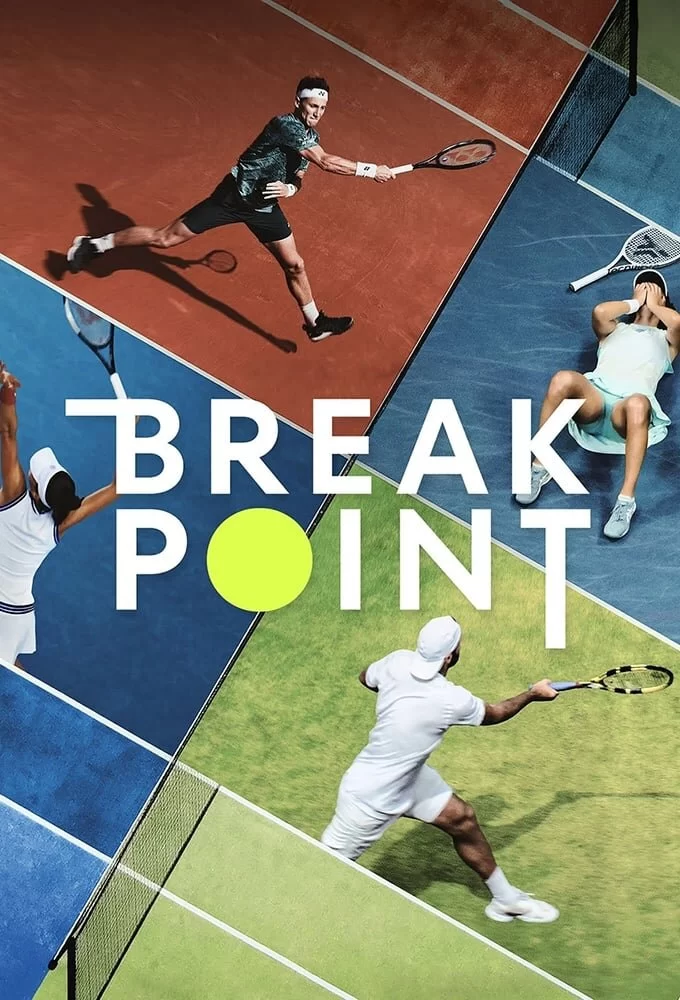
Break Point approaches professional tennis through players trying to make their place in a sport with very little room at the top. Its strongest moments show how the same tournament can mean opportunity for one competitor, mounting expectation for another and an abrupt end to weeks of preparation for someone else.

Alex Bennett
Covered by Alex Bennett
The Shelf
Break Point
Break Point
The Gist Of Break Point

The Gist

Why it caught our attention

The documentary series premiered in 2023, with its first season following the 2022 tour. Players including Nick Kyrgios, Ons Jabeur, Taylor Fritz and Maria Sakkari provide different routes through that calendar. The programme is interested in what the television broadcast usually leaves outside the frame: preparation, relationships and the emotional aftermath of a result.

This is a selective portrait of the tour, not a complete record of the tennis year. The athletes granting access shape which stories can be told, while some of the sport's most important figures appear chiefly as opponents standing in their way.


At A Glance

Break Point approaches professional tennis through players trying to make their place in a sport with very little room at the top. Its strongest moments show how the same tournament can mean opportunity for one competitor, mounting expectation for another and an abrupt end to weeks of preparation for someone else.

About This Shelf Item

About Break Point

The first season moves among tournaments and personalities rather than attaching itself to a single champion. That structure can make a familiar event feel different depending on whose experience leads the episode. A match that looks like a routine step for an established favourite may be the central opportunity in another player's season.

Fritz's Indian Wells storyline puts a major home-country opportunity beside the physical uncertainty surrounding his campaign. Jabeur's ambitions bring a different kind of expectation, including the significance of her achievements for audiences who have rarely seen themselves represented at the sport's highest level. Kyrgios supplies a more openly volatile relationship with tennis and the attention surrounding him.

These differences keep the documentary from supporting one simple theory of a successful sporting personality. The players do not respond to pressure in the same way, and their public reputations reveal only part of what they are managing. The programme is most useful when its access complicates an existing impression rather than merely confirming a familiar label.

The tour's rhythm gives the stories their underlying severity. Most entrants lose before a tournament ends, yet the calendar continues. Players have to move from a highly personal disappointment towards another event, often with little time to convert what happened into something emotionally manageable.

Why It Belongs

The Sport Connection

Break Point makes the support structure of an apparently individual sport easier to see. Coaches, partners and other people around a player help organise a career, but they cannot play the decisive points. Their influence meets a firm limit once the athlete has to act under match conditions.

The series also raises a useful question about how tennis markets its next group of stars. Giving viewers access to personalities can make unfamiliar names easier to follow. However, turning an athlete into an appealing character can encourage a cleaner story than the results will support. A promising arc may end in an early defeat rather than a satisfying breakthrough.

That uncertainty is worth preserving. Documentary editing can provide emotional continuity, but professional tennis remains full of interruptions, inconsistent form and opponents pursuing stories of their own. The series is more revealing when watched with that wider field in mind, rather than treating every featured player as the natural centre of a tournament.

Our Recommendation

Why Watch Break Point

For viewers new to tennis, Break Point offers an approachable way to attach names and personalities to the tour. For established followers, its value lies less in explaining who won than in showing how selected players experienced the route to those results.

It is not a substitute for detailed tactical coverage. The programme often favours an emotional turning point over the technical exchanges that produced it. That choice makes it accessible, but viewers interested in why a particular matchup unfolded as it did may want to revisit the match itself after watching the episode.

Final Thoughts

Alex's Final Thoughts

Break Point is worth including on the Shelf because it restores uncertainty to careers often summarised in rankings and trophies. Its players are trying to interpret setbacks while continuing to compete, without knowing which moment will later be described as a turning point. That unfinished quality is more informative than a retrospective story in which every disappointment conveniently leads towards success.