The Shelf · TV Series

Decades in Sports

Released 2026Curated by SPMA Hub because sport culture lives beyond the field.

Decades in Sports takes a familiar American sports memory and changes the question attached to it. The athlete, the rivalry and the championship still matter. So do the television camera that made them nationally recognisable, the labour arrangements beneath the competition and the people previously kept outside the picture.

Arash Sayed
Covered by Arash Sayed
The Shelf
Decades in Sports
Decades in Sports
The Gist Of Decades in Sports

The Gist

Why it caught our attention

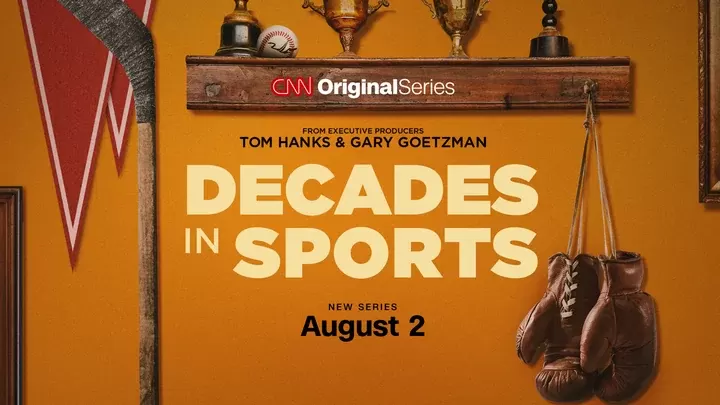
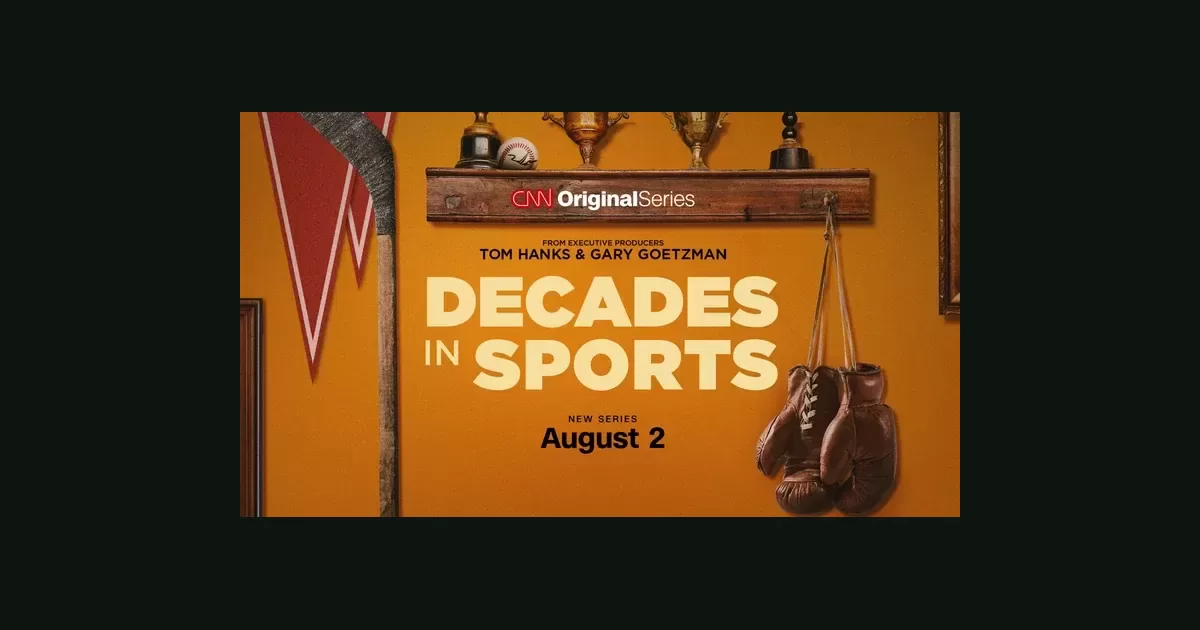
CNN's six-part documentary series premiered in August 2026, with Tom Hanks, Gary Goetzman and Mark Herzog as executive producers. Its chapters move from the 1960s into the present, connecting sport with political and cultural change. This is an American survey with a broad title, a distinction Canadian viewers should keep in mind.

A decade supplies an easy organising device. It also creates a trap: history can start looking like a sequence of famous people taking turns. The useful question throughout this series is what changed around those people, particularly who could compete, who could earn and who could command an audience.

At A Glance

Decades in Sports takes a familiar American sports memory and changes the question attached to it. The athlete, the rivalry and the championship still matter. So do the television camera that made them nationally recognisable, the labour arrangements beneath the competition and the people previously kept outside the picture.

About This Shelf Item

About Decades in Sports

The 1960s chapter places television beside figures including Bill Russell, Joe Namath, Muhammad Ali and Peggy Fleming. Their inclusion establishes several kinds of visibility, across different sports and public identities. A broadcast brings competition into homes, but it also makes an athlete available for arguments about race, gender, celebrity and acceptable behaviour.

The following decade pairs the expanding place of women in sport with free agency. That is a particularly useful pairing because both subjects concern the terms on which people enter an institution. Participation and bargaining power deserve attention alongside the scoreboard. Neither change can be understood simply by identifying the decade's most successful team.

Later chapters turn to Chris Evert and Martina Navratilova, Larry Bird and Magic Johnson, Wayne Gretzky, Michael Jordan, Tiger Woods and the Williams sisters. The names are familiar; the structure invites comparison between the rivalry sold to an audience and the wider change associated with an athlete. That comparison needs care. A compelling matchup and a social turning point are different historical claims.

The final chapter brings LeBron James, Simone Biles and Stephen Curry into a discussion of social media and sports betting. The screen is again central, although the relationship between athlete, broadcaster and spectator has changed. The series' chronology therefore offers something more useful than a list of sporting firsts: a way to follow how public attention is organised.

Why It Belongs

The Sport Connection

The history behind the free-agency chapter makes its stakes concrete. In 1975, arbitrator Peter Seitz ruled for Andy Messersmith and Dave McNally after they challenged baseball's reserve system. The Baseball Hall of Fame identifies that decision as a foundation for the free-agent era. A player negotiating with other clubs has choices that a player indefinitely reserved by one club does not.

That context helps resist the temptation to treat larger salaries as the whole story. The underlying question concerns who can decide where an athlete works. The same historical lens can be applied to television: greater exposure is only part of the issue. Someone also decides which events receive airtime and which participants become recognisable enough to attract it.

CNN's interview roster includes broadcasters Bob Costas, Al Michaels and Andrea Kremer alongside athletes such as Kathrine Switzer and Diana Taurasi. Their professional positions matter. Calling an event, competing in it and later explaining its significance are different relationships to the same history.

Our Recommendation

Why Watch Decades in Sports

This is a useful starting point for viewers who know the highlights but have not connected them to changes in the sports industry. Its breadth gives a labour dispute, a tennis rivalry and the emergence of a new media platform room in one conversation. Follow the connections, then investigate the subjects that the format can only introduce.

The American frame also deserves scrutiny. Gretzky's appearance does not make the programme a history of Canadian hockey, any more than an international tennis rivalry makes it a complete account of women's sport. A six-episode selection inevitably leaves substantial histories elsewhere. Recognising that boundary makes the survey more useful.

Final Thoughts

Arash's Final Thoughts

Decades in Sports is best approached with two questions running together: what do we remember, and what made that memory possible? The first produces the familiar names. The second leads towards television, access, labour and the authority to tell the story afterwards. That is where a tour through sporting nostalgia can become a more searching account of how the industry acquired its present shape.