In boxing, the route from an undercard fight to public recognition can be uncertain even for accomplished athletes. Promoters, managers, broadcasters and matchmakers play substantial roles in deciding who receives attention and opportunities. The Contender, developed by Mark Burnett, built a reality television series around that uncertainty. Its original NBC season in 2005 placed professional boxers in a competition with training scenes, family stories and elimination matches. Sugar Ray Leonard and Sylvester Stallone were prominent on-screen figures, with Leonard involved in training and hosting. The format offered a potentially powerful platform for fighters who might otherwise have struggled for television exposure. It also introduced a different set of incentives: the needs of a competitive athlete were now intertwined with the needs of a primetime production.
The Shelf · TV Series
The Contender
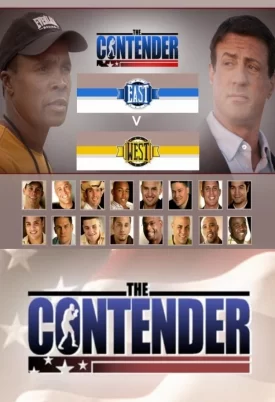
The Contender brought the boxing gym into reality television by following aspiring professional fighters through training, personal stories and elimination bouts. The series debuted in 2005 with Sugar Ray Leonard and Sylvester Stallone, presenting a sporting opportunity within a television format that also needed compelling characters and audience retention.
The Gist
Why it caught our attention
At A Glance
The Contender brought the boxing gym into reality television by following aspiring professional fighters through training, personal stories and elimination bouts. The series debuted in 2005 with Sugar Ray Leonard and Sylvester Stallone, presenting a sporting opportunity within a television format that also needed compelling characters and audience retention.
About This Shelf Item
About The Contender
The series organizes its story around boxers living and preparing in a shared environment, then facing challenges and bouts that determine who remains in the competition. Viewers encounter family obligations, rivalries and the emotional costs of a sport in which defeat can have lasting financial and physical consequences. An elimination format gives the show a clear structure that casual audiences can understand, but it is not identical to ordinary boxing career development. A traditional promoter might build a prospect's experience through carefully selected opponents and sustained training. Television demands a new result every episode. The resulting drama makes participants recognizable, yet their long-term interests cannot automatically be inferred from what produces the most gripping broadcast.
Why It Belongs
The Sport Connection
For sports managers, The Contender raises questions about talent development and contractual bargaining power. An athlete offered television exposure may gain sponsors, fan recognition and access to future bouts. They may also surrender control over scheduling, image rights and the presentation of personal experiences. Competent representation therefore requires clarity about prize structures, health arrangements, appearance obligations and the use of footage after the season ends. Managers should help fighters assess the full opportunity rather than treating visibility as a reward that cancels other obligations. Boxing is a particularly demanding context because head injury and medical suspension are central safeguards. A format built around elimination must still operate within appropriate athletic oversight.
Our Recommendation
Why Watch The Contender
The show also demonstrates the differences between telling a fighter's story and managing a fighter's welfare. Family interviews can make competition emotionally meaningful, but participants should retain reasonable privacy and the ability to make informed choices about sensitive material. The producer's job is to construct an engaging series; the coach's job is to develop performance safely; a manager's job is to protect the athlete's interests. Those roles can support one another, but they are not interchangeable. People entering sports media need to understand where the commercial value of a narrative comes from and who bears the consequences if a participant is presented unfairly. A successful broadcast can open doors while leaving unresolved questions about an athlete's longer-term career.
Final Thoughts
Arash's Final Thoughts
The Contender is a useful historical Shelf selection because it shows an early and influential attempt to combine serious boxing competition with modern reality television. It makes the marketplace surrounding fighters more visible while inviting criticism of the way that marketplace can reward spectacle. Watch it for the relationship between exposure, opportunity and decision-making, not merely to identify a winner. In athlete representation, a big audience can be valuable, but the lasting measure of an opportunity is what it enables after the cameras are gone.
Keep Exploring
More On The Shelf