
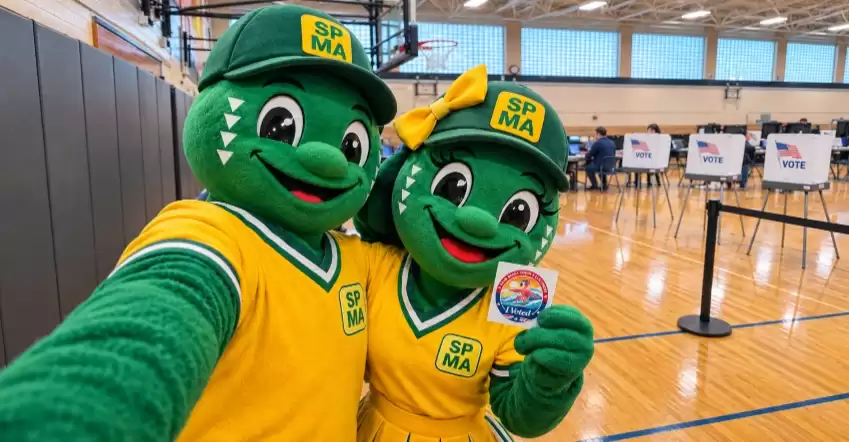
A community basketball court with working lights. A school team that can afford transportation. A stadium agreement that protects taxpayers. These may look like unrelated sports stories, but each can involve decisions made by elected officials.
Voting in U.S. elections can help sports by giving citizens a voice in the public funding, facilities, education policies and oversight that shape opportunities to play and work in sport. The effect is usually indirect: voters choose decision-makers and, in some places, decide specific ballot measures. Results depend on what those decisions deliver.
That does not make one political party the universal choice for sports. People who care equally about athletes and their communities can disagree about taxes, public spending, regulation and fairness. Understanding how elections affect sports starts with examining those choices on their merits.
How voting affects sports: the connection between a ballot and a playing field
Elections influence who sets priorities and who must answer for the results. A mayor may propose recreation spending, a council may approve it, and a parks department may administer it. School boards, state governments and federal officials have different responsibilities. Their powers vary by jurisdiction.
The practical chain is straightforward: an election shapes public leadership; that leadership helps shape budgets and policy; implementation determines what athletes and residents actually experience. A campaign promise is only the beginning of that chain.
Consider a hypothetical town deciding whether to repair an aging public pool. One proposal might use public funding to keep admission affordable. Another might contract with an operator to reduce the town’s financial exposure. Residents could reasonably assess both approaches by asking about swimming access, staffing, maintenance, fees and long-term costs.
Which level of government affects which part of sports?
National elections attract attention, but the official with the most influence over a particular sports problem may be closer to home. The following is a starting point, not a statement that every jurisdiction assigns powers identically.
| Decision-maker | Potential connection to sports | Important limit |
|---|---|---|
| City, county or park-district officials | Recreation budgets, facility access, land-use decisions and some venue agreements | Authority may be shared with an independent district, agency or other government. |
| School boards and education officials | School budgets, transportation, facilities and district priorities | Some boards are appointed; state law, funding rules and administrators also shape decisions. |
| State legislators and governors | State education funding, public-university policy and legislation affecting sports businesses or athletes | An official’s position does not become law without the required legislative or administrative process. |
| Congress and the federal executive branch | Federal statutes, grants and enforcement priorities relevant to sport | Federal authority does not replace every state, local or private governing body’s role. |
For example, the National Conference of State Legislatures describes elementary and secondary education as predominantly financed by state and local sources. That helps explain why a presidential candidate’s general support for school sports tells a family less about its own team’s budget than the relevant state and district decisions. Source: NCSL’s explanation of education funding and federal responsibilities.
There are also two different electoral mechanisms. A candidate election delegates decisions to an officeholder who must weigh many issues. A ballot measure can authorize or reject a defined action, such as a tax or bond, where that procedure is available. Even an approved measure still needs lawful implementation. Neither mechanism gives voters direct control over a private team’s lineup, ticket prices or league rules.
1. Local elections can shape youth sports funding and recreation access
For many families, the most tangible connection between voting and sports is close to home. Decisions about parks, fields, courts and recreation programs can influence where children play, what participation costs and whether facilities remain usable.
Federal support can also connect with local priorities. The National Park Service’s Land and Water Conservation Fund provides assistance for public outdoor recreation. Its 2026 manual lists sports fields, courts, running tracks and other recreational facilities among eligible projects. That is a concrete example of how government decisions can reach everyday sport. Source: National Park Service.
Supporters of greater public investment argue that affordable facilities extend opportunities beyond families who can pay for private clubs. Others prefer smaller public budgets, targeted assistance, nonprofit partnerships or user fees. They may question whether a proposed project meets a demonstrated need or creates expenses the community cannot sustain.
A useful evaluation goes beyond the construction price. Who can book the facility? Are fees affordable? Can residents reach it? Is there money for maintenance and trained staff? A new field helps less if the people it was intended to serve cannot use it.
Affordability involves more than the registration fee
A 2025 report from the Aspen Institute’s Project Play, based on a survey conducted with Utah State University and Louisiana Tech University, estimated average family spending of $1,016 on one child’s primary sport in 2024, up 46% from 2019. The survey covered 1,848 parents whose children participated regularly in sports. This is reported spending among participating families, not a minimum price to play or a measure of all children excluded by cost. Source: Project Play’s parent-survey findings and methodology.
Public officials cannot eliminate every private expense. They can, however, consider different ways to address barriers within their authority. Broad fee reductions reach many participants but also subsidize families who could afford the original price. Income-based assistance concentrates funding on need, but eligibility checks can create administrative work and discourage applications. Partnerships with community organizations may add expertise and capacity, while requiring clear standards for access, pricing and reporting.
Each approach solves a different problem. A fee waiver will not fix a schedule that conflicts with a parent’s work shift. A new court will not solve a shortage of coaches. In a rural community, travel distance may be the constraint; in a dense neighborhood, available space or booking access may matter more. A credible youth sports funding proposal identifies the actual barrier before choosing the spending.
A real example: Oklahoma City’s MAPS 4
Oklahoma City voters approved the MAPS 4 temporary sales tax in December 2019. The program included parks and youth centers alongside other public projects, as recorded in the city’s 2026 bond offering document. In September 2026, the city announced that construction had begun on its first MAPS 4 youth center at Woodson Park. Source: City of Oklahoma City 2026 official statement. Source: City’s groundbreaking announcement.
The example demonstrates a pathway from a ballot to a facility project. It does not, by itself, prove that every project will meet its goals. The interval between authorization and construction also matters: residents need to assess delivery, eventual access and operating arrangements after the election, not only celebrate the funding announcement.
2. School funding decisions can affect school sports
School athletics depend on more than uniforms and scoreboards. Transportation, coaching, equipment, facilities and scheduling all affect whether a program can function. Depending on the jurisdiction, elected school boards and state or local officials influence the resources available to public schools.
One view treats athletics as an important part of education, with opportunities for teamwork, belonging and leadership. Another emphasizes protecting classroom instruction and essential student services when money is limited. These priorities can overlap: someone may support school sports while opposing an expensive stadium renovation.
For a proposed school levy or bond, examine what the measure actually funds. Construction funding and operating funding are not interchangeable, and a facility project does not necessarily pay for coaches or student transportation. The ballot language, district budget and public financial documents matter more than a broad promise to support students.
The difference between building a gym and keeping it open
A construction budget pays for an asset. An operating budget pays for the people and services that make that asset useful. A district could complete a gym renovation and still struggle to provide late buses, custodial coverage or enough coaches. Conversely, a modest operating change could make an existing facility available to more students without a major building project.
This distinction creates a better comparison than simply asking whether a candidate favors more sports spending. Ask how many additional students could participate, which recurring expenses are covered, whether assistance reaches students who need it, and how the proposal fits the district’s wider educational responsibilities. Measures of success should include access and retention, not just wins or a ribbon-cutting.
3. Stadium funding puts sports benefits and taxpayer costs in the same debate
Public funding for sports stadiums is one of the clearest examples of sports and politics intersecting. Depending on local rules, voters may weigh in directly on a financing measure or elect the officials responsible for negotiating and approving an agreement.
Supporters often emphasize keeping a team, civic pride, events and activity around the venue. Critics question whether those benefits justify public subsidies, debt and the cost of services around the stadium.
The economic evidence deserves particular attention. A Federal Reserve Bank of St. Louis explainer describes why stadium spending may replace other local entertainment spending rather than create an equivalent amount of new regional activity. It also highlights opportunity cost: money committed to a stadium cannot simultaneously fund another public priority. Source: St. Louis Fed.
That does not mean residents must assign no value to having a team. It means civic value and financial return should be evaluated separately. Ask who pays for overruns, who receives revenue, who maintains the venue and what happens if the team leaves. Supporting sports can include demanding a stronger agreement or declining a particular deal.
Economic impact is not the same as a return to taxpayers
A stadium district can look busy while producing a disappointing public return. Visitor spending, developer revenue, team revenue and municipal tax receipts are different figures. A forecast should identify which one it is estimating, over what period, and compared with what alternative.
A 2023 review by economists John Charles Bradbury, Dennis Coates and Brad Humphreys finds that the evidence does not support large stadium subsidies as a reliable engine of economic development. This is an important limit on the growth argument, even when supporters place substantial value on a team’s cultural role. Balanced coverage should acknowledge both people’s preferences and the strength of the evidence; it does not require treating every economic forecast as equally credible. Source: The Economics of Stadium Subsidies: A Policy Retrospective.
Useful safeguards to examine include a defined public contribution, responsibility for cost overruns, realistic maintenance obligations, independently tested revenue assumptions and enforceable terms if a tenant leaves. A community-benefit promise also needs a measurable obligation, a responsible party and a remedy if it is not delivered.
A vote against a deal is not necessarily a vote against a team
In April 2024, Jackson County, Missouri, voters rejected a sales-tax proposal intended to help finance a new Royals ballpark and Arrowhead Stadium renovations. The result illustrates that a community can reject a particular financing package; it does not establish why every individual voted as they did. Source: Associated Press reporting on the 2024 vote.
Team retention, neighborhood disruption, public risk and spending priorities are separate considerations. Residents may agree about the value of a franchise and disagree about how much government should pay to retain it. Evaluating a specific agreement is more informative than dividing voters into people who support sports and people who do not.
4. Elections can influence equal opportunity and accessible sports facilities
Sports policy also involves who gets a fair chance to participate. Title IX addresses sex discrimination in education programs receiving federal financial assistance, including athletic opportunities. The U.S. Department of Education identifies participation, scholarships and the treatment of athletes as key areas of athletics compliance. Source: U.S. Department of Education.
Accessibility is another part of the picture. The U.S. Access Board explains accessibility requirements for newly constructed and altered sports facilities, including routes to areas of sport activity. Whether a recreation project serves residents with disabilities is a practical question about design and access. Source: U.S. Access Board.
Some eligibility questions are strongly contested, including participation rules affecting transgender athletes. Arguments include protecting competitive fairness and opportunities in women’s sports, ensuring inclusion and dignity for transgender participants, and developing rules suited to different ages, sports and competition levels. Those concerns should be described accurately without assuming that everyone on either side has the same motives.
Voters can compare the actual proposals, evidence, scope and enforcement mechanisms. Elections influence lawmakers and executive officials, but courts, governing bodies and existing legal obligations also matter. A campaign statement alone does not establish the rule that applies to a particular competition.
Separate access, eligibility and implementation
These debates become more useful when their questions are kept distinct. Access concerns opportunities, facilities and resources. Eligibility concerns who may enter a competition or category. Implementation concerns how rules are applied, reviewed and challenged. Agreement on one does not guarantee agreement on the others.
For a contested eligibility proposal, examine the sport and age group covered, the stated competitive or safety objective, the evidence offered, the privacy implications of enforcement and the available appeal process. Respect for the people affected and scrutiny of a rule’s design can coexist. The policy should be evaluated on its actual provisions rather than on assumptions about an athlete or a voter’s identity.
Accessibility also requires follow-through. A facility plan should consider the participant’s whole visit: arriving, entering, using changing areas and reaching the activity. Funding an accessible entrance is not a substitute for examining the rest of the experience.
5. College athlete compensation shows why sports policy extends beyond game day
College sports bring elected officials into debates over athlete compensation, name, image and likeness (NIL), educational protections and the authority of athletic organizations. Federal legislative proposals illustrate how these questions can reach Congress, rather than remaining solely within a league or university. Source: Senate Commerce Committee’s August 2026 proposal summary.
Advocates of national standards emphasize consistency and workable rules across state lines. Critics of restrictive frameworks question limits on athletes’ earning power, bargaining rights or access to legal remedies. Schools and athletes may also weigh how changes affect scholarships and sports that generate less revenue.
The relevant question is what a specific proposal would do: who gains protection, who accepts restrictions and who enforces the arrangement? A bill, a court settlement and an athletic association’s policy are different instruments. Their effects should not be treated as interchangeable.
NIL, school payments and employment are different questions
NIL concerns the commercial use of an athlete’s name, image or likeness. Direct compensation from a school raises additional questions about the institution’s finances and obligations. Employment status is a separate legal issue involving the relationship between an athlete and an institution. A proposal addressing one may not settle the others.
To evaluate a college-sports framework, follow both the money and the decision-making power. Does the athlete receive clearer contract terms or health protections? Does a governing body receive greater enforcement authority or protection from lawsuits? Who can challenge a decision? What is the expected effect on smaller programs? A promise of stability is incomplete without explaining whose rights and responsibilities change.
The Senate committee summary linked above describes a legislative proposal, not proof of its present enactment status. Any decision about a current athlete’s rights requires checking the applicable law and rules at that time. The enduring connection to elections is that lawmakers can influence this framework; they do not single-handedly determine every athlete’s agreement.
6. Sports betting policy involves revenue, consumer protection and integrity
Sports betting is another area where government decisions affect the sports environment. State-level policy choices can address authorization, taxation, advertising and safeguards. Research from the National Council on Problem Gambling compares responsible-gambling requirements across states, illustrating that legalization and consumer protection are separate policy questions. Source: National Council on Problem Gambling.
Supporters of regulated betting emphasize legal oversight, consumer choice and potential public revenue. Critics emphasize gambling-related harm, exposure of young audiences to advertising, athlete harassment and risks to confidence in competition.
Neither projected tax receipts nor a promise of regulation settles the debate. A careful assessment asks how safeguards will be funded, what limits apply and whether promised benefits outweigh the costs. Revenue associated with sports is not automatically revenue devoted to helping people play sports.
Follow betting revenue all the way to its destination
Three amounts are often confused: the money wagered, the operator’s revenue and the government’s tax receipts. They are not interchangeable. Nor does earmarking money for a public purpose necessarily show how much additional support that purpose receives if other funding changes at the same time.
A stronger policy discussion therefore asks what is being taxed, what deductions or exclusions apply, what the regulator can enforce and which services receive the proceeds. Supporters should be able to explain safeguards alongside revenue projections. Opponents should identify the harms they expect a different approach to reduce and how they would assess that result. These questions allow scrutiny without assuming that either legalization or prohibition resolves every problem.
Why this matters for sport management
For sport management professionals, public policy can become an operational responsibility. A facility manager may need to plan for accessibility and maintenance. A recreation director may need to explain a budget request. A college athletics administrator may need to track changing compensation rules.
Understanding elections and sports policy helps professionals identify which institution makes a decision, what evidence is needed and how to explain the consequences to different stakeholders. It also helps distinguish a political announcement from an approved budget, an enforceable rule or a funded program.
Good management can be assessed through practical outcomes: participation, affordability, facility condition, transparency and responsible use of resources. Those standards are useful regardless of which candidates win.
Measure what changes after Election Day
Accountability requires a baseline. Before a recreation expansion, record participation, waiting lists, prices, opening hours and facility condition. Then compare outcomes after implementation. A higher attendance total may reflect repeat visits by existing users; it does not automatically show that more residents gained access. A larger budget may reflect higher costs rather than a larger service.
Consider an explicitly hypothetical program that spends an additional $100,000 and serves 200 additional participants. That is $500 per additional participant before other costs and benefits are considered. The number is not a universal benchmark. It is a starting point for asking whether the program reached its intended users and how it compares with feasible alternatives.
For professionals interested in the operational side, SPMA’s guide to how a college athletic department works explains the broader organizational setting. Policy becomes meaningful through the people responsible for budgets, compliance, facilities and delivery.
How to evaluate sports-related election proposals without taking a partisan side
A consistent set of questions makes competing proposals easier to compare:
- Authority: Does this office actually control the decision?
- Access: Who benefits, and who might still face barriers?
- Cost: What are the full construction, operating and maintenance costs?
- Evidence: Are forecasts independently supported, and what assumptions do they use?
- Tradeoffs: What other services or projects would receive fewer resources?
- Accountability: What results will be published, and who answers if the plan falls short?
For voting procedures, use official election information. Registration deadlines, identification requirements and voting options vary by state. The U.S. Election Assistance Commission provides links to state election resources. Find official information for your state.
Frequently asked questions about voting and sports
Does voting in U.S. elections directly fund sports?
Usually, voting selects officials who make later funding decisions. Some ballots include measures involving taxes, bonds or facilities. The effect depends on the measure, the office and the jurisdiction; a vote does not automatically create a sports program.
Are local elections important for youth sports?
They can be, because local institutions often make decisions about public recreation facilities and school resources. State and federal decisions can also influence funding and policy. Check which body is responsible for the program in question.
Does supporting sports mean supporting stadium subsidies?
No. Someone can value a professional team while opposing a financing agreement. Others may accept a public contribution because they value the team or venue. The terms of the proposal and the alternatives are central to that judgment.
Which political party is better for sports?
There is no single answer that applies to every sport, community or policy. Candidates within the same party can disagree. Compare their specific proposals on access, cost, athlete interests and accountability rather than treating party identity as a complete sports policy.
Can voting guarantee better sports opportunities?
No. Voting is one way to influence public decisions. Outcomes also depend on implementation, available resources, legal requirements and the work of schools, clubs, leagues and community organizations. Public meetings, budget reviews and ongoing oversight can help residents track what happens after an election.
What voting can—and cannot—do for sports
A single election cannot guarantee lower fees, a better facility or a fairer agreement. Voting is one part of public decision-making, alongside lawful administration, community participation, independent scrutiny and the work of sports organizations. Its value lies in giving eligible citizens a formal role in choosing decision-makers and deciding measures placed before them.
The connection between voting and sports ultimately runs through decisions about people, places and resources. A ballot can help shape who makes those decisions. Whether the result helps sports depends on how well the resulting policies serve athletes, communities and the public.
Have experience with this topic?
Help make this SPMA resource better with a first-hand perspective, practical addition, or question. Use your SPMA account or contribute as a guest.