The Shelf · Movies

Rocky Balboa

Released 2006Curated by SPMA Hub because sport culture lives beyond the field.

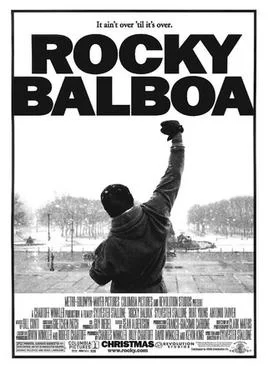
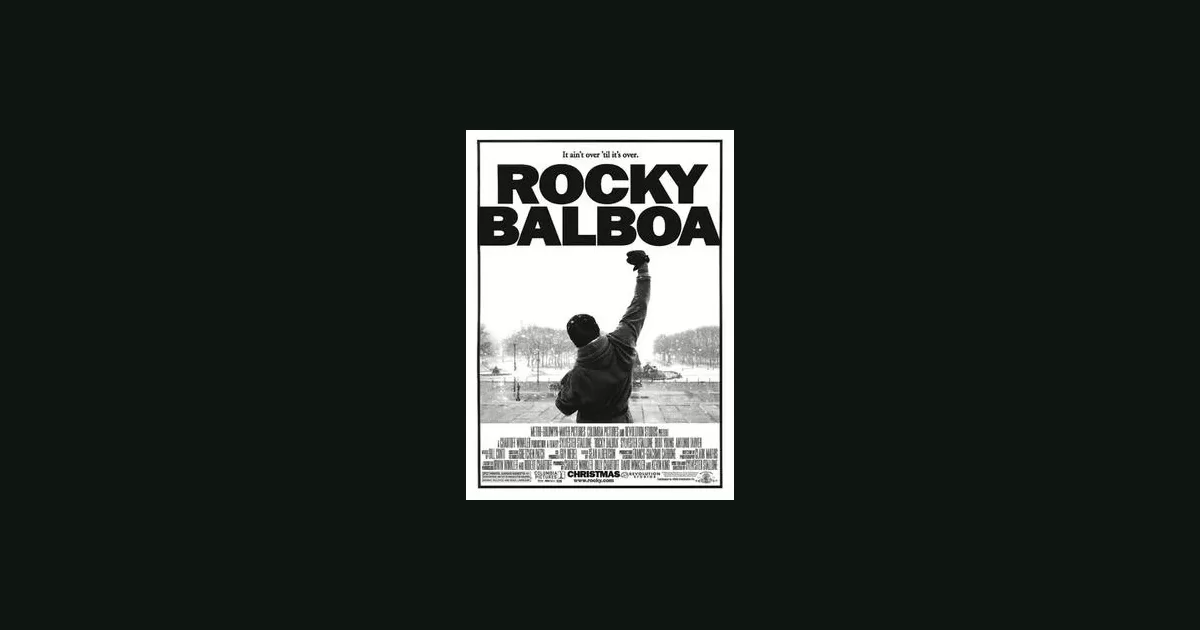
Rocky Balboa begins with a former champion whose most familiar stories are becoming a way of staying close to what he has lost. Returning to the ring gives him a new decision to make, but the deeper struggle is finding a future that does not require forgetting Adrian.

Alex Bennett
Covered by Alex Bennett
The Shelf
Rocky Balboa
Rocky Balboa
The Gist Of Rocky Balboa

The Gist

Why it caught our attention

Sylvester Stallone's 2006 film revisits Rocky as an older man running a Philadelphia restaurant named for his late wife. Burt Young returns as Paulie, while Antonio Tarver plays heavyweight champion Mason Dixon. Milo Ventimiglia plays Rocky's son, Robert, who is trying to establish an identity outside his father's reputation.

A televised computer simulation imagining Rocky against Dixon helps create public interest in an exhibition. The premise joins two different forms of dissatisfaction. Rocky has unfinished emotional business, while Dixon holds a championship without receiving the respect he believes should accompany it.
At A Glance

Rocky Balboa begins with a former champion whose most familiar stories are becoming a way of staying close to what he has lost. Returning to the ring gives him a new decision to make, but the deeper struggle is finding a future that does not require forgetting Adrian.

About This Shelf Item

About Rocky Balboa

The restaurant gives Rocky's past a daily audience. Telling stories to customers preserves a connection with his career and marriage, but it also makes memory part of his work. The film's early attention to those routines allows the proposed return to feel like an attempt to act rather than only remember.

Robert experiences the same legacy differently. His father's name can overshadow his own efforts, turning public admiration into a private burden. The conflict matters because Rocky's comeback is not automatically uplifting to everyone close to him. For his son, it risks making an already dominant family story larger still.

Mason Dixon's position offers an unexpected parallel. Being champion has not guaranteed that audiences regard his career as meaningful. He needs a contest that will change perception, making a much older opponent commercially useful even when the sporting logic is unusual. Reputation creates its own market for spectacle.

Training must acknowledge that Rocky's body is not the one from his earlier fights. The preparation is shaped around remaining strengths and obvious limits. The film gives that adjustment emotional value, presenting the older athlete as someone who must work with the present rather than simply summon an unchanged version of himself.

Why It Belongs

The Sport Connection

Rocky Balboa offers a useful discussion of identity after elite sport. Retirement ends regular competition without necessarily ending the need for challenge, recognition or a structured purpose. Rocky's restaurant provides work and connection, but it does not answer every need once met by boxing and family life.

The exhibition also raises questions about who benefits from a comeback. Promoters can see a marketable contrast between nostalgia and current status, while the participants attach more private meanings to the event. Those interests may align temporarily without being identical, especially when physical risk becomes part of what sells the occasion.

The film's emotional endorsement of Rocky should not erase the distinction between his fictional opportunity and a general recommendation about ageing athletes. Its real subject is agency: whether he can make a meaningful choice about his own remaining capacities while acknowledging the concerns of people who care about him.

Our Recommendation

Why Watch Rocky Balboa

Watch Rocky Balboa for its quieter attention to grief and familiar places before the sporting machinery begins to move. The film restores a human scale to the character, making neighbourhood encounters and difficult family conversations important in their own right. The eventual fight draws much of its force from that groundwork.

Dixon's frustration also deserves attention. He is not simply an obstacle positioned for an old favourite to overcome. His need for a credible test gives the contest a second emotional stake and prevents respect from being something only one participant is allowed to seek.

Final Thoughts

Alex's Final Thoughts

Rocky Balboa finds a new purpose for its hero without pretending time has stood still. The return matters because it is bounded by loss, age and altered relationships. Its most satisfying idea is that a final performance can express something unfinished without needing to restore the whole life that once surrounded it.