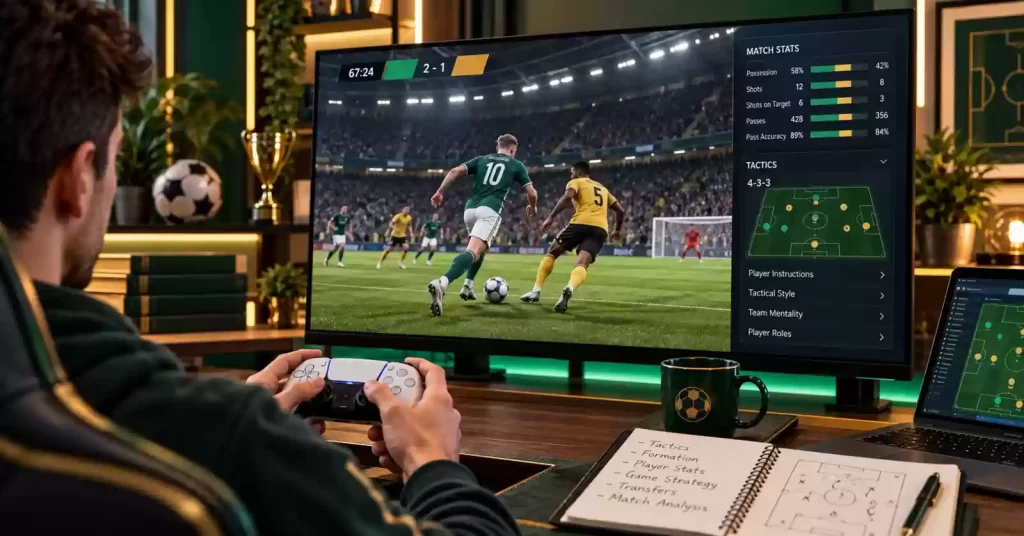
Sports video games generally need several different permissions before they can reproduce real-world players, clubs, competitions and branded equipment. A deal involving one league logo does not necessarily cover player faces, every stadium or the rights of clubs in another country.
Which rights are separate?
| In-game feature | Rights commonly needed |
|---|---|
| Team names, crests and uniforms | Club and/or league trademarks, designs and licences |
| Real players' names and likenesses | Individual or collectively administered name, image and likeness permissions |
| League branding and competition presentation | League or event intellectual property |
| Stadium appearance and venue branding | Venue imagery, designs, advertising and other clearances |
| Recorded commentary and music | Performer, recording, composition and publishing rights |
Why does one game include some teams but not others?
Publishers negotiate rights at different levels. A league may license common branding and participating clubs collectively; separate player-group and local agreements can still be necessary. That is why a game's roster, stadium selection and shirt sponsors may not perfectly match the real competition, even when most teams are officially licensed.
The distinction is visible in the evolution of football games: the EA SPORTS FC series is produced without the FIFA title, demonstrating that the licence to use a football governing body's name is different from securing clubs, leagues and athletes for gameplay. The publisher's exact portfolio of active agreements changes over time.
Who does the work?
Business-development and licensing teams negotiate scope, territory and term. Legal staff handle trademarks, player-rights clearances, approvals and restrictions. Artists and data teams implement the permitted likenesses and uniforms. A licence may also require updates when a sponsor changes or a player transfers. What feels like an authentic game on a console is supported by a web of separate commercial agreements.