MLB authenticates eligible game-used memorabilia by having designated independent authenticators personally witness an item being used or signed, then applying a traceable, tamper-evident hologram. A hologram is a record of what the authenticator saw, not a guarantee that any historic item can be certified after the fact.
Follow a game-used baseball
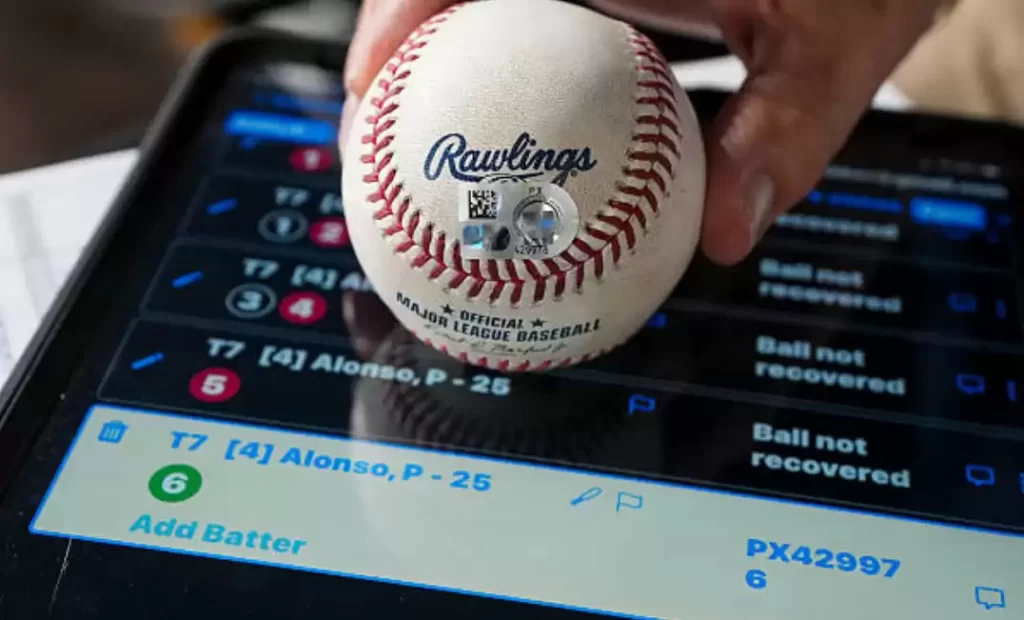
An authenticated ball is identified and removed through an approved chain of custody. The authenticator records the witnessed event and applies a numbered hologram. The code connects the item to a database entry that buyers can later check on MLB's authentication site. Newer labels incorporate a two-letter prefix, a unique number and additional verification features.
What about jerseys and bats?
A jersey or bat can qualify when the relevant usage or signature is witnessed under the programme. MLB also distinguishes game-used from team-issued. A team-issued item was provided by the club, but its label does not necessarily prove that it appeared in a game. This distinction is critical when a collector reads a listing.
| Wording | What it establishes |
|---|---|
| Authenticated game-used | An authorized authenticator witnessed qualifying use |
| Authenticated signed | The signature was witnessed under the programme |
| Team-issued | An item was issued by the club, without necessarily proving game use |
| Generic licensed hologram | Officially licensed merchandise, not necessarily a witnessed-use record |
Why won't MLB authenticate my old ball?
Its published programme does not retroactively certify a random previously obtained autograph or baseball. Without witnessed use, there is no primary event record to connect to the label. MLB's searchable code system addresses provenance, not the resale market value of an item. This is where authentication, appraisal and ownership history become three separate questions.