The Shelf · Books

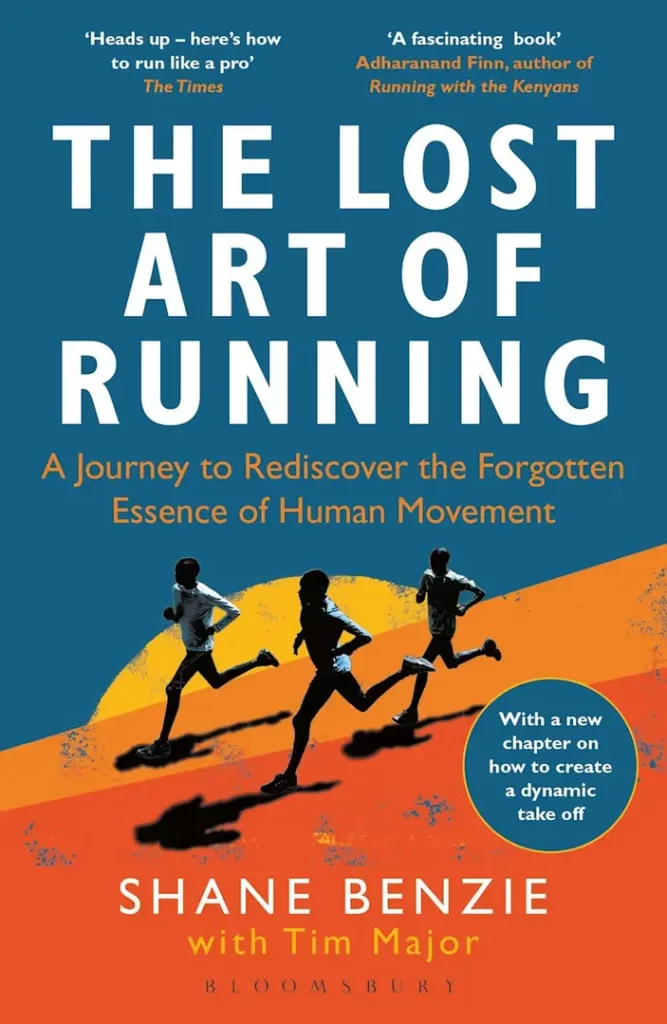
The Lost Art of Running: A Journey to Rediscover the Forgotten Essence of Human Movement

By Shane Benzie & Tim MajorReleased 2020Curated by SPMA Hub because sport culture lives beyond the field.

Why do some runners appear to move with so little effort? Shane Benzie takes that question across training grounds, extreme races and everyday running communities in The Lost Art of Running. Written with Tim Major, the book follows the observations behind his coaching approach before asking readers to pay closer attention to their own movement.

Arash Sayed
Covered by Arash Sayed
The Shelf
The Lost Art of Running: A Journey to Rediscover the Forgotten Essence of Human Movement

The Gist

Why it caught our attention

Published in 2020, the book combines travel, coaching experience and practical instruction. Benzie's journey includes Ethiopia and Kenya as well as environments as different as the Arctic and the Sahara. The variety gives him opportunities to observe how people move under very different demands.

The structure follows that investigation. A narrative section establishes where his ideas came from, a second explains their foundations, and a final section considers practical application. Readers are therefore introduced to a line of inquiry before encountering individual suggestions about cadence, posture or foot placement.

The Details

Quick facts

Format
Book
Author
Shane Benzie & Tim Major
Published
2020
ISBN
9781472991614
Relevant Sport
Running

At A Glance

Why do some runners appear to move with so little effort? Shane Benzie takes that question across training grounds, extreme races and everyday running communities in The Lost Art of Running. Written with Tim Major, the book follows the observations behind his coaching approach before asking readers to pay closer attention to their own movement.

About This Shelf Item

About The Lost Art of Running: A Journey to Rediscover the Forgotten Essence of Human Movement

Benzie's central interest is the coordinated action of the body. He gives particular attention to elastic movement and the role of connective tissue, using these ideas to explain the qualities he notices in fluent runners. These are presented through his coaching perspective and the experiences that shaped it.

The practical material covers familiar elements of running, including stride length, arm movement, breathing, hills and the position of the head. Considering them together encourages readers to look beyond an isolated correction. The book asks how one part of a movement relates to the rest.

Accounts of athletes and demanding events provide a setting for that discussion. Running across varied terrain or continuing through an endurance effort makes efficiency a visible concern. The journey is not simply decorative travel writing; it supplies the situations through which Benzie develops and communicates his approach.

Why It Belongs

The Sport Connection

The Lost Art of Running has a clear connection to coaching education. It illustrates the work of observing, forming an explanation and finding language that an athlete can use. Technical knowledge only becomes useful in a session when the runner understands what the coach is asking them to notice.

Its international scope also broadens where expertise can be sought. Benzie looks at established athletes, different communities and unusual environments rather than assuming that all useful information comes from a single training setting. That curiosity is a worthwhile feature of professional development, provided observation and interpretation remain distinguishable.

For running organizations, the book offers a way to discuss movement without making pace the only measure of attention. A runner can become more aware of rhythm, coordination or comfort even when they are not preparing for a particular finishing time. The appeal is the quality of the experience as well as the pursuit of performance.

Our Recommendation

Why Read The Lost Art of Running: A Journey to Rediscover the Forgotten Essence of Human Movement

This book suits runners who enjoy understanding the reasoning behind coaching cues. Its narrative material gives context to ideas that might otherwise arrive as disconnected instructions. Readers interested in endurance sport will also appreciate the range of settings through which the investigation travels.

The most useful reading is curious and selective. Benzie's approach invites observation and discussion; it does not need to be treated as a demand to change every element of a stride at once. The book works particularly well as a starting point for an informed conversation between an athlete and someone who knows their individual running history.

Arash Sayed

Final Thoughts

Arash's Final Thoughts

The Lost Art of Running makes familiar movement worth looking at again. Its attraction lies in the connection between Benzie's travels, his questions and the explanations he develops with Major. Even readers who do not adopt every suggestion can take something useful from that attention: running is a skill with texture and variation, not simply a distance completed at a recorded speed.