




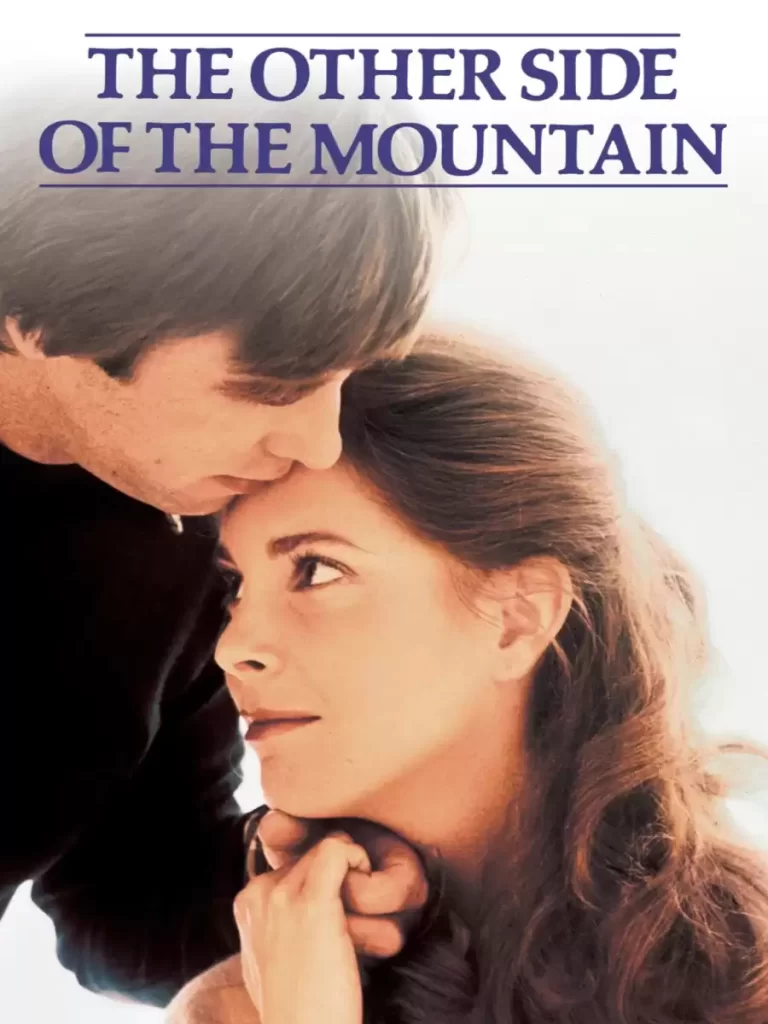
The Other Side of the Mountain adapts the real story of American skier Jill Kinmont, whose racing career was interrupted by a serious accident in 1955, shortly before the 1956 Winter Olympics. Peerce's film does not approach the material as a mystery: audiences know the fall is coming, and the early skiing sequences establish exactly what Kinmont stands to lose. Marilyn Hassett portrays a young athlete accustomed to measuring herself against slopes, rivals and Olympic possibility. The story then shifts to hospitals, rehabilitation and the relationships that endure after a celebrated sporting future disappears. Beau Bridges plays Dick Buek, a talented skier whose devotion becomes central to the drama. The film belongs to an era that often told disability stories through the language of courage and romance; those conventions are worth watching closely rather than accepting without qualification.
The Shelf · Movies
The Other Side of the Mountain
Jill Kinmont was on course for an elite skiing career when a racing accident changed almost everything about her life. Larry Peerce's 1975 drama follows the crash and its consequences, with Marilyn Hassett playing Kinmont and Beau Bridges as fellow skier Dick Buek. What matters most is what happens after sport can no longer supply a simple identity.
The Gist
Why it caught our attention
The Details
Quick facts
- Format
- Movie
- Released
- 1975
- Genre
- Drama

At A Glance
Jill Kinmont was on course for an elite skiing career when a racing accident changed almost everything about her life. Larry Peerce's 1975 drama follows the crash and its consequences, with Marilyn Hassett playing Kinmont and Beau Bridges as fellow skier Dick Buek. What matters most is what happens after sport can no longer supply a simple identity.

About This Shelf Item
About The Other Side of the Mountain
The skiing scenes give Kinmont a life beyond the accident. Racing is not an incidental hobby she can replace with a new interest at the next turn of the plot. She has organized her ambitions, friendships and sense of competence around competitive movement. When that independence changes, the camera moves into rooms where people make decisions about her body and her future. Doctors, relatives and partners can be loving and still speak as though the athlete has become a passive subject. Hassett's performance gives particular weight to moments of frustration, anger and refusal; the movie is strongest when Kinmont is permitted to be difficult rather than inspirational. Buek's presence complicates the expected romance because the relationship does not make her recovery predictable or the future fair. Peerce sometimes reaches for sentimental assurance, and the score presses emotions the performances can already communicate. The film's central accomplishment is nevertheless its willingness to remain with Kinmont after the spectators and headlines have moved elsewhere. Instead of ending at the catastrophic downhill run, it asks what it means to build a life when returning to the start gate is no longer an option.

Why It Belongs
The Sport Connection
The sporting implications reach beyond safety barriers and course inspection, although those matters are impossible to ignore. A competitive career can be interrupted in an instant, while the athlete's needs afterward continue for years. The movie invites questions about the obligations of ski organizations, medical teams, sponsors and the broader sporting community when the person who once represented an exciting prospect can no longer perform. It also captures the thin boundary between admiration for a skier's courage and pressure to present disability as an uplifting public story. Neither athletic achievement nor an accident should become the whole definition of a person. Modern discussions of athlete welfare, long-term care and disability inclusion are more nuanced than the film's 1970s framing, but that gap makes the work useful as a historical document as well as a drama.

Our Recommendation
Why Watch The Other Side of the Mountain
Viewers drawn to skiing history will recognize the shadow of the pre-Olympic circuit and the prestige attached to America's rising racers. Those interested in athlete welfare will find more to examine in the aftermath than in the competition itself. Hassett gives the role emotional seriousness, and Bridges keeps Buek from functioning only as a supportive symbol. The film should also invite conversation about who gets to narrate a disabled athlete's experience: the athlete, the people around her, or the audience hoping for an encouraging conclusion. Its most rewarding passages resist making that decision easy.
Final Thoughts
Arash's Final Thoughts
There is an obvious version of Jill Kinmont's story that would end when she can no longer compete. The Other Side of the Mountain refuses that ending, even when its storytelling becomes sentimental. Kinmont's sporting career is the starting point, not the full measure, of her life. That distinction gives the film a lasting place in a collection concerned with how sport shapes people long after an event is over.
Keep Exploring
Similar Movies on The Shelf




Stay in the loop
Follow SPMA
New jobs, interviews and sport-industry news in your feed.






74224298 new jobs in sport this week
Teams, leagues, agencies and brands in Canadain the USAin Canada & the USA are hiring. Find your next role, or let new ones come to you.
Just posted
 Digital Content & Social Media InternSport Management Hub · Toronto, ON★ Featured
 Event Operations & Fan Experience Crew (Game Day Staff Pool)Saskatoon Mamba · Saskatoon, SK1 day ago
 Chapter Director, First Tee – AlbertaGolf Canada · Edmonton, AB9 hours ago
 Assistant Athletic Trainer - BaseballUniversity of Iowa · Iowa City, IA9 hours ago
 General ManagerBrodie Rec League · Austin, TX18 hours ago
 Customer Marketing Coordinator, CommsFanduel · New York, NY23 hours ago
- Digital Content & Social Media InternSport Management Hub · Toronto, ON★ Featured
- Assistant Athletic Trainer - BaseballUniversity of Iowa · Iowa City, IA9 hours ago
- General ManagerBrodie Rec League · Austin, TX18 hours ago
