The Shelf · Movies

The Workers Cup

Released 2017Curated by SPMA Hub because sport culture lives beyond the field.

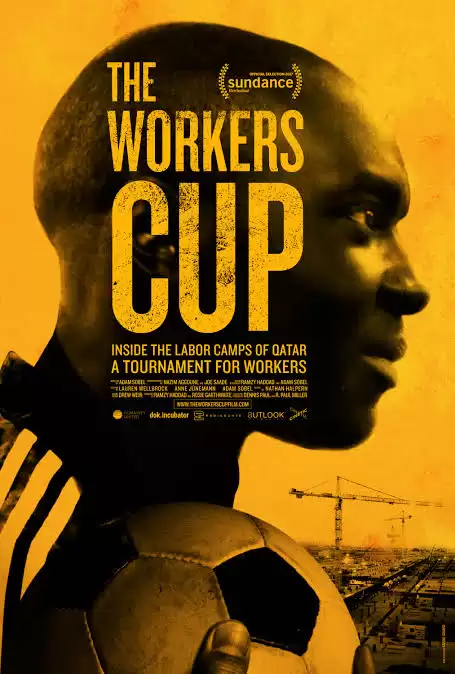
The stadiums of a World Cup are built long before supporters arrive. Adam Sobel's documentary follows migrant labourers in Qatar who spend their days on that construction effort and their spare hours playing in a company-sponsored football tournament. Their matches provide pleasure and recognition, but the film keeps asking how much freedom exists behind the spectacle of a workers' competition.

Arash Sayed
Covered by Arash Sayed
The Shelf
The Workers Cup

The Gist

Why it caught our attention

Released in 2017, The Workers Cup was filmed as Qatar prepared to host the 2022 men's FIFA World Cup. Its subjects are not visiting football stars. They are migrant workers from countries including Nepal, India, Ghana and Kenya, living far from their families while carrying out work linked to the tournament's enormous construction programme. Director Adam Sobel follows a group as they take part in a football competition organized for workers.

The structure provides an uneasy mirror of the global event. There are teams, expectations, supporters and the possibility of winning something that matters to the participants. There are also long working hours, restricted choices and the knowledge that a brief sporting opportunity cannot change the conditions surrounding a person's employment. Sobel gives the players room to enjoy the matches without confusing enjoyment with consent to the wider system.

The Details

Quick facts

Format
Movie
Released
2017
Relevant Sport
Soccer

At A Glance

The stadiums of a World Cup are built long before supporters arrive. Adam Sobel's documentary follows migrant labourers in Qatar who spend their days on that construction effort and their spare hours playing in a company-sponsored football tournament. Their matches provide pleasure and recognition, but the film keeps asking how much freedom exists behind the spectacle of a workers' competition.

About This Shelf Item

About The Workers Cup

The documentary's most revealing scenes are not confined to the pitch. Conversations in labour camps and shared accommodation make visible the distance between the workers and the people who will ultimately benefit from the completed venues. These men are central to producing the World Cup, yet their contribution does not come with the recognition routinely accorded to a player, coach or sponsor.

Football offers a genuine form of companionship. Men from different countries who may not share a language can still understand the meaning of a well-timed pass or a disappointing defeat. The tournament creates identities beyond those assigned by employers. It allows players to be competitors, friends and supporters rather than simply labour. The film is careful, however, not to turn that temporary relief into a solution for the problems its subjects describe.

There is a particularly uncomfortable relationship between the workers' competition and the presentation of the 2022 World Cup. A tournament can demonstrate that an employer takes an interest in welfare, while also producing images of cheerful participation. Sobel makes it difficult to forget the asymmetry: the people featured do not control the broader conditions of their lives, and the opportunity to play is only one small part of the story.

Why It Belongs

The Sport Connection

The Workers Cup should be part of any serious discussion about mega-event management. World Cups are often assessed through attendance, broadcast reach, tourism or venue legacy. Those measures say little about the labour systems through which the facilities were constructed. Procurement, contractor oversight, employment protections and meaningful worker representation are as relevant to an event's governance as the quality of its pitch.

For sponsors and event organizers, the film raises a challenge that cannot be addressed by a carefully framed corporate-social-responsibility video. A worker football tournament may be enjoyable and still coexist with exploitation. Measuring an organization's ethics requires attention to contracts, wages, mobility and living conditions, not only its visible recreational programmes. Enjoyment in sport is genuine here; it is not proof that the surrounding arrangements are fair.

Our Recommendation

Why Watch The Workers Cup

Watch this film before discussing the social impact of international sport in the abstract. Sobel puts faces, voices and competing priorities into an issue often reduced to competing press releases. It is especially pertinent for those studying event bids, construction, international football governance and sponsorship accountability.

The football itself matters. If the film merely contrasted stadiums with labour camps, its subjects might appear as passive victims. Seeing them compete gives viewers access to their ambitions, humour and disappointments, and shows why participation can remain meaningful even under deeply unequal conditions.

Arash Sayed

Final Thoughts

Arash's Final Thoughts

The Workers Cup does not ask viewers to stop enjoying football. It asks them to expand the field of vision. The match, the stadium and the television rights are only the final visible pieces of an event. The film's strongest claim is that the workers who make the rest possible also belong in the history of that event.