The Shelf · Movies

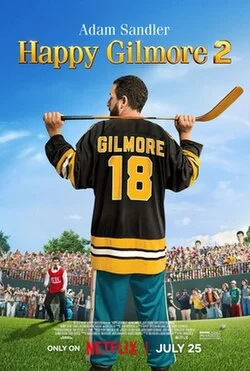
Happy Gilmore 2

Released 2025Curated by SPMA Hub because sport culture lives beyond the field.

Happy Gilmore 2 asks whether a golfer whose identity was built on disruption can return to competition without turning every problem into another performance. Its comedy comes from the clash between Happy's old instincts and a sport increasingly organized around entertainment, celebrity and commercial scale.

Arash Sayed
Covered by Arash Sayed
The Shelf
Happy Gilmore 2

The Gist

Why it caught our attention

Directed by Kyle Newacheck, Happy Gilmore 2 brings Adam Sandler back as the hot-tempered former hockey player whose unusual swing made him a golf celebrity. Netflix identifies Tim Herlihy, co-writer of the original film, as a returning writer alongside Sandler. Julie Bowen and Christopher McDonald also return, while the film adds appearances from professional golfers including John Daly, Paige Spiranac, Rory McIlroy, Scottie Scheffler and Bryson DeChambeau.

The sequel gives Happy a concrete reason to return: he wants to pay for his daughter Vienna's ballet programme in Paris. Netflix's cast guide finds him working in a grocery store and raising five children, well beyond the triumphant ending of the original film. That structure gives the character more than a chance to repeat familiar jokes. He must negotiate family responsibility, public attention and a sport that has become even more comfortable treating personalities as part of the product.

The Details

Quick facts

Format
Movie
Released
2025
Genre
Comedy
Relevant Sport
Golf

At A Glance

Happy Gilmore 2 asks whether a golfer whose identity was built on disruption can return to competition without turning every problem into another performance. Its comedy comes from the clash between Happy's old instincts and a sport increasingly organized around entertainment, celebrity and commercial scale.

About This Shelf Item

About Happy Gilmore 2

Happy Gilmore 2 is a sports comedy sequel that uses golf as both a competitive setting and a source of institutional satire. Happy's appeal has always depended on his refusal to behave like a conventional golfer. His new caddie, Oscar Mejías, played by Bad Bunny, adds another outsider to a setting with firmly established social rules. The sequel's challenge is to make that refusal relevant after years of fame, rather than presenting him as unchanged simply because the audience remembers the first film.

Netflix's production information confirms that Newacheck directs, Sandler and Herlihy write, and the original creative team remains involved through producing and executive-producing roles. The involvement of current golf figures gives the film a connection to the contemporary sport's celebrity culture, even though the story and its fictional organizations remain comedic inventions.

The movie should be understood as exaggeration rather than a realistic account of professional golf administration. Its value for sport readers comes from the way comedy makes familiar tensions visible: the athlete as personality, the event as spectacle and the difference between authentic competition and a format designed to attract attention.

Why It Belongs

The Sport Connection

Happy Gilmore 2 is most useful as a playful examination of athlete-brand management. Happy's behaviour is difficult to control, but his unpredictability is also the source of his commercial value. An organization that wants the attention generated by a disruptive personality may eventually discover that the same personality resists scripts, sponsors and institutional etiquette.

The sequel's expanded celebrity presence points to another issue: the blending of sport and entertainment. Professional athletes appear not only as competitors but as cultural signals. Their participation can introduce a film to golf audiences, while the film can make golf feel more accessible to people who would not normally watch a tournament. That exchange benefits both sides, but it can also reduce athletes to recognizable cameos.

Happy's return further raises a question about succession. A famous athlete may remain commercially useful after peak performance, yet the organization must decide whether the goal is competitive achievement, nostalgia or both. Managing that ambiguity requires honest role definition. Otherwise, a comeback becomes a marketing story that leaves the athlete and the audience unsure what success means.

Our Recommendation

Why Watch Happy Gilmore 2

Watch Happy Gilmore 2 if you enjoy sports comedy, golf culture and stories about athletes whose personal brands are larger than their formal achievements. It will be especially accessible to viewers interested in how professional sport borrows from entertainment and how entertainment borrows credibility from sport.

The limitation is its tone. The film uses exaggeration, cameos and broad comic conflict rather than a detailed portrait of golf operations. It can start useful conversations about branding and spectacle, but it should not be treated as a realistic guide to player management or tour governance.

Arash Sayed

Final Thoughts

Arash's Final Thoughts

Happy's comeback connects the familiar golf outsider to a new responsibility: helping his daughter pursue an ambition of her own. His wildness made him valuable, but the systems around him still need rules, revenue and a reason to believe in the next tournament. The joke beneath the sequel is also a serious sport-business question: can an organization commercialize rebellion without eventually domesticating it?