The Shelf · Movies

The Sweater

Released 1980Curated by SPMA Hub because sport culture lives beyond the field.

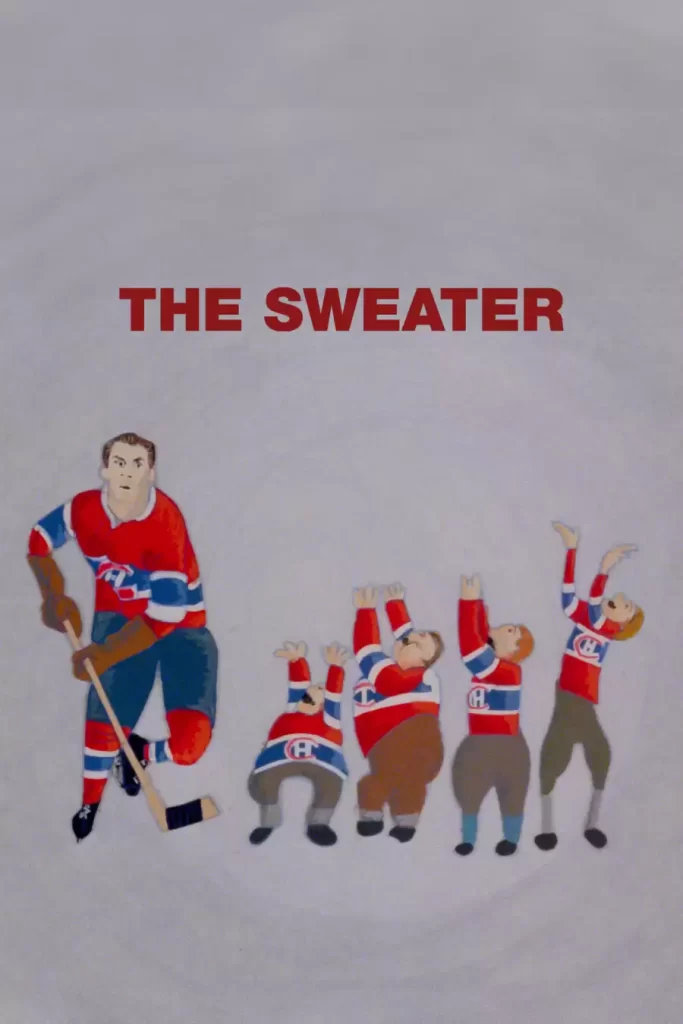
A wrong-colour hockey sweater ought to be a small childhood inconvenience. In Sheldon Cohen's animated short, it becomes a public humiliation. Roch Carrier's young narrator has to wear the blue of Toronto in a Quebec village devoted to the Montreal Canadiens. The mistake reveals how closely a hockey team can become tied to language, place and belonging.

Arash Sayed
Covered by Arash Sayed
The Shelf
The Sweater

The Gist

Why it caught our attention

The National Film Board's The Sweater, released in 1980, adapts Carrier's story of growing up in Saint-Justine, Quebec, during the era of Maurice “Rocket” Richard. The village boys follow the Canadiens over the radio, copy their hero and wear his number nine. The child needs a replacement jersey, so his mother orders one from Eaton's. When a Toronto Maple Leafs sweater arrives, an apparently simple purchase becomes impossible to undo. The family cannot afford to discard it, and the boy cannot imagine wearing it among Canadiens supporters.

Cohen's animation conveys childhood embarrassment without relying on a lengthy explanation of Canadian political history. The rink, the catalogue and the mother's practical response say enough. Carrier narrates his own story, giving the film an adult memory of an incident that felt enormous to the child who lived it.

The Details

Quick facts

Format
Movie
Released
1980
Relevant Sport
Hockey

At A Glance

A wrong-colour hockey sweater ought to be a small childhood inconvenience. In Sheldon Cohen's animated short, it becomes a public humiliation. Roch Carrier's young narrator has to wear the blue of Toronto in a Quebec village devoted to the Montreal Canadiens. The mistake reveals how closely a hockey team can become tied to language, place and belonging.

About This Shelf Item

About The Sweater

The new sweater is not just the wrong product. It carries the colours of a rival club in a village where club allegiance functions almost like a shared language. On the ice, the boy's appearance announces a loyalty he does not possess. What might be unremarkable in another setting becomes a challenge to his standing among friends and teammates. The film is particularly good at showing the difference between what adults intend and what children experience: the mother sees a perfectly serviceable garment, while her son sees the loss of his place within the group.


The short's playful exaggeration matters. Cohen gives emotional scale to an ordinary transaction, using the movement and expressions of animation to make social pressure visible. The story does not require a professional game or a championship to express what hockey means in this community. Its sporting action is neighbourhood play, which is precisely why the feeling of exclusion lands. The rink is a public space where a child learns the local rules of identification.

Carrier's perspective also prevents the film from becoming an uncomplicated celebration of fandom. The narrator loves the Canadiens, but that love gives others the power to shame him over something he did not choose. The humour is affectionate; the pressure is real. The two can coexist.

Why It Belongs

The Sport Connection

For sport marketing, the film provides an unusually clear account of what a uniform signifies before anyone calls it a brand asset. A jersey becomes a declaration of identity. Its colours, crest and connection to a famous athlete convey membership in a regional culture, even though the child wearing it has no formal relationship with the club. The emotional value of the garment comes from collective meaning, not its price or quality.

Eaton's role is just as revealing. The ordered object and the delivered object have the same basic function, yet they are not interchangeable to the customer. Sport merchandising depends on precisely this distinction. The team's identity is the product. The film also asks a question that modern organizations still encounter: how much pressure to conform is hidden inside an enthusiastic fan community? The sport brings people together, but belonging can be enforced with unexpected severity.

Our Recommendation

Why Watch The Sweater

The Sweater deserves attention from viewers who want to understand Canadian hockey beyond the professional arena. Its ten-minute running time makes it easy to watch, yet its story remains useful for conversations about fandom, merchandising, childhood sport and the overlap between local culture and national institutions.

There is no grand athletic triumph here. A boy wants to participate without being judged by a mistake in his clothing. That modest ambition makes the story immediately recognizable even to someone who has never followed the Canadiens or Maple Leafs. For hockey fans, the humour is sharper because the rivalry is familiar; for everyone else, the embarrassment needs no translation.

Arash Sayed

Final Thoughts

Arash's Final Thoughts

The most memorable contest in The Sweater happens before any puck is dropped. It is between a child's understanding of who he is and the message that other people read into his clothes. Cohen and Carrier turn that disagreement into a compact piece of Canadian sporting history. It is funny, uncomfortable and exact about the power that a team's colours can acquire far from the team itself.