The Shelf · Movies

Grand Prix

Released 1966Curated by SPMA Hub because sport culture lives beyond the field.

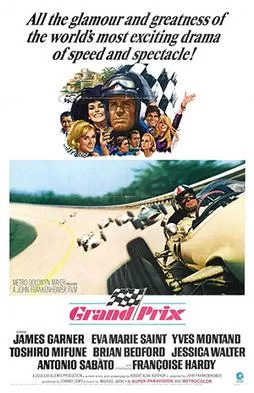
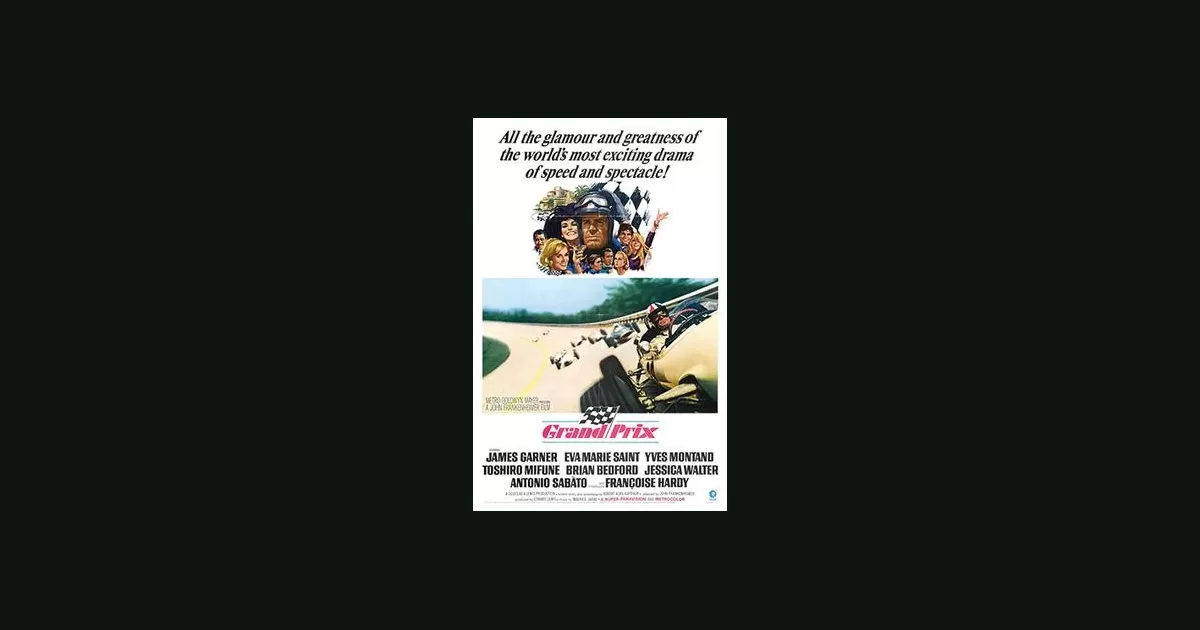
Grand Prix turns the Formula One circuit into a travelling arena of ambition, rivalry and emotional displacement. John Frankenheimer's 1966 film follows several drivers whose careers overlap on the track while their private relationships reveal different ways of living with danger.

Alex Bennett
Covered by Alex Bennett
The Shelf
Grand Prix
Grand Prix
The Gist Of Grand Prix

The Gist

Why it caught our attention

James Garner plays Pete Aron, an American driver whose career is unsettled by a crash involving teammate Scott Stoddard. Brian Bedford's Stoddard faces physical recovery and the strain racing places on his marriage. Yves Montand plays Jean-Pierre Sarti, an established champion whose experience has complicated rather than eliminated his doubts. Antonio Sabàto's Nino Barlini represents a younger competitor's hunger for success.

These intersecting stories give the film a broader perspective than a single driver's rise. Each man occupies a different point in the cycle of opportunity, recognition and possible decline.

The Details

Quick facts

Format
Movie
Released
1966
Genre
Drama
Relevant Sport
Motorsport

At A Glance

Grand Prix turns the Formula One circuit into a travelling arena of ambition, rivalry and emotional displacement. John Frankenheimer's 1966 film follows several drivers whose careers overlap on the track while their private relationships reveal different ways of living with danger.

About This Shelf Item

About Grand Prix

The championship provides movement and structure, carrying the characters between circuits while compressing their decisions into race weekends. Aron's search for another chance depends on someone else being willing to employ him. Stoddard's determination to return tests the distinction between professional commitment and an inability to imagine life outside competition.

Sarti's relationship with journalist Louise Frederick introduces someone who observes racing without sharing every assumption of its participants. His experience makes him capable of questioning the world in which he has succeeded. Barlini, meanwhile, has reasons to embrace precisely the rewards that an older driver may have begun to distrust.

Frankenheimer gives these conflicts an unusually expansive visual setting. Racing footage, split-screen compositions and the film's large-format presentation make speed a matter of perception as well as plot. Cars occupy space in relation to one another, and the audience is asked to feel how quickly that space changes. The technical spectacle does not remove the human stories, but it often expresses their pressure more effectively than dialogue.

Moving between these drivers means that victory never has only one possible emotional meaning. The same result can signify arrival, survival or the postponement of an unwelcome decision.

Why It Belongs

The Sport Connection

Grand Prix is especially interesting as a film about a professional circuit rather than an isolated event. Teams recruit, reputations travel and relationships continue after one result has been recorded. An accident can therefore become a career turning point as well as a physical crisis.

The drivers' different relationships to risk also resist a simple explanation based on courage. A newcomer seeking recognition, an injured competitor seeking restoration and a champion questioning his future do not have identical motives. Treating them as interchangeable would obscure the pressures that make their decisions understandable.

For sport organizations, that distinction matters. Supporting an athlete requires attention to career stage, personal identity and the incentives created by selection. The film dramatizes those conditions without pretending that professional experience automatically produces emotional clarity.

Our Recommendation

Why Watch Grand Prix

Watch it for the way its multiple protagonists change the meaning of a race. A manoeuvre can be one driver's opportunity and another driver's evidence that his position is becoming insecure. The shifting viewpoint prevents the championship from belonging entirely to one hero.

Its melodrama and gender relationships also belong to its period, and some viewers will respond more strongly to the racing than to the private entanglements. That imbalance is worth considering rather than concealing. Grand Prix remains distinctive because it presents the circuit as both glamorous and consuming, allowing the scale of the production to coexist with doubts about the life being celebrated.

Alex Bennett

Final Thoughts

Alex's Final Thoughts

Grand Prix finds drama in the difficulty of leaving a world that continually offers another start, another contract and another chance to prove oneself. Its drivers are joined by the sport but separated by what they need from it. The film's value for a sport-focused shelf lies in that range of motives, together with filmmaking that makes racing feel spatial, physical and organizational rather than merely symbolic of personal ambition.