




English football can claim global audiences, prestigious broadcasting arrangements and investors from around the world, yet supporters still worry about the survival of smaller clubs and the cost of following their teams. Gary Neville's 2022 book The People's Game: A View from a Front Seat in Football takes that contradiction seriously. Neville writes as someone who competed at the highest level with Manchester United and later experienced the sport as a broadcaster, entrepreneur and owner. Those overlapping perspectives help explain the book's urgent tone. His concern is not that football generates money, but that an increasingly commercial system can distribute its rewards and obligations unevenly. The result is an argument about stewardship: who has the authority to shape the game and whose interests should carry weight?
The Shelf · Books
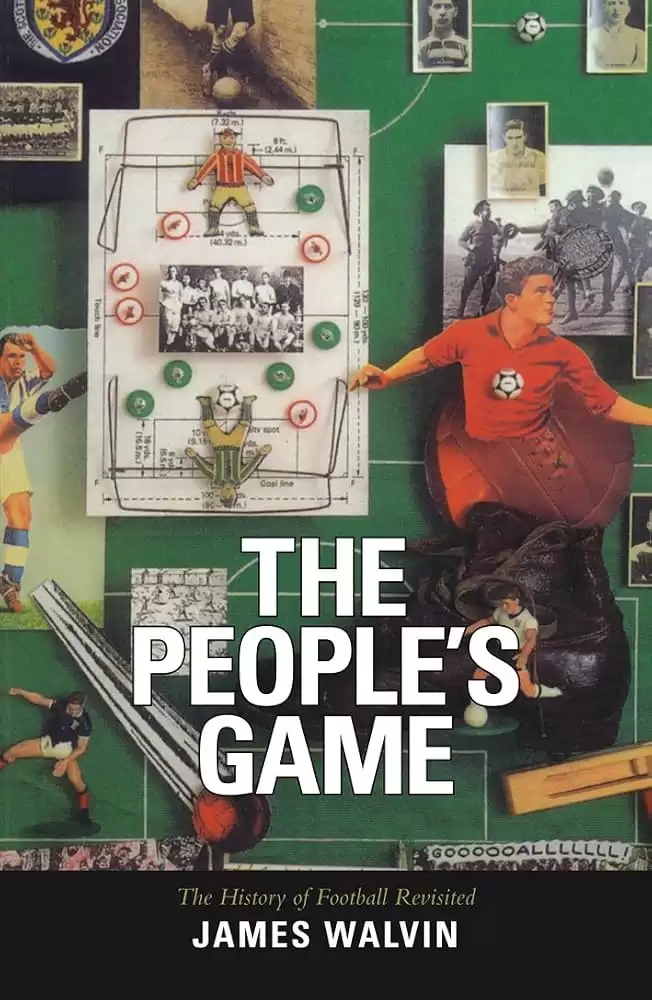
The People's Game
Gary Neville's The People's Game begins with an argument about who football is for. Drawing on life as a player, pundit and club owner, he examines the gap between the sport's commercial ambitions and the communities that give it meaning.
The Gist
Why it caught our attention
The Details
Quick facts
- Format
- Book
- Author
- Gary Neville
- Published
- 2022
- Genre
- Non-Fiction
- Relevant Sport
- Soccer

At A Glance
Gary Neville's The People's Game begins with an argument about who football is for. Drawing on life as a player, pundit and club owner, he examines the gap between the sport's commercial ambitions and the communities that give it meaning.

About This Shelf Item
About The People's Game
The book ranges across ownership, regulation, the future of the domestic game, supporters' influence and the obstacles facing different participants. Neville draws on his playing experience while discussing institutions far beyond one dressing room. That blend matters because it prevents the argument from becoming purely nostalgic. Some aspects of modern football are clearly more professional and commercially developed than in previous decades; the challenge is determining whether those gains protect the wider ecosystem. The failed European Super League proposal sharpened public debate about whether a small group of major clubs could redesign competition primarily around their own financial interests. Neville's wider questions are not limited to one controversy. They concern the decision-making structures that make such proposals possible and the mechanisms available to challenge them.

Why It Belongs
The Sport Connection
An executive reading The People's Game should pay attention to stakeholder representation. Club owners may supply capital and bear financial risk, but supporters contribute decades of loyalty and the cultural identity that sponsors and media companies seek to reach. Players and staff rely on organizations as employers, while communities benefit from local programs and employment. A sustainable governance model needs more than an annual commercial target. It should explain how decisions are reviewed, how conflicts are disclosed and how affected groups can be heard before a major change becomes irreversible. Neville's account is a useful starting point for comparing ownership models, supporter engagement strategies and public-interest obligations across leagues. It also makes the case that transparency can be a business asset rather than an obstacle to growth.

Our Recommendation
Why Read The People's Game
The distinction between revenue growth and institutional health is especially important for sport management students. A television deal might improve one club's finances while widening the gap between wealthy and resource-constrained competitors. A new commercial partner may strengthen an organization but create reputational risks if supporters do not understand the arrangement. A stadium proposal can promise economic benefits while changing how local people experience a club. These decisions are not automatically wrong; they require careful evaluation of who benefits, who bears the costs and whether there are viable alternatives. The People's Game encourages readers to see football as a connected structure, not simply a set of powerful businesses operating independently. Protecting competition and public trust may be essential to its long-term commercial appeal.
Final Thoughts
Arash's Final Thoughts
Neville's book is deliberately a case for reform, not a neutral encyclopedia of football governance. Readers should examine its arguments critically and consider competing proposals. Its practical value lies in forcing a useful question into the centre of every sports-business discussion: what obligations come with controlling an institution that belongs emotionally to people who do not own it financially? That question is relevant far beyond English football, especially when organizations weigh growth against public trust.
Keep Exploring
Similar Books on The Shelf



Same sport
More Soccer on The Shelf










Stay in the loop
Follow SPMA
New jobs, interviews and sport-industry news in your feed.






7679155 new jobs in sport this week
Teams, leagues, agencies and brands in Canadain the USAin Canada & the USA are hiring. Find your next role, or let new ones come to you.
Just posted
 Digital Content & Social Media InternSport Management Hub · Toronto, ON★ Featured
 Senior Software Engineer, Bet EnginePENN Interactive · Remote2 hours ago
 High Performance Intern (Winter 2027)Rugby Ontario · Toronto, ON2 hours ago
 Player Development Associate (Arizona)San Francisco Giants · Papago, AZ17 minutes ago
- Account ExecutivePENN Interactive · Los Angeles, CA2 hours ago
 Baseball Operations Intern (Summer 2027)Royal Oak Leprechauns · Royal Oak, MI3 hours ago
- Digital Content & Social Media InternSport Management Hub · Toronto, ON★ Featured
- Player Development Associate (Arizona)San Francisco Giants · Papago, AZ17 minutes ago
- Account ExecutivePENN Interactive · Los Angeles, CA2 hours ago
