




The 2005–06 Phoenix Suns are remembered for pace, Steve Nash and Mike D'Antoni's willingness to play a kind of basketball that challenged conventional expectations. Sports Illustrated writer Jack McCallum approached the team as an embedded observer, first expecting a short stay and eventually following the season from inside the coaches' meetings and locker room. His 2006 book therefore has an advantage over a familiar retrospective: much of its material comes from routines performed before anyone knows how the campaign will end. The seven-second idea sounds like a simple instruction to play quickly. McCallum's reporting demonstrates that such simplicity depends on highly specific agreements among coaches, players and staff.
The Shelf · Books
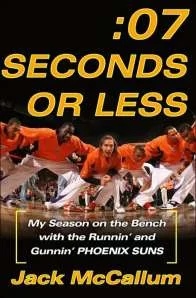
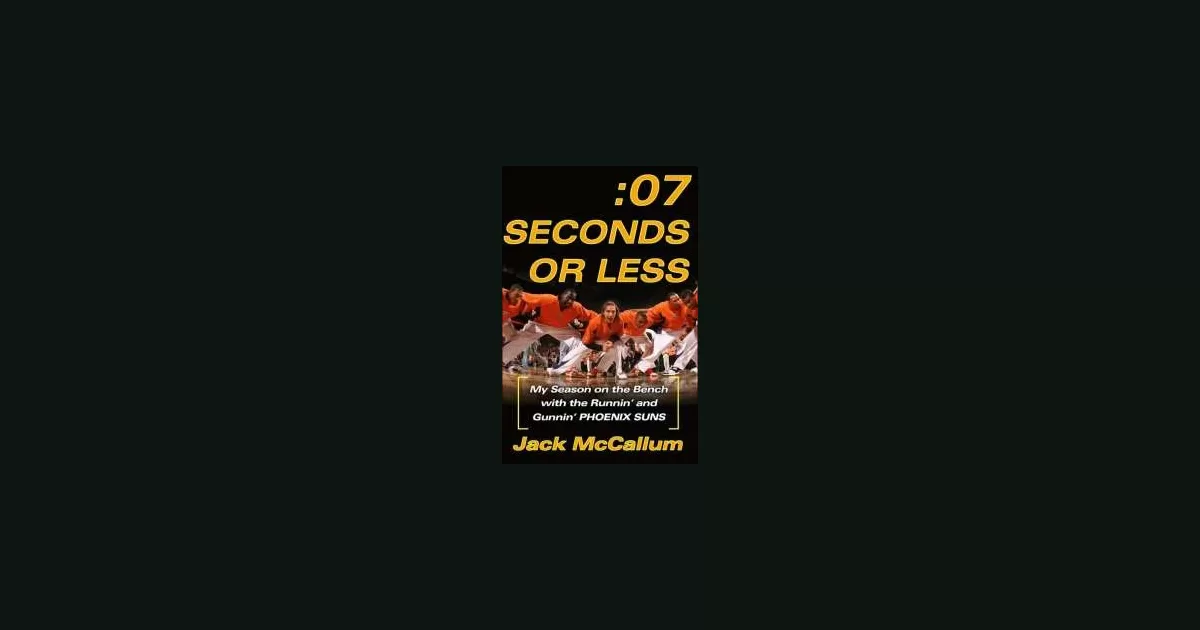
Seven Seconds or Less
By Jack McCallumReleased 2006Curated by SPMA Hub because sport culture lives beyond the field.
Jack McCallum's Seven Seconds or Less gets unusually close to the Phoenix Suns' coaching staff and shows how a radical playing style depends on ordinary, relentless coordination.
The Shelf
The Gist
Why it caught our attention
The Details
Quick facts
- Format
- Book
- Author
- Jack McCallum
- Published
- 2006
- Genre
- Non-Fiction
- Relevant Sport
- Basketball

At A Glance
Jack McCallum's Seven Seconds or Less gets unusually close to the Phoenix Suns' coaching staff and shows how a radical playing style depends on ordinary, relentless coordination.

About This Shelf Item
About Seven Seconds or Less
A fast break is visible to anyone watching the game; an organization that makes it repeatable is less obvious. The book gives attention to D'Antoni's approach, Nash's ability to read teammates and the relationships that allow the Suns to live with the risks of their distinctive offense. Players have to understand spacing and timing without stopping to receive new directions every possession. Coaches must decide when the system can accommodate mistakes and when accountability requires intervention. The season also brings injuries and lineup adjustments, testing whether a philosophy is genuinely flexible or merely dependent on a particular set of healthy stars. McCallum is interested in personality, but the more revealing moments often concern conversations held outside the arena's noise.

Why It Belongs
The Sport Connection
There is an important distinction between inventing a tactical approach and managing an organization capable of executing it. The Suns' style affects training, scouting priorities, recruitment and the characteristics valued in a role player. A club cannot consistently ask for tempo while rewarding only slow, conventional decisions. The book shows why coaching philosophy must become an operational language shared across departments. It also introduces a management question that extends beyond basketball: how do leaders protect the elements that make a team unusual when the pressure of a playoff series encourages retreat into familiar habits? That requires confidence, but also accurate feedback and a willingness to modify the parts of the system that are failing.
A playing style becomes a management system when it changes who a team recruits, which skills receive coaching time and how mistakes are evaluated. Under D'Antoni, speed was not merely permission to take a quick shot; it required players to recognize opportunities collectively and trust that teammates would respond. An executive who hires a coach with such a distinctive approach must consider whether the roster and developmental pipeline can support it. Success can make a style fashionable, yet imitation without the necessary people is unlikely to reproduce the same performance. McCallum's proximity to the Suns also reminds readers that innovation is rarely tidy inside a season. Injuries, contested substitutions, fatigue and the pressure of playoff expectations force adjustments to the original idea. Readers should ask how much variation a coach can tolerate before a team's identity becomes meaningless, and how much rigidity turns an identity into a liability. That balance is more useful than treating the Suns as a collection of highlights.

Our Recommendation
Why Read Seven Seconds or Less
Readers interested in coaching careers will appreciate the staff's practical work. Much of the appeal comes from how decisions are made under conditions no manual can perfectly reproduce: an injured starter, an opponent's adjustment, a player who needs reassurance or a substitution that changes the rhythm of a game. The text also helps explain why the NBA's most influential tactical innovations are not isolated clever plays. They change what teams search for in athletes and how people collaborate during competition. A modern reader should remember that this is one team's 2005–06 story, not the final word on every later iteration of pace-and-space basketball. That historical distance makes its original decisions more valuable, not less.
Final Thoughts
Arash's Final Thoughts
Seven Seconds or Less deserves attention because it treats game strategy as a living workplace. Nash and D'Antoni provide the recognizable names, while McCallum makes coaches' meetings and everyday trust feel consequential. It is a remarkably useful text for understanding how a compelling sporting identity survives contact with actual people, incomplete information and a long season.
Related organizations



Keep Exploring
Similar Books on The Shelf

Same sport
More Basketball on The Shelf





Stay in the loop
Follow SPMA
New jobs, interviews and sport-industry news in your feed.






Hiring now on Sports Hired
7679155 new jobs in sport this week
Teams, leagues, agencies and brands in Canadain the USAin Canada & the USA are hiring. Find your next role, or let new ones come to you.
343319662 open jobs2,8676,2869,153 organizations
Just posted
 Digital Content & Social Media InternSport Management Hub · Toronto, ON★ Featured
 Senior Software Engineer, Bet EnginePENN Interactive · Remote2 hours ago
 High Performance Intern (Winter 2027)Rugby Ontario · Toronto, ON2 hours ago
 Player Development Associate (Arizona)San Francisco Giants · Papago, AZ17 minutes ago
- Account ExecutivePENN Interactive · Los Angeles, CA2 hours ago
 Baseball Operations Intern (Summer 2027)Royal Oak Leprechauns · Royal Oak, MI3 hours ago
- Digital Content & Social Media InternSport Management Hub · Toronto, ON★ Featured
- Player Development Associate (Arizona)San Francisco Giants · Papago, AZ17 minutes ago
- Account ExecutivePENN Interactive · Los Angeles, CA2 hours ago
Copied
