
The Shelf · Books

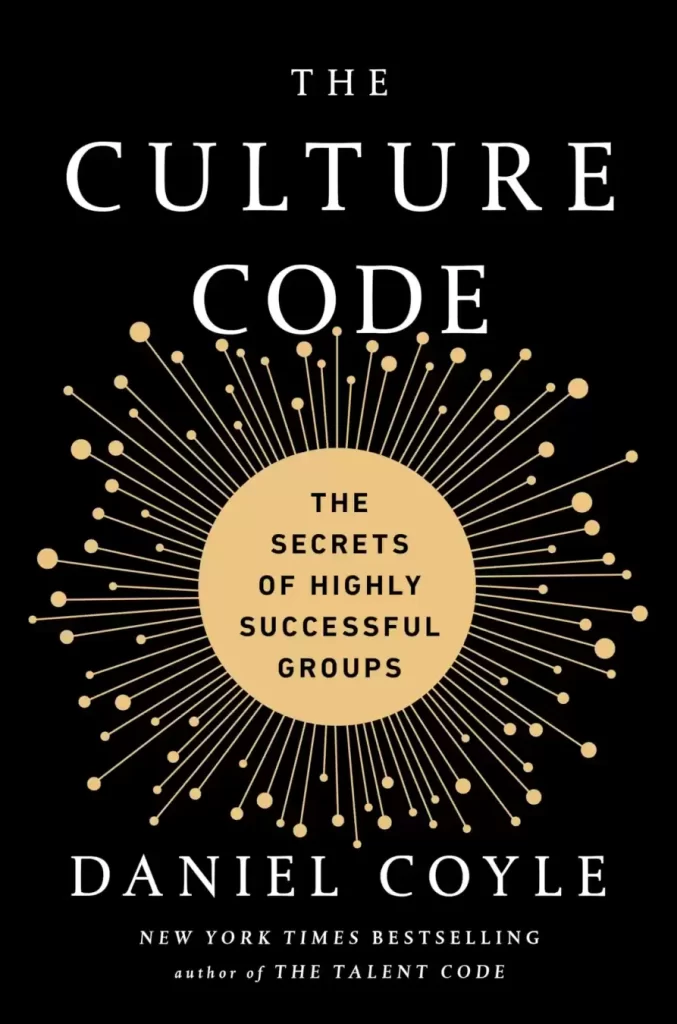
The Culture Code

By Daniel CoyleReleased 2018Curated by SPMA Hub because sport culture lives beyond the field.

The Culture Code examines the conditions that make groups work together. Daniel Coyle's book ranges well beyond sport, but its discussion of the San Antonio Spurs makes it especially relevant to team leadership and sports management.

Arash Sayed
Covered by Arash Sayed
The Shelf
The Culture Code
The Culture Code
The Gist Of The Culture Code

The Gist

Why it caught our attention

Every organization says it wants a strong culture. The phrase becomes less useful when nobody can explain what people are expected to do differently on Monday morning. In The Culture Code, Daniel Coyle investigates high-performing groups, including the San Antonio Spurs, to identify behaviours that help people feel secure, exchange honest information and pursue common purposes. He treats culture as something constructed through repeated interactions rather than a statement displayed on a wall.

The book's range is deliberate. Coyle looks at groups from different sectors, including creative firms and elite military organizations, alongside professional basketball. Their environments are not interchangeable, but the comparison gives readers a way to separate claims that sound universal from practices shaped by a particular workplace. The important question for a sports organization is not whether it can imitate the Spurs' rituals. It is why certain routines make collaboration possible under competitive pressure.

The Details

Quick facts

Format
Book
Author
Daniel Coyle
Published
2018

At A Glance

The Culture Code examines the conditions that make groups work together. Daniel Coyle's book ranges well beyond sport, but its discussion of the San Antonio Spurs makes it especially relevant to team leadership and sports management.

About This Shelf Item

About The Culture Code

Coyle organizes his argument around three broad capacities: building safety, sharing vulnerability and establishing purpose. Those phrases can sound soft beside the visible intensity of elite sport. In practice, they describe conditions that affect whether a player asks for help, a coach admits a mistake, or a staff member challenges a flawed assumption before it becomes an expensive decision.

The Spurs example helps make those mechanisms concrete. A successful franchise contains stars, role players, coaches and support staff whose influence is not distributed equally. Maintaining shared standards without denying those differences is a substantial leadership task. The book gives readers useful scenes and examples, although its case-study method should not be confused with a controlled experiment proving that a particular cultural behaviour caused a championship.

Why It Belongs

The Sport Connection

A sport manager can apply the book by examining how information moves. Are trainers free to explain an injury concern that complicates selection? Can junior analysts question a veteran decision without embarrassment? Do athletes understand expectations and feel able to raise problems that could affect playing time? Culture becomes measurable through these ordinary encounters, even if it cannot be reduced to one simple numerical score.

The leadership challenge is to translate broad values into decisions and routines. Managers control who speaks in meetings, how feedback is delivered and whether mistakes trigger learning or defensiveness. They also control incentives: celebrating teamwork while rewarding only individual statistics sends conflicting signals. Coyle's framework is valuable when it prompts operational changes, but less useful when leadership borrows attractive language without altering authority or accountability.

Our Recommendation

Why Read The Culture Code

The Culture Code deserves attention from coaches, athletic directors, general managers and people overseeing multidisciplinary support teams. It is particularly useful where performance requires specialists to work together despite differences in status and expertise. A physio, video analyst and head coach will not always see the same problem, but their collaboration can determine what athletes experience.

Readers should be cautious about treating successful organizations as proof of a permanent management formula. The Spurs themselves have experienced changing rosters and competitive cycles, and any organization's culture can deteriorate under new incentives or leadership. Coyle supplies a compelling practical vocabulary rather than a guarantee of winning. That distinction is essential when applying business literature to high-performance environments.

Arash Sayed

Final Thoughts

Arash's Final Thoughts

The Culture Code earns its Shelf place because it asks managers to look beyond inspirational speeches. Trust, communication and purpose are revealed in the structures people work within. For sport professionals, the lesson is to judge a team's culture by how it behaves under pressure, not by how elegantly it describes itself.