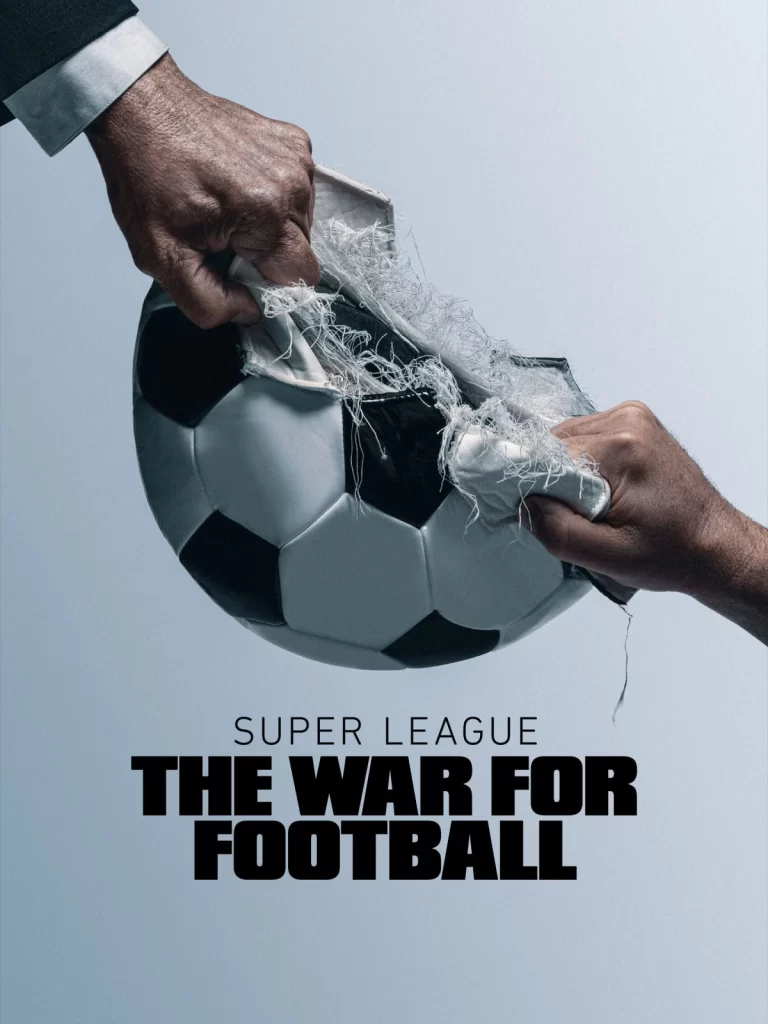

The Shelf · TV Series

Super League: The War for Football

Released 2023Curated by SPMA Hub because sport culture lives beyond the field.

Super League: The War for Football moves the decisive action away from the pitch. Its contest concerns who may organise elite European club football, who receives the financial benefits and whether the people running major clubs can redefine competition without securing the acceptance of the people who follow it.

Alex Bennett
Covered by Alex Bennett
The Shelf
Super League: The War for Football
The Gist Of Super League: The War for Football

The Gist

Why it caught our attention

Jeff Zimbalist's four-part documentary premiered in 2023 and examines the attempted European Super League breakaway. It brings together perspectives from football executives, club leadership and figures involved in the dispute, treating the announcement and resistance as a struggle over the sport's structure.

The central conflict is understandable even without detailed knowledge of every organisation. Some of football's most powerful clubs sought a different arrangement for elite competition. The proposal challenged existing authorities and prompted a much wider argument about the relationship between commercial value and sporting legitimacy.

The Details

Quick facts

Format
TV Series
Released
2023
Relevant Sport
Soccer

At A Glance

Super League: The War for Football moves the decisive action away from the pitch. Its contest concerns who may organise elite European club football, who receives the financial benefits and whether the people running major clubs can redefine competition without securing the acceptance of the people who follow it.

About This Shelf Item

About Super League: The War for Football

The series makes executive decisions dramatic by showing how closely institutional power depends on cooperation. A club may command a large audience and considerable wealth, yet it still operates within relationships with other clubs, competition organisers, players and supporters. Those relationships become visible when a proposed change threatens to rearrange them.

For the breakaway's supporters, a new structure offered a way to reconsider revenues and control. For its opponents, the proposal raised concerns about access to competition and the meaning of achievement within the existing system. The documentary's tension comes from watching these arguments become urgent public positions rather than remaining private discussions among executives.

The language of tradition deserves attention throughout. It can express a real attachment to sporting principles and community history. It can also be used by institutions with commercial interests of their own. Defending the existing arrangement does not mean every aspect of that arrangement is beyond criticism.

The involvement of supporters changes the scale of the dispute. Football clubs have owners and formal decision-makers, but their identity is sustained by people whose attachment is not equivalent to purchasing an interchangeable product. The series is most revealing when that difference affects what powerful organisations are able to do.

Why It Belongs

The Sport Connection

Super League offers an unusually direct examination of legitimacy in sport governance. The legal or financial capacity to announce a competition does not necessarily create the consent required for it to function. Authority has to operate through a network of people and institutions that can respond in ways the planners do not control.

The proposed structure also exposes the tension between predictable commercial returns and competitive uncertainty. Uncertainty is part of what makes sport valuable to audiences, yet organisations may seek arrangements that reduce their own exposure to it. The documentary gives that contradiction a concrete institutional setting.

For sport-business readers, the case is useful because public communication becomes consequential rather than decorative. Explaining a proposal after major decisions have been made is different from involving affected groups in its formation. A persuasive financial argument can still fail to answer what supporters believe is being taken from them.

Our Recommendation

Why Watch Super League: The War for Football

Watch the series for an accessible account of football as a negotiated institution. The personalities help make the dispute legible, but the larger interest lies in the relationships that make any executive's authority possible. It is a strong companion to stories focused entirely on players and coaches.

The documentary covers a particular episode in a continuing debate. It should not be used as a statement of the latest legal position or the current status of any later proposal. Its value is historical and organisational: it shows how this attempted reordering was explained, opposed and experienced by those involved.

Alex Bennett

Final Thoughts

Alex's Final Thoughts

Super League's central lesson is not that money and tradition occupy separate worlds. They are entangled throughout elite football. The series becomes compelling when it shows the limits of acting as though one side of that relationship can be redesigned without the other responding. The sport's commercial assets are powerful partly because people attach meanings to them that owners cannot simply rewrite.