



The original SportsCenter looked nothing like the polished programmes associated with ESPN's later dominance. Its early broadcasts had limited resources, unfamiliar personalities and a difficult problem: how could a channel fill its schedule when most live contests were being shown elsewhere? The answer was to gather highlights, scores, interviews and reporting into a recognizable daily appointment. Grande and Leonard hosted the first edition on the evening ESPN launched in September 1979. The show eventually became the network's signature production and a central part of how American fans learned about games they had not watched. That history also makes SportsCenter an unusually interesting Shelf entry. It is neither a single scripted narrative nor a sports documentary with a concluding argument. It is a continually rebuilt news operation whose editorial decisions accumulate into a version of the day's sporting world.
The Shelf · TV Series
SportsCenter
On September 7, 1979, SportsCenter became the first programme shown on ESPN. George Grande and Lee Leonard were introducing more than a nightly collection of scores: they were helping invent a television service built around the assumption that sports news could occupy an entire channel. Decades of changing anchors, production methods and viewing habits have tested that proposition without making it irrelevant.

The Gist
Why it caught our attention
The Details
Quick facts
- Format
- TV Series
- Released
- 1979
- Genre
- Drama

At A Glance
On September 7, 1979, SportsCenter became the first programme shown on ESPN. George Grande and Lee Leonard were introducing more than a nightly collection of scores: they were helping invent a television service built around the assumption that sports news could occupy an entire channel. Decades of changing anchors, production methods and viewing habits have tested that proposition without making it irrelevant.

About This Shelf Item
About SportsCenter
The familiar sequence of highlights conceals a considerable amount of judgment. Producers decide which competitions merit attention, how much explanation a play requires, whose quote should follow it and whether a result deserves celebration or skepticism. An anchor's timing can turn a routine sequence into a shared reference point. At its best, SportsCenter gives viewers enough context to understand an important event without asking them to sit through the full contest. At its weakest, the appetite for memorable moments can make a complicated season seem like a string of spectacular fragments.
The programme's personalities have always been part of the attraction. Chris Berman joined ESPN in its opening month and helped develop a distinctive vocabulary of nicknames and recurring rhythms. Later generations of anchors brought different tones, from straightforward reporting to comedy, argument and social-media-ready delivery. SportsCenter's evolution also tracks changes outside the studio: greater access to live footage, real-time statistics, mobile alerts and athletes communicating directly with their followers. A broadcast that once had a practical monopoly on the day's best clips must now justify the extra time a viewer spends with it. The editors' craft therefore matters more, not less. The strongest segments explain why a clip matters after everybody has already seen it.

Why It Belongs
The Sport Connection
SportsCenter is a case study in the economics of sports media. A dependable news product makes viewers return between live events, strengthens a network's identity and creates valuable advertising inventory. Highlight licensing, league relationships, editorial independence and investment in on-air talent are not background details; they help determine the programme viewers receive. The decision to prioritize one sport over another can also influence what audiences consider nationally important. For anyone working in communications or media rights, the show demonstrates how distribution and storytelling shape the apparent hierarchy of sports.

Our Recommendation
Why Watch SportsCenter
Watch an early broadcast alongside a modern episode, rather than treating the series as one unchanging object. Notice the pace of the scripts, the amount of explanation between clips, the division of attention among leagues and the way anchors express uncertainty. The comparison is especially useful for sports journalism students and anyone studying the relationship between rights-holders and newsrooms. Fans who know SportsCenter only through its catchphrases may be surprised by how much practical editorial work keeps it functioning.
Final Thoughts
Arash's Final Thoughts
SportsCenter's importance is not that every edition has been excellent. It is that the programme made sports news a product audiences could expect every day, then spent decades adjusting that product as the meaning of “news” changed. Its real legacy lies in the mechanics of selection: whose performance is seen, whose is ignored and how a sporting event becomes a public story. Those remain questions worth asking long after the final highlight of the night.
Related organizations

Keep Exploring
Similar TV Series on The Shelf





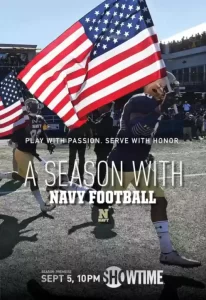

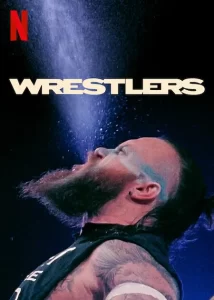



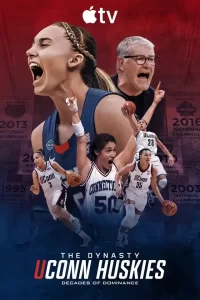
Stay in the loop
Follow SPMA
New jobs, interviews and sport-industry news in your feed.






6872140 new jobs in sport this week
Teams, leagues, agencies and brands in Canadain the USAin Canada & the USA are hiring. Find your next role, or let new ones come to you.
Just posted
 Content Creation InternSport Management Hub · Toronto, ON★ Featured
 Marketing InternLUG Sports Group · Remote1 hour ago
 Sales & Business Development InternWager Chatter · Toronto, ON1 hour ago
 Inside Sales Representative (Seasonal Position)Myrtle Beach Pelicans · Myrtle Beach, SC1 hour ago
 Director, FinanceFront Office Sports · New York, NY21 hours ago
 Staff Engineer, Balance and Ledger - CoreFanatics Betting & Gaming · New York, NY23 hours ago
- Content Creation InternSport Management Hub · Toronto, ON★ Featured
- Inside Sales Representative (Seasonal Position)Myrtle Beach Pelicans · Myrtle Beach, SC1 hour ago
- Marketing InternLUG Sports Group · Remote1 hour ago
