



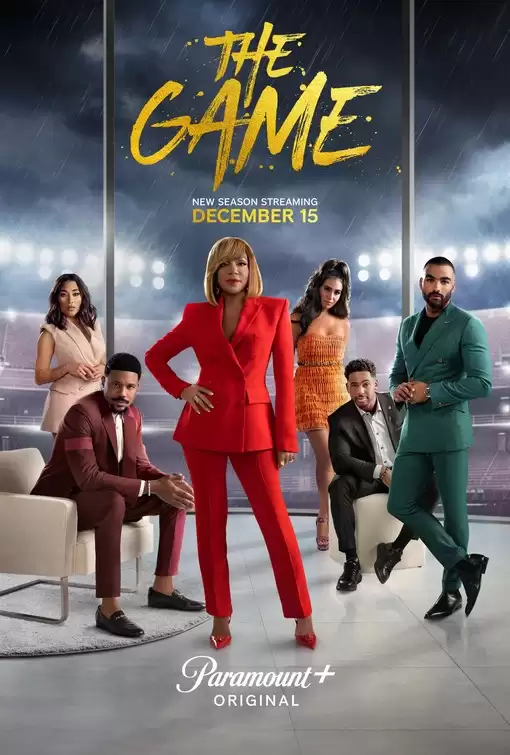
A spin-off of Girlfriends, The Game premiered on The CW in 2006 and later continued on BET, a move that became an important part of the show's own broadcasting history. Tia Mowry's Melanie enters the story as an aspiring medical student whose relationship with football player Derwin Davis, played by Pooch Hall, makes her reconsider what a future with him might entail. Wendy Raquel Robinson's Tasha Mack, Hosea Chanchez's Malik Wright and Brittany Daniel's Kelly Pitts give the series other vantage points on the same professional team. The programme's setting is fictional, but the people around the players are constantly negotiating roles that real professional sport makes difficult to separate.
The Shelf · TV Series
The Game
Released 2006Curated by SPMA Hub because sport culture lives beyond the field.
The Game follows Melanie Barnett into the world of professional football and quickly dismantles the notion that a player's partner enjoys an uncomplicated life of money and glamour. Created by Mara Brock Akil, the 2006 series places relationships, public image and precarious careers around the fictional San Diego Sabers. Its football business matters because every private decision seems to have an audience.
The Shelf
The Gist
Why it caught our attention
The Details
Quick facts
- Format
- TV Series
- Released
- 2006
- Genre
- Drama
- Relevant Sport
- American Football

At A Glance
The Game follows Melanie Barnett into the world of professional football and quickly dismantles the notion that a player's partner enjoys an uncomplicated life of money and glamour. Created by Mara Brock Akil, the 2006 series places relationships, public image and precarious careers around the fictional San Diego Sabers. Its football business matters because every private decision seems to have an audience.

About This Shelf Item
About The Game
Derwin's career does not remain neatly on the field. Melanie's ambitions, his relationships and the scrutiny that accompanies a professional contract become simultaneous sources of pressure. Tasha operates as a mother and manager, willing to intervene in Malik's public and professional decisions. Kelly's marriage to veteran player Jason Pitts exposes the price of attaching family stability to a career that has a relatively short shelf life. The series can be melodramatic and occasionally pushes its characters toward spectacular confrontations, but its basic insight is more durable: the support system around an athlete is never as simple as the camera's glimpse of a person sitting in the stands.
The characters' arguments also expose differences in what they consider success. Medical education, family loyalty, independence and public recognition compete with professional football's schedule. Rather than making every character subordinate to a game result, The Game asks what the other ambitions cost. That choice gives the series a reason to exist beyond the appeal of sports celebrity. Its long run across two networks also allowed changes in the characters' status to feel less tidy than a single-season romance plot. Some storylines are heightened television, not a documentary account of an actual club, and should be read that way.

Why It Belongs
The Sport Connection
Sports organizations often present athletes as individual brands, while contract negotiations, agent relationships, partners and family decisions shape what those brands can sustain. The Game is especially alert to image management and the way public status changes personal bargaining power. Tasha's dual roles make the question of representation concrete: who is advising an athlete, and whose interests are being served? The series also has a media-business story of its own, having found a substantial audience after moving from The CW to BET.

Our Recommendation
Why Watch The Game
Watch for the supporting characters rather than only the athletes. Tasha's management instincts, Melanie's resistance to disappearing inside Derwin's career and Kelly's assessment of life after football give the story its most interesting tensions. It works well for discussions of player representation, relationships and athlete image. Viewers seeking accurate football play diagrams will not find them; this is a drama about the business and emotional environment in which a player works.
Final Thoughts
Arash's Final Thoughts
The Game lasts because it recognizes that professional sport creates an entire social world, not merely employment for the people on the roster. Its soapier turns can obscure the point, yet the best character conflicts remain grounded in unequal opportunities, money and attention. The show's contribution to the SPMA Shelf lies in that extended portrait of the people whose lives are changed by football without ever appearing on a stat sheet.
Keep Exploring
Similar TV Series on The Shelf











Same sport
More American Football on The Shelf







Stay in the loop
Follow SPMA
New jobs, interviews and sport-industry news in your feed.






Hiring now on Sports Hired
6872140 new jobs in sport this week
Teams, leagues, agencies and brands in Canadain the USAin Canada & the USA are hiring. Find your next role, or let new ones come to you.
319318637 open jobs2,3063,6215,927 organizations
Just posted
 Content Creation InternSport Management Hub · Toronto, ON★ Featured
 Marketing InternLUG Sports Group · Remote1 hour ago
 Sales & Business Development InternWager Chatter · Toronto, ON1 hour ago
 Inside Sales Representative (Seasonal Position)Myrtle Beach Pelicans · Myrtle Beach, SC1 hour ago
 Director, FinanceFront Office Sports · New York, NY21 hours ago
 Staff Engineer, Balance and Ledger - CoreFanatics Betting & Gaming · New York, NY23 hours ago
- Content Creation InternSport Management Hub · Toronto, ON★ Featured
- Inside Sales Representative (Seasonal Position)Myrtle Beach Pelicans · Myrtle Beach, SC1 hour ago
- Marketing InternLUG Sports Group · Remote1 hour ago
Copied
