The Shelf · Movies

Little Giants

Released 1994Curated by SPMA Hub because sport culture lives beyond the field.

Becky O'Shea is a better football player than several boys on her town's youth team. Her uncle, the celebrated former player who coaches it, declines to pick her. Little Giants turns that familiar act of exclusion into a family comedy about who gets to play, who gets to decide and what happens when rejected children build a team of their own.

Arash Sayed
Covered by Arash Sayed
The Shelf
Little Giants

The Gist

Why it caught our attention

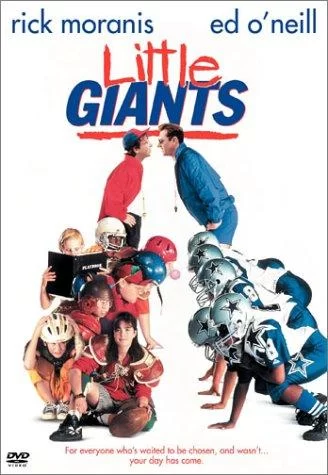
Duwayne Dunham's 1994 comedy stars Rick Moranis as Danny O'Shea and Ed O'Neill as Kevin, his successful older brother. Their rivalry is old, but it acquires new urgency when Kevin excludes Danny's daughter Becky, played by Shawna Waldron, from his Pop Warner squad. Danny assembles the overlooked children into a rival team, setting up a local contest that matters enormously to families even though nobody is getting paid to watch it.

The film's charm comes from identifying a problem familiar to youth sport without pretending the programme itself is evil. Kevin wants an excellent team and has defined excellence in narrow, conventional terms. Danny has much less experience coaching, but he sees the talent and enthusiasm of children his brother overlooks. Both men bring their childhood rivalry onto a field that ought to belong to the players.

The Details

Quick facts

Format
Movie
Released
1994
Genre
Drama
Relevant Sport
American Football

At A Glance

Becky O'Shea is a better football player than several boys on her town's youth team. Her uncle, the celebrated former player who coaches it, declines to pick her. Little Giants turns that familiar act of exclusion into a family comedy about who gets to play, who gets to decide and what happens when rejected children build a team of their own.

About This Shelf Item

About Little Giants

Becky, nicknamed Icebox, is the film's most compelling athlete. She tackles hard and reads the game, yet Kevin's selection process puts her gender ahead of those skills. Her response is not a speech about opportunity. She is furious because she wanted to play and knows she was good enough. That uncomplicated grievance gives the comedy something solid underneath its broad jokes.

Moranis makes Danny a believable reluctant coach: a father who begins by defending his daughter and ends up responsible for a collection of children with different anxieties and very uneven athletic ability. The Little Giants' practices are chaotic partly because their coach has not prepared himself for the job. Kevin's established Cowboys look orderly, but the film gradually reveals the costs of sorting children into winners and leftovers before a ball is snapped.

The movie also explores the uncomfortable space between team identity and a child's attempt to be accepted. Becky is good at football, but she worries that excelling at it might make her less attractive to a boy she likes. That conflict belongs to the film's period and its family-comedy conventions. It is also a recognizable account of the social pressures that can push girls away from activities they enjoy. The climax insists that Becky should not have to purchase belonging by pretending to be a different person.

Why It Belongs

The Sport Connection

Little Giants is especially relevant to grassroots sport administration. Selection procedures are rarely neutral simply because they are familiar. A coach can believe he is choosing on merit while building in assumptions about gender, size or appearance before evaluating ability. Kevin's authority is reinforced by his former sporting reputation, which makes his decisions difficult for parents and children to challenge.

Danny's response is imperfect but revealing: when an existing programme excludes participants, another programme may emerge to serve them. Community sport needs inclusive entry points, trained volunteers and a genuine account of what participation is for. A single elite youth team cannot carry every purpose at once. The movie makes those competing purposes visible through two brothers who cannot stop measuring themselves against each other.

Our Recommendation

Why Watch Little Giants

Watch it for Waldron's fearless Becky and the contrast between Moranis's anxious decency and O'Neill's practiced authority. The slapstick and underdog routines are familiar, and the winning play is designed for cheers rather than tactical scrutiny. Yet the children's fears and peculiarities give the film a human scale that separates it from a generic football fantasy.

It is a useful film for families, youth coaches and anyone thinking about how early selection can shape who remains involved in sport. The kids should not have to prove themselves extraordinary to earn a place. Little Giants succeeds when it remembers that simple fact.

Arash Sayed

Final Thoughts

Arash's Final Thoughts

The contest between the Cowboys and the Little Giants matters less than the decision that created two teams in the first place. Kevin sees the players who fit his image of a winner; Danny is forced to see the ones left standing outside it. The film lets that argument play out in jokes, sibling resentment and improbable football. Its lasting appeal rests on a more serious question about youth sport: whose enthusiasm counts before anybody knows the score?