Career Guide
About This Role
A Head Coach leads a team’s sporting program: the training plan, team selection, tactics, standards of conduct and preparation for competition. The job is broader than calling plays. A head coach sets priorities for the season, directs assistant and specialist coaches, explains decisions to athletes, and does all of it inside the organization’s budget, eligibility rules and competition schedule.
The role changes sharply with the level. At a community club or high school, the head coach may also book gyms, drive the van and manage registrations. At a college, the job adds recruiting, academic monitoring and fundraising. In professional and national-team sport, the head coach works inside a larger staff of assistants, analysts, performance and medical specialists, and reports to a general manager, sporting director or federation.
What a head coach does day to day
A competitive week usually follows a cycle: review the last game, decide what to fix, plan training loads with the performance staff, prepare a game plan for the next opponent, then compete and review again. In-season, much of that work happens before athletes ever arrive at practice.
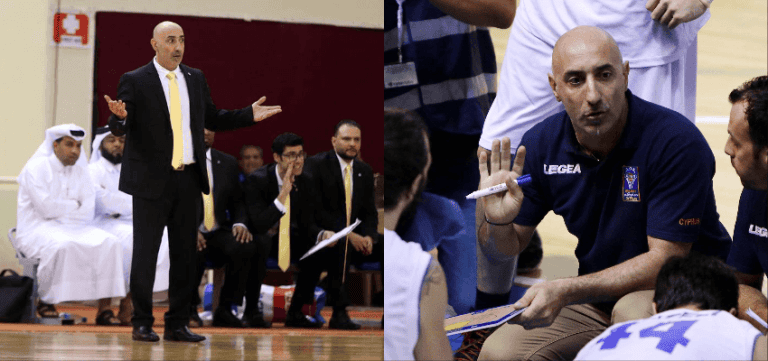
When SPMA interviewed Panos Yiannaras, Head Coach of Qatar’s national basketball team (2020), he described days without national-team games as office planning, staff meetings, and attending league games across youth age groups so he knew which young players were developing. Game days, by contrast, meant double practices, meetings with associates and players, scouting and video analysis from early morning until late at night.
At the college level, the day is more fragmented. Kendel Ross, Head Coach of Lambton College women’s basketball (2019), told SPMA her days moved between teaching at the college, training strength and conditioning clients, helping her former high school coach at practice, and running her own varsity practice, with weekends filled by recruiting and games. That mix is common outside professional sport: coaching is one responsibility among several.
Florence Schelling, then Head Coach of Switzerland’s U18 women’s national team, described what makes the job worthwhile to SPMA in 2019: “The most rewarding aspect of being the Head Coach of Switzerland’s U18 Women’s National Hockey Team is that I get to see and be part of the player’s development, as hockey players but also their development into adulthood.”
What a head coach decides, and what sits with others
The head coach normally owns playing style, practice design, team selection and in-game decisions. Responsibilities shared with others typically include player recruitment (with a general manager, recruiting coordinator or scouts), training load (with the Strength and Conditioning Coach and Head of Performance) and athlete welfare (with player care and safeguarding staff).
Some decisions belong to others entirely. Licensed clinicians decide whether an injured or concussed athlete is cleared to play. Contracts, salary-cap decisions and trades usually sit with management. Eligibility is governed by league and association rules, such as those administered by a U SPORTS Eligibility Coordinator in Canadian university sport.
Occasionally one person holds both sides of that line. Chantal Vallée (2019) was Head Coach of the University of Windsor women’s basketball team and, in the spring and summer, both Head Coach and General Manager of the CEBL’s Hamilton Honey Badgers when SPMA spoke with her. Combined roles exist, but they make it more important to be clear which decision is a coaching call and which is a roster and budget call.
Leading a staff, not just a team
At most levels above community sport, the head coach is also a manager of people. That means assigning clear responsibilities to assistants (one may own defence, another player development, another opponent scouting), running efficient staff meetings, and giving specialists room to use their expertise. A Performance Analyst or Video Analyst is most useful when the head coach asks a specific question rather than requesting “everything on the opponent.”
Head coaches also carry the team’s culture. They set expectations about punctuality, effort, conduct on social media and treatment of officials, then apply those expectations consistently, including to their best players. Inconsistency is usually noticed by athletes before anyone else.
Skills employers look for in a head coach
Hiring committees look for evidence rather than reputation alone:
- A coherent season plan showing phases, priorities and how training adapts to the competition calendar.
- Player development records: athletes who improved, moved up a level or earned scholarships, with the coach’s specific contribution explained honestly.
- Communication under pressure, often tested through interview scenarios about a selection dispute or a parent complaint.
- Staff leadership, including how assistants were developed and how disagreements were resolved.
- Certification appropriate to the sport and level. In Canada, the National Coaching Certification Program (NCCP) is the standard pathway; many sports and leagues set their own requirements on top of it.
How to become a head coach
Most head coaches spend years as assistants first. Florence Schelling (2019), a four-time Olympic goaltender, retired from playing in 2018, joined Switzerland’s U18 women’s national team as an Assistant Coach that August, and was promoted to Head Coach in July 2019. Even with an elite playing record, the assistant year came first.
Practical routes include age-group and high school coaching, volunteer assistant roles at colleges, Player Development Coach positions, and programs that help athletes move into coaching. Coaching associations are useful starting points; SPMA’s profile of Jeremy Cross of the Coaches Association of Ontario (2019) explains how provincial bodies support coach development.
Keep a portfolio: sample practice plans showing objectives and progressions, a season review you wrote, and short video clips of your teaching. When you interview, ask who controls recruitment, how coaching performance is reviewed, what support staff exist, and what authority the head coach has over hiring assistants.
Head coach jobs on SPMA: what the postings show
Since late 2023, SPMA has listed 30 jobs that match this role, including 23 in Canada and 7 in the United States. Employers used titles such as “Head Coach, Men’s Volleyball”, “Head Coach, Women’s Basketball”, “Head Coach – Women’s Hockey” and “Head Coach, Women’s Field Hockey”. Organizations that posted them include Douglas College Athletics, University of Toronto Varsity Blues, Queen’s University, Athletics & Recreation, Brock University – Brock Sports and University of Ottawa.
None of these postings listed pay, so use the official wage data below as the guide.
Source: SPMA’s database of 3,289 sport job postings in Canada and the U.S., late 2023 to November 2026, matched by job title. Pay figures use the midpoint of each posted range and exclude postings without pay. See current head coach openings on SPMA.
Head coach salary and job outlook
Pay for Head Coach positions depends heavily on the level of sport, the size of the organization and the region. The closest occupation tracked by the U.S. Bureau of Labor Statistics is coaches and scouts, which had a median annual wage of $47,320 in May 2025 across all industries, with employment projected to grow by 6% from 2025 to 2035. Many coaching positions, especially in youth, high school and university sport, are part-time or seasonal.
Treat any national figure as a broad benchmark rather than a sport-specific salary. Jobs with junior, minor-league, university and nonprofit sport organizations often pay below all-industry figures, while senior roles at major professional teams and leagues can pay more. In Canada, use Job Bank’s wage search to check current wages for the closest occupation in your province, and compare with pay ranges in live postings on SPMA’s jobs board.
Common career questions
How much does a head coach make?
Pay varies widely by level of sport and organization. The closest U.S. government occupation category, coaches and scouts, had a median annual wage of $47,320 in May 2025 across all industries, but many sport jobs pay less, especially at junior, minor-league, university and nonprofit organizations.
What does a head coach do day to day?
A head coach plans and runs practices, reviews games, prepares game plans, selects the team and manages assistant coaches. Depending on the level, the day may also include recruiting, administration, media duties and meetings with performance and medical staff.
How do you become a head coach?
Most people start as assistant or age-group coaches, earn the certifications their sport requires, and build a record of developing athletes. Promotions usually come from within a program or through a network built across several assistant roles.
Does a head coach have to be a former professional athlete?
No. Playing experience can help with credibility and understanding, but coaching education, communication, organization and a track record of player development matter more. Some competitions set specific licensing requirements instead.
What is the difference between a head coach and a general manager?
The head coach decides how the team trains and plays. The general manager usually builds the roster through recruitment, contracts and trades, and manages the team operations budget. In some smaller organizations one person does both.
Who decides whether an injured player can return?
The qualified medical team makes return-to-play decisions under the organization’s procedures. The coach adjusts selection and practice participation based on that guidance.
Further reading and qualification checks
For occupational outlook and pay data, see the U.S. Bureau of Labor Statistics Coaches and Scouts profile. Related SPMA guides: Assistant Coach, Athletic Director and Mental Performance Consultant. Always check the exact qualifications for a vacancy with its employer and governing body.