Career Guide
About This Role
A Media Relations Manager is the link between a sport organization and the journalists, broadcasters and content creators who cover it. They arrange interviews and press conferences, write releases and game notes, manage credentials and press areas, prepare athletes and coaches for media, answer reporters’ questions accurately, and help the organization handle difficult stories. The goal is fair, accurate coverage and access that works for both the media and the team.
In professional sport, media relations usually sits within a communications department, sometimes split between the playing side (often called basketball, hockey or football communications) and the business side. In university athletics, similar work is done by a Sports Information Director.
What a media relations manager does day to day
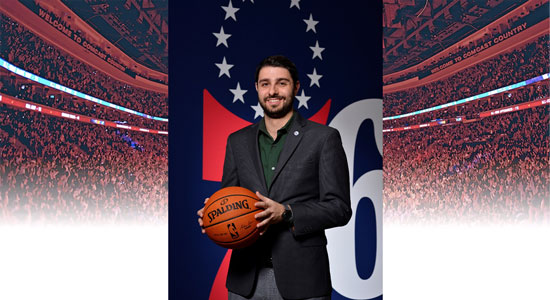
The day is shaped by the schedule: practice day, game day at home or away, or an off day. Rob King, Manager of Media Relations for the Philadelphia 76ers (2021), told SPMA he supported the basketball communications staff, assisted reporters covering the team daily, wrote all basketball press releases and stayed connected to the front office every day. His department coordinated media availabilities for players, coaches and staff.
The intermediary role is central. Chris Balenovich, Manager of Football Media for the Toronto Argonauts (2020), described dealing directly with everyone covering the team, from national outlets such as TSN, the Canadian Press and CBC to local papers, blogs, Latin TV networks and student journalists, and organizing interviews so they were comfortable and accessible for both player and reporter.
Some teams add unusual challenges. Erik Grosman, Director of Media Relations for the Toronto Wolfpack (2020), a transatlantic rugby league club, described starting each Toronto morning five hours behind events in the UK, relying on the head coach and UK-based staff for overnight news.
Rob King told SPMA in 2021: “As Manager, Media Relations for the Philadelphia 76ers, my role is to support our basketball communications staff, while assisting media covering the team on a daily basis.” Chris Balenovich of the Toronto Argonauts stressed presence: “Being at practice and around those media members covering the team helps me build relationships with them which is so crucial in this business and one of the biggest things I learned from my Raptors internship.”
What a media relations manager decides, and what sits with others
The media relations manager owns media access arrangements, accurate releases and notes, credential policy, interview preparation and day-to-day relationships with reporters.
What can be disclosed about injuries, contracts and discipline is decided by management, the coaching staff and medical staff, within league rules. Crisis messaging usually involves the Communications Manager or Public Relations Manager and senior leadership. Leagues set media access rules, such as post-game availability requirements, which teams must follow.
Skills employers look for in a media relations manager
- Fast, accurate writing: releases, notes and statements.
- News judgment: knowing what will become a story.
- Relationship building with media and with players and coaches.
- Composure during controversy.
- Organization for credentials, availabilities and travel.
- Knowledge of the sport and its records for notes and context.
How to become a media relations manager
Many media relations staff start in university athletics communications, junior or minor-league team communications, or journalism. Internships with professional team communications departments are competitive but common entry points. Building a portfolio of game notes, releases and features helps.
When interviewing, ask whether the role covers the playing side, business side or both, how travel works, who approves sensitive information, and how the team handles media access.
Game day in the press box
On game day, media relations staff run the press operation. Typical duties include preparing game notes and statistics packages, managing the press box and seating, distributing credentials, coordinating pre-game availabilities, and running post-game interviews with coaches and players.
Between games, the work is about access and accuracy: setting up interviews, answering reporters’ questions, preparing players and coaches for media, keeping roster and biography information correct, and writing news releases. Many teams also expect media relations staff to support social media and internal content teams.
Relationships with reporters are built over time and depend on reliability. Returning calls, being clear about what can and cannot be shared, and treating all outlets fairly are what make media relations staff trusted. College sports communications offices and team internships are the usual starting points.
Media relations manager jobs on SPMA: what the postings show
Since late 2023, SPMA has listed 8 jobs that match this role, including 1 in Canada and 7 in the United States. Employers used titles such as “Media Relations Intern”, “Associate, Media Relations”, “Spring Training Intern, Media Relations” and “Coordinator, Communications and Media Relations”. Organizations that posted them include Baltimore Orioles, Canada Games Council, Beloit Snappers, Florida Everblades and Buffalo Bisons.
None of these postings listed pay, so use the official wage data below as the guide.
Source: SPMA’s database of 3,289 sport job postings in Canada and the U.S., late 2023 to November 2026, matched by job title. Pay figures use the midpoint of each posted range and exclude postings without pay. See current media relations manager openings on SPMA.
Media relations manager salary and job outlook
Pay for Media Relations Manager positions depends heavily on the level of sport, the size of the organization and the region. The closest occupation tracked by the U.S. Bureau of Labor Statistics is public relations specialists, which had a median annual wage of $74,750 in May 2025 across all industries, with employment projected to grow by 2% from 2025 to 2035.
Treat any national figure as a broad benchmark rather than a sport-specific salary. Jobs with junior, minor-league, university and nonprofit sport organizations often pay below all-industry figures, while senior roles at major professional teams and leagues can pay more. In Canada, use Job Bank’s wage search to check current wages for the closest occupation in your province, and compare with pay ranges in live postings on SPMA’s jobs board.
Common career questions
How much does a media relations manager make?
Pay varies widely by level of sport and organization. The closest U.S. government occupation category, public relations specialists, had a median annual wage of $74,750 in May 2025 across all industries, but many sport jobs pay less, especially at junior, minor-league, university and nonprofit organizations.
What does a media relations manager do in sports?
A sports media relations manager arranges media access, writes releases and game notes, manages credentials, prepares players and coaches for interviews and helps the organization respond to reporters accurately.
Is media relations the same as public relations?
Media relations is part of public relations. It focuses specifically on working with journalists and outlets.
Do media relations managers travel with teams?
Often, yes, especially for professional teams, so road media logistics are handled on site.
How do you get into sports media relations?
Start in university athletics communications, team internships or journalism, then build writing and media experience.
Further reading and qualification checks
Related SPMA guides: Communications Coordinator, Sports Broadcaster and Social Media Manager. SPMA’s profile of Al Cameron of Curling Canada (2020) describes moving from journalism into national sport media relations.