




The 2006 first edition, subtitled Managing Organizational Communication, establishes public relations as a strategic function within sport. It begins with definitions, organisational goals and campaign planning before moving into specific forms of practice. That order is significant. Writing a release or arranging a news conference makes more sense when the reader understands the relationship the activity is intended to serve. The authors also distinguish public relations from a narrow promotional role. A sport organisation needs recognition, but it also needs reliable connections with people whose interests may differ from its immediate marketing objectives. The textbook gives those relationships a place within routine management.
The Shelf · Books
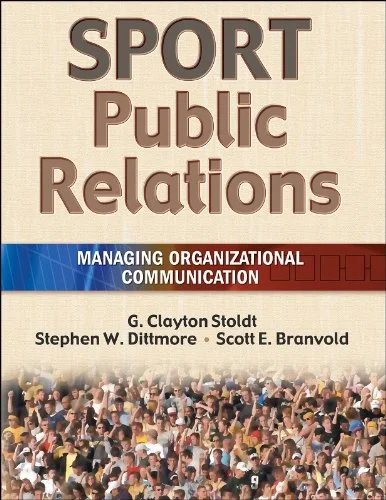
Sport Public Relations: Managing Organizational Communication
By G. Clayton Stoldt, Stephen W. Dittmore & Scott E. BranvoldReleased 2006Curated by SPMA Hub because sport culture lives beyond the field.
A sport organisation communicates with far more people than the journalists covering its next game. Sport Public Relations examines the relationships behind that wider responsibility, connecting media work with employees, donors, supporters and communities. G. Clayton Stoldt, Stephen W. Dittmore and Scott E. Branvold present communication as part of how an organisation is managed.
The Shelf
The Gist
Why it caught our attention
The Details
Quick facts
- Format
- Book
- Author
- G. Clayton Stoldt, Stephen W. Dittmore & Scott E. Branvold
- Published
- 2006
- ISBN
- 9780736053402
- Genre
- Non-Fiction

At A Glance
A sport organisation communicates with far more people than the journalists covering its next game. Sport Public Relations examines the relationships behind that wider responsibility, connecting media work with employees, donors, supporters and communities. G. Clayton Stoldt, Stephen W. Dittmore and Scott E. Branvold present communication as part of how an organisation is managed.

About This Shelf Item
About Sport Public Relations: Managing Organizational Communication
Media relations receive detailed attention through information services, interviews, news conferences, media guides and event arrangements. The practical emphasis helps readers see the work behind apparently straightforward communication. A useful announcement depends on accurate material, an understanding of the recipient and a process for providing answers. Those requirements connect communication craft with organisational preparation.
The book then broadens into crisis planning, direct contact, charitable programmes and communication with internal and external groups. Its appendixes include examples such as college football notes, a women's basketball media guide, a crisis communication plan and a minor league baseball community relations plan. These documents make the differences between functions tangible. A supporter looking for event information, an employee needing clarity and a community partner considering a programme may all be dealing with the same organisation, but they are not asking it the same questions.

Why It Belongs
The Sport Connection
For someone entering a sport communication role, the most useful shift is from producing messages to understanding responsibilities. The chapter on crisis communication, for example, places advance planning beside the pressure of responding in public. The sections on employees, donors and government relationships demonstrate that reputation is affected by interactions that may never become a headline. That perspective matters in organisations where a small communications staff serves many departments. The text offers a way to explain why the job involves more than publicity and why the quality of internal decisions affects what can credibly be said outside the organisation.

Our Recommendation
Why Read Sport Public Relations: Managing Organizational Communication
The book is intended for students and developing practitioners who want a broad introduction to the field. Its sample materials and learning activities make it suitable for structured study, especially when readers compare documents and discuss the audience each one serves. The selected edition also has historical value. Published in 2006, it treats the internet within the communication environment of that period, before many later platform practices became routine. Readers should therefore distinguish lasting principles of relationship management from the channels through which a particular example was delivered. That distinction can itself become a useful exercise in understanding how a profession changes while retaining core responsibilities.
Final Thoughts
Arash's Final Thoughts
Sport Public Relations gives communication a full organisational setting. The authors show why preparation, accurate information and attention to different groups belong together, and why a polished public message cannot substitute for the relationship behind it. Its practical documents are most valuable when read with that larger purpose in mind. The book provides a foundation for recognising what a sport communicator is responsible for, whom the work affects and how a communication decision connects with the organisation's behaviour before anyone writes the first sentence.
Keep Exploring
Similar Books on The Shelf









Stay in the loop
Follow SPMA
New jobs, interviews and sport-industry news in your feed.






Hiring now on Sports Hired
7679155 new jobs in sport this week
Teams, leagues, agencies and brands in Canadain the USAin Canada & the USA are hiring. Find your next role, or let new ones come to you.
343319662 open jobs2,8676,2869,153 organizations
Just posted
 Digital Content & Social Media InternSport Management Hub · Toronto, ON★ Featured
 Senior Software Engineer, Bet EnginePENN Interactive · Remote2 hours ago
 High Performance Intern (Winter 2027)Rugby Ontario · Toronto, ON2 hours ago
- Account ExecutivePENN Interactive · Los Angeles, CA2 hours ago
 Baseball Operations Intern (Summer 2027)Royal Oak Leprechauns · Royal Oak, MI2 hours ago
- Digital Content & Social Media InternSport Management Hub · Toronto, ON★ Featured
- Account ExecutivePENN Interactive · Los Angeles, CA2 hours ago
- High Performance Intern (Winter 2027)Rugby Ontario · Toronto, ON2 hours ago
Copied
