The Shelf · Books

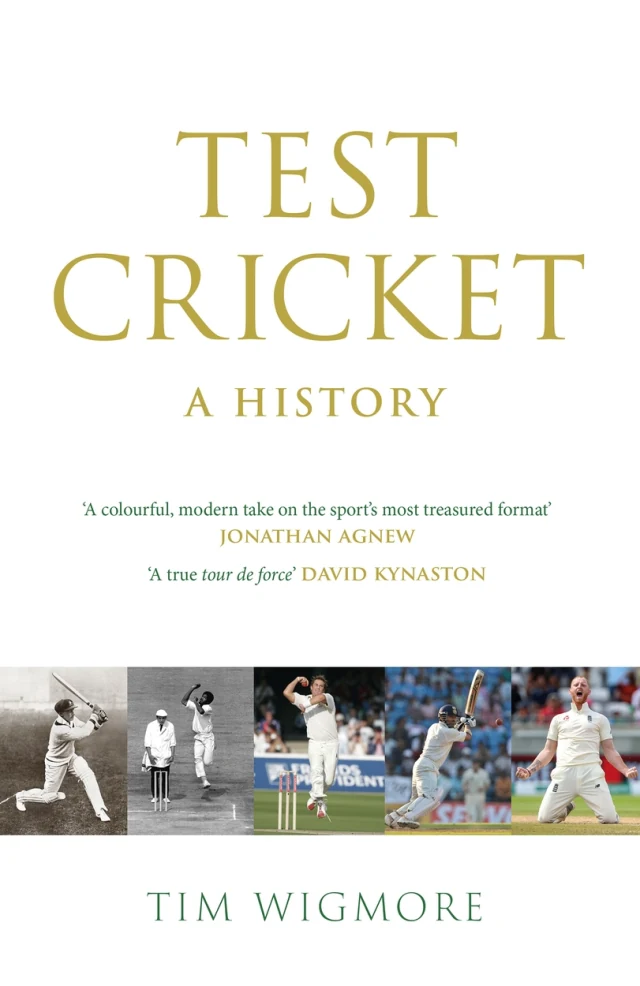
Test Cricket: A History

By Tim WigmoreReleased 2025Curated by SPMA Hub because sport culture lives beyond the field.

Five days of cricket can hold a nation's hopes, a changing balance of power and a very particular argument about how to play. Tim Wigmore's Test Cricket: A History follows that unusually expansive format from 1877 onward. Great players and memorable series sit inside a wider account of the societies that made the game their own.

Arash Sayed
Covered by Arash Sayed
The Shelf
Test Cricket: A History

The Gist

Why it caught our attention

Wigmore's 2025 history spans the development of Test cricket across countries and generations. Its cast includes familiar figures such as Sachin Tendulkar, Shane Warne and Ian Botham, while new interviews bring players including Michael Holding, Rahul Dravid and Pat Cummins into the account. The scale permits connections that a single-team history cannot easily make.

The book moves between action on the field and the conditions surrounding it. That is an appropriate approach to a format whose appeal depends partly on duration. A Test allows an advantage to change, a strategy to unravel and a performance to acquire meaning over several days. Its history deserves a similarly patient view.

The Details

Quick facts

Format
Book
Author
Tim Wigmore
Published
2025
ISBN
9781529428612
Relevant Sport
Cricket

At A Glance

Five days of cricket can hold a nation's hopes, a changing balance of power and a very particular argument about how to play. Tim Wigmore's Test Cricket: A History follows that unusually expansive format from 1877 onward. Great players and memorable series sit inside a wider account of the societies that made the game their own.

About This Shelf Item

About Test Cricket: A History

Bodyline and Bazball mark two very different moments in arguments about how the game should be played. Placing them within one history makes tactical innovation visible as a recurring source of friction. An approach admired as bold by its advocates can be regarded as a threat to the game by opponents, especially when national identity becomes attached to the dispute.

The rise of West Indies gives the international story another centre of gravity. Test cricket was never simply a stable tradition handed down unchanged. Competitive authority moved, and players from different societies made the format speak to their own ambitions. That movement is essential to understanding why particular victories mattered well beyond the score.

Wigmore's interviews also put lived experience alongside the historical record. A great player's explanation of a contest can illuminate decisions and pressures that statistics leave unresolved. At the same time, the long sweep allows the reader to see each individual career within changes that no single player controlled: opposition strength, scheduling, playing conditions and the organisation of international cricket.

Why It Belongs

The Sport Connection

The sport-business question running through this history is how a demanding format sustains the conditions it needs. Test cricket asks for time from players, spectators, broadcasters and host organisations. Its future therefore depends on decisions about resources as well as affection for its past.

For administrators, the international scope matters. Preserving the strongest bilateral contests alone would not preserve the full sporting world described here. A history that includes several centres of excellence encourages readers to consider how competitive opportunity is distributed and what happens when some countries have fewer chances to develop or display it.

The book also gives context to discussions of innovation. New tactics do not necessarily erase tradition; they can be part of the process through which a long-established competition remains alive. Wigmore's chronology helps distinguish the rules that define Test cricket from habits that previous generations also disputed or changed.

Our Recommendation

Why Read Test Cricket: A History

Readers who know the famous names but want to connect their eras will have a clear reason to spend time with this history. It also works for cricket followers interested in why certain series acquired national importance, and for sport students studying the relationship between format, audience and institutional support.

The breadth is the attraction. A reader can move from a celebrated performance to the larger circumstances that made it possible, then return to the match with a fuller understanding of what was at stake. That movement gives familiar cricket stories renewed interest.

Arash Sayed

Final Thoughts

Arash's Final Thoughts

Test Cricket: A History treats the format as an evolving international achievement. Its survival has depended on people repeatedly finding new reasons to value it, often in circumstances very different from those of its beginnings. Wigmore's wide view makes the pleasure of the game inseparable from the work required to keep that possibility open.