The Shelf · Books

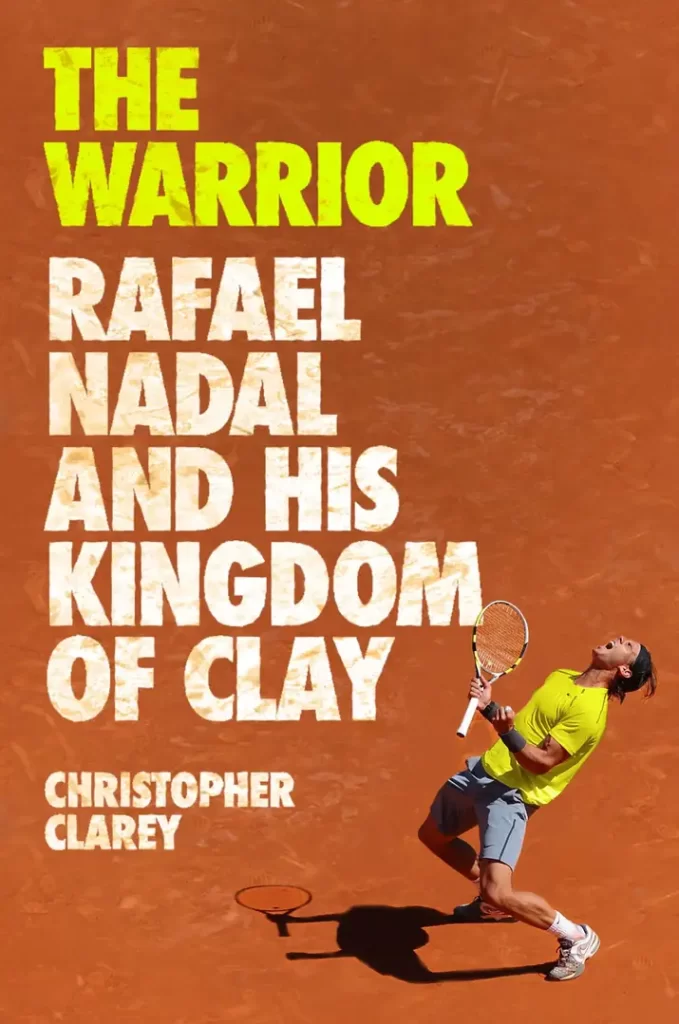
The Warrior: Rafael Nadal and His Kingdom of Clay

By Christopher ClareyReleased 2025Curated by SPMA Hub because sport culture lives beyond the field.

Fourteen French Open titles make Rafael Nadal's relationship with Roland Garros unlike almost anything else in individual sport. Christopher Clarey's The Warrior examines how that achievement was built. Clay supplies the setting, but technique, temperament, physical demands and the people around Nadal give the biography its larger story.

Arash Sayed
Covered by Arash Sayed
The Shelf
The Warrior: Rafael Nadal and His Kingdom of Clay

The Gist

Why it caught our attention

Published in 2025, The Warrior follows Nadal through the surface on which his abilities found their most dominant expression. Clarey draws on interviews conducted over many years, including conversations with Nadal, members of his team and rivals such as Roger Federer. The approach places a remarkable record inside a sustained professional life.

Nadal also won major titles on grass and hard courts, so the emphasis on clay is a deliberate choice of focus. It allows the book to examine how an athlete's skills interact with particular competitive conditions. Roland Garros becomes more than a venue; it is the repeated test around which the account is organised.

The Details

Quick facts

Format
Book
Author
Christopher Clarey
Published
2025
ISBN
9781538759134
Relevant Sport
Tennis

At A Glance

Fourteen French Open titles make Rafael Nadal's relationship with Roland Garros unlike almost anything else in individual sport. Christopher Clarey's The Warrior examines how that achievement was built. Clay supplies the setting, but technique, temperament, physical demands and the people around Nadal give the biography its larger story.

About This Shelf Item

About The Warrior: Rafael Nadal and His Kingdom of Clay

Clarey considers the combination of Nadal's topspin forehand, tactical ability and determined approach to competition. On clay, those qualities could make the court feel increasingly difficult for an opponent to escape. The interest lies in how the elements work together, rather than in reducing dominance to effort alone.

Repeated success creates its own demands. Returning to a tournament as the established favourite means carrying a different kind of expectation from the one faced on a first successful visit. Each season offers fresh opponents and circumstances, even when spectators expect the familiar outcome. Nadal's record makes the work of repetition a subject worthy of close attention.

The interviews with rivals help show what that dominance felt like from the other side of the net. A great champion's biography gains depth when achievement is understood as an encounter with other capable people. Their experience can reveal aspects of a player's effectiveness that a list of victories leaves abstract.

The relationship between person and place also gives the book a distinct shape. A career becomes associated with a tournament, and the tournament's own identity changes through the career. Nadal and Roland Garros accumulated meaning together, with each return carrying the memory of previous matches.

Why It Belongs

The Sport Connection

The Warrior offers performance leaders a concrete example of excellence built around a specific competitive environment. Nadal's clay-court success invites attention to the fit between technique, strategy and conditions. It also cautions against describing all success through a single personality trait when the sporting detail is doing essential work.

For event and brand professionals, the Nadal-Roland Garros relationship is equally interesting. An athlete can become part of how an audience recognises and remembers a venue. That connection creates value for the event while also raising questions about how its story continues when the player is no longer competing.

Clarey's long reporting perspective makes the book useful for thinking about sustained careers. A champion's reputation can appear fixed even as the work required to maintain it changes. The biography encourages readers to look at that continuing process, including the contribution of a support team whose efforts are less visible than the decisive point.

Our Recommendation

Why Read The Warrior: Rafael Nadal and His Kingdom of Clay

Tennis readers will appreciate a biography organised around the achievement that most clearly distinguishes Nadal. The focus gives familiar matches a larger context and makes the technical demands of clay part of the personal story.

It is also a strong companion to Clarey's Federer biography. Reading the two together allows different styles of excellence to remain different. Nadal's success does not need to be explained in the vocabulary used for his rival; this book gives his own methods, circumstances and competitive character room to define the account.

Arash Sayed

Final Thoughts

Arash's Final Thoughts

The Warrior makes an astonishing total more understandable without making it ordinary. Fourteen titles still resist easy explanation, but Clarey's attention to the work and relationships behind them gives the number substance. Nadal's kingdom of clay emerges as something repeatedly earned, with every return requiring the champion to meet the contest again.