The Shelf · Books

Winning Ugly

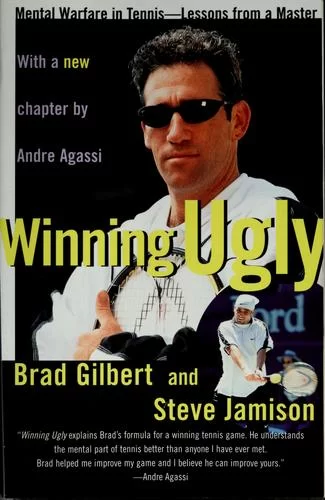
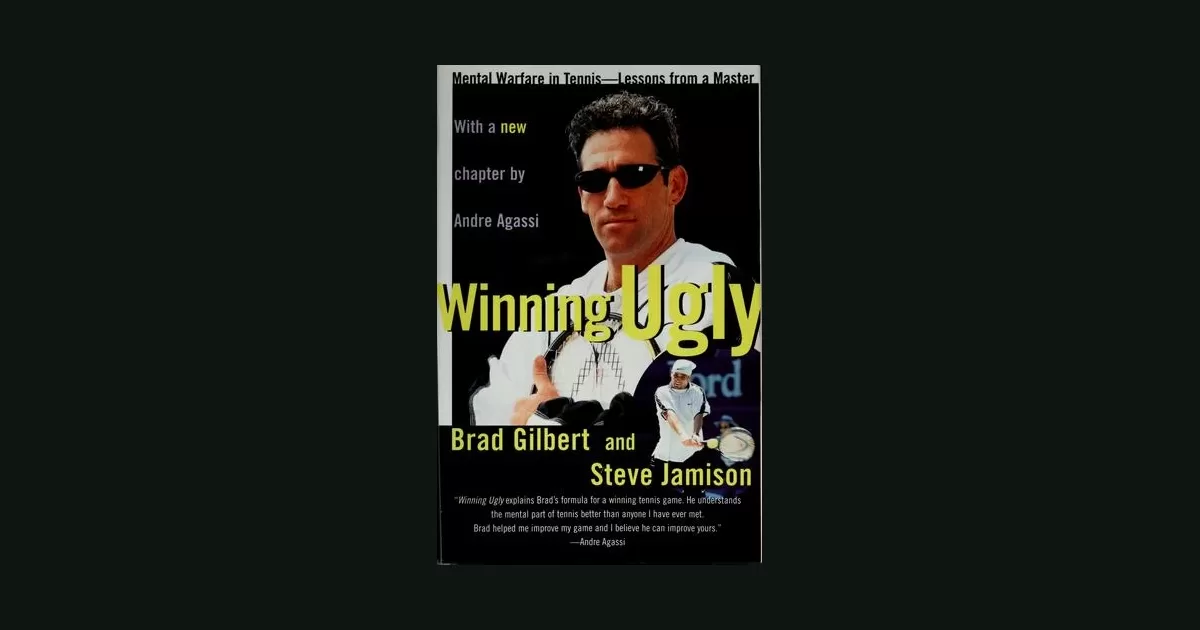
By Brad Gilbert & Steve JamisonReleased 1993Curated by SPMA Hub because sport culture lives beyond the field.

Winning Ugly begins with a practical tennis problem: the player with the prettier strokes does not always win. Brad Gilbert, writing with Steve Jamison, concentrates on the decisions that turn available skills into competitive results. The title is provocative, but the underlying subject is intelligent, observant match play.

Alex Bennett
Covered by Alex Bennett
The Shelf
Winning Ugly
Winning Ugly
The Gist Of Winning Ugly

The Gist

Why it caught our attention

Originally published in 1993, the book draws on Gilbert's experience as a professional player. His interest is the contest as it actually unfolds, including preparation, momentum, an opponent's preferences and the emotional response to inconvenient circumstances. It is less concerned with making every stroke look ideal than with making each choice serve a purpose.

Later editions add material, so examples involving more recent champions should be understood as additions rather than part of the original publication. Across versions, the central proposition remains recognizable: thinking clearly about a match can improve what a player does with the game already available.

The Details

Quick facts

Format
Book
Author
Brad Gilbert & Steve Jamison
Published
1993
Relevant Sport
Tennis

At A Glance

Winning Ugly begins with a practical tennis problem: the player with the prettier strokes does not always win. Brad Gilbert, writing with Steve Jamison, concentrates on the decisions that turn available skills into competitive results. The title is provocative, but the underlying subject is intelligent, observant match play.

About This Shelf Item

About Winning Ugly

The distinction between playing well and competing well gives the book its shape. A player can hit impressive balls while repeatedly choosing patterns that favour the opponent. Conversely, a less spectacular player can make the contest uncomfortable by recognizing what is happening and refusing to cooperate with the other person's preferred rhythm.

That approach depends on observation. The opponent is not simply a ranking, a reputation or an intimidating warm-up. The useful information is more specific: what seems dependable, what produces difficulty, and how those tendencies change under pressure. Gilbert's strategic emphasis turns attention outward instead of allowing every error to become a private crisis.

Preparation belongs within the same argument. Competition begins before the first official point, because expectations and routines influence what a player notices and how quickly they settle. The book treats these apparently peripheral moments as part of performance rather than assuming that technical ability will take care of everything.

The title should not be confused with permission to disregard sportsmanship. Tactical intelligence and an opponent's discomfort are not identical to deception or abuse. A thoughtful reading distinguishes legitimate competitive problem-solving from behaviour that damages the conditions in which both players should be able to compete.

Why It Belongs

The Sport Connection

For coaches, Winning Ugly encourages a useful separation between technical instruction and tactical judgement. A lesson can improve a stroke without teaching a player when to use it. Match preparation needs space for choices, recognition and adaptation, not only repetition of an ideal movement in a controlled setting.

It also raises questions about how development is assessed. If young players receive praise only for attractive attacking shots, they may learn to value appearance above the quality of a decision. A more complete evaluation can recognize patience, recovery and a sensible response to what the opponent is doing.

That does not mean sacrificing long-term learning for every short-term result. The tension is worth discussing explicitly. A developing player may need to practise a new skill under pressure even when an older pattern is more likely to win today. Gilbert's competitive focus is useful when placed within that wider coaching judgement.

Our Recommendation

Why Read Winning Ugly

The book suits recreational competitors as well as readers interested in the thinking behind professional tennis. Its appeal lies in treating a match as an active problem rather than a public test of whether someone possesses enough talent. That change in perspective can make strategy more accessible.

Readers looking primarily for detailed stroke mechanics should recognize the different emphasis. The value here is in how a player approaches opposition, pressure and the sequence of decisions that shape a contest from one point to the next.

Alex Bennett

Final Thoughts

Alex's Final Thoughts

Winning Ugly gives competitive intelligence the attention usually reserved for athletic elegance. Gilbert's argument is that effectiveness deserves to be understood on its own terms. The most useful takeaway is a habit of asking what the situation requires, then making a choice with a reason behind it, rather than trying to win an imaginary contest for the best-looking tennis.