




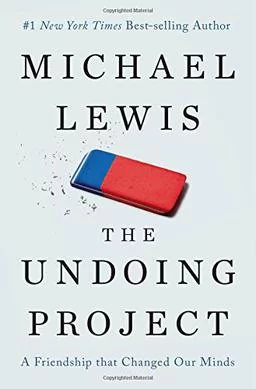
A scout can be confident and wrong. So can an economist, coach or executive. In The Undoing Project: A Friendship That Changed Our Minds, Michael Lewis tells the story of psychologists Daniel Kahneman and Amos Tversky, whose work reshaped the study of how people make judgments under uncertainty. The 2016 book is principally a story about an intellectual partnership, not a sports-management textbook. Its relevance to the sports industry comes from the problems its protagonists investigated: how intuition can be distorted by framing, incomplete evidence and predictable mental shortcuts. Lewis, whose earlier Moneyball made baseball analytics accessible to a broad audience, helps readers see why evaluating a decision requires more than asking whether the result felt convincing.
The Shelf · Books
The Undoing Project
Before teams could trust performance models, researchers had to question something more basic: the reliability of human judgment. Michael Lewis's The Undoing Project explains how two psychologists changed the way organizations think about decisions.
The Gist
Why it caught our attention
The Details
Quick facts
- Format
- Book
- Author
- Michael Lewis
- Published
- 2016
- Genre
- Non-Fiction

At A Glance
Before teams could trust performance models, researchers had to question something more basic: the reliability of human judgment. Michael Lewis's The Undoing Project explains how two psychologists changed the way organizations think about decisions.

About This Shelf Item
About The Undoing Project
Kahneman and Tversky's studies showed that people can depart systematically from the judgments assumed by simple rational-choice models. Their work contributed to the development of behavioural economics and research into decision-making under risk. Lewis follows the friendship and collaboration behind those ideas, describing the tension between different personalities and the scientific questions that brought them together. This narrative structure matters because innovation is shown as an interpersonal achievement with its own vulnerabilities. The book also asks how professionals become certain of conclusions that available evidence does not justify. Once a compelling example comes to mind, a decision can feel more obvious than the actual record supports. That is a particularly relevant warning in sport, where one dramatic performance can overshadow a much larger body of information.

Why It Belongs
The Sport Connection
Consider a club assessing a player after a breakout tournament. Highlight clips and recent headlines are memorable; less spectacular performances may disappear from the conversation. An evaluation process informed by decision science should ask whether the sample is representative, whether comparisons are fair and what assumptions shape the conclusion. Interviews can introduce their own biases when evaluators interpret confidence, familiarity or personal similarity as evidence of future success. Lewis's subject encourages recruitment teams to structure assessments before they become invested in a candidate. This does not imply that an algorithm is automatically fairer than a person. Models reflect choices about data and objectives. The useful discipline is to identify uncertainty and test how recommendations change when assumptions are challenged.

Our Recommendation
Why Read The Undoing Project
There is a leadership lesson in the relationship between psychological insight and institutional behaviour. Knowing that bias exists does not make a manager immune to it. Sports organizations need procedures that encourage disagreement, document the reasons behind decisions and make room for reviewing outcomes without assigning blame retrospectively. Otherwise, even a sophisticated analytics department can become an additional source of unquestioned authority. The Undoing Project offers the intellectual background for asking why intelligent people can consistently make flawed judgments. Its subjects were not investigating a transfer market, but the issues they raised apply to contract negotiation, game strategy, medical risk assessment and hiring. The challenge is transferring their insights responsibly rather than treating psychology as a collection of shortcuts.
Teams can operationalize that insight by recording a recommendation before a season begins, specifying the evidence and the conditions under which it would be reconsidered. Revisiting that record later protects against the tempting story that an unexpected outcome was obvious all along.
Final Thoughts
Arash's Final Thoughts
The Undoing Project belongs on a sport management reading list because high-stakes decisions are unavoidable in the industry, while reliable information is often incomplete. Lewis's engaging account shows why humility about judgment can be a practical advantage. Executives and coaches do not need to abandon expertise; they need to understand where its limits lie and create safeguards around their strongest assumptions. A good decision process is one that can explain itself before the final score is known.
Keep Exploring
Similar Books on The Shelf




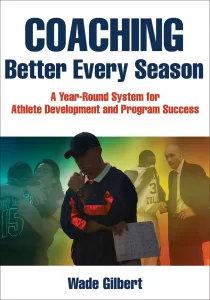
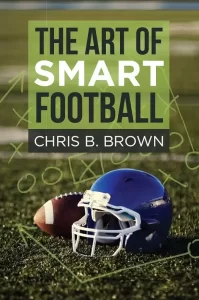

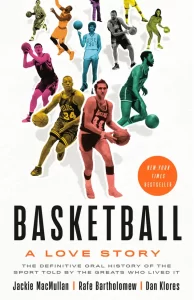

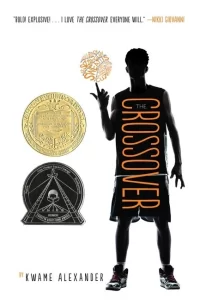
Stay in the loop
Follow SPMA
New jobs, interviews and sport-industry news in your feed.






55261316 new jobs in sport this week
Teams, leagues, agencies and brands in Canadain the USAin Canada & the USA are hiring. Find your next role, or let new ones come to you.
Just posted
 Digital Content & Social Media InternSport Management Hub · Toronto, ON★ Featured
 Game Day Assistant (Contract) / Assistant·e aux Opérations les Jours de MatchMontréal Victoire · Montréal, QC7 hours ago
 Head Coach, Varsity Blues FootballUniversity of Toronto Varsity Blues · Toronto, ON8 hours ago
 Spring and Summer 2027 InternshipsRochester Red Wings · Rochester, NY7 hours ago
 Golfnow Coordinator, Business SupportVersant · Orlando, FL9 hours ago
 Manager, Media PartnershipsTMRW Sports · Orlando, FL9 hours ago
- Digital Content & Social Media InternSport Management Hub · Toronto, ON★ Featured
- Game Day Assistant (Contract) / Assistant·e aux Opérations les Jours de MatchMontréal Victoire · Montréal, QC7 hours ago
- Spring and Summer 2027 InternshipsRochester Red Wings · Rochester, NY7 hours ago
