




Published in 2007, the book finds Cassidy working as an attorney in south Florida. He has achieved enough to make a return to intense competition look unnecessary from the outside. That is what gives the premise its force. A sporting goal need not solve an obvious practical problem to command a person's attention, and a settled life can still leave the former athlete uncertain about who he has become.
The Shelf · Books
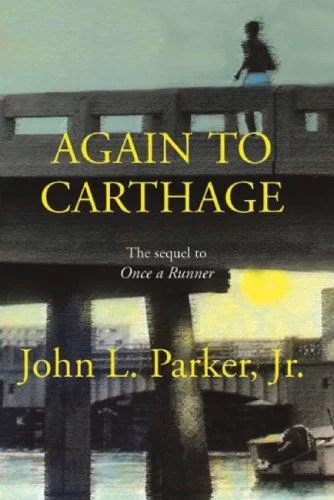
Again to Carthage
By John L. Parker Jr.Released 2007Curated by SPMA Hub because sport culture lives beyond the field.
Again to Carthage returns to Quenton Cassidy after the youthful pursuit that drove Once a Runner. John L. Parker Jr.'s sequel asks what happens when an athlete has built an adult life but still feels that something essential remains unfinished. The result is a running novel about return, with ambition now measured against work, loss and a changing understanding of time.

The Shelf
The Gist
Why it caught our attention
The Details
Quick facts

At A Glance
Again to Carthage returns to Quenton Cassidy after the youthful pursuit that drove Once a Runner. John L. Parker Jr.'s sequel asks what happens when an athlete has built an adult life but still feels that something essential remains unfinished. The result is a running novel about return, with ambition now measured against work, loss and a changing understanding of time.

About This Shelf Item
About Again to Carthage
Loss pushes that uncertainty into sharper focus. Cassidy's response is to reconnect with Bruce Denton and pursue another Olympic opportunity. Their renewed relationship gives the novel continuity with its predecessor while changing the terms of the work. An older athlete does not simply repeat an earlier version of himself. Experience may offer knowledge and patience, but it also brings a clearer awareness of what cannot be recovered by training harder.
The move toward the marathon makes that difference tangible. A longer event changes the rhythm of preparation and the nature of the competitive problem. The return is therefore more than a symbolic decision to try again. It requires a different relationship with effort and a willingness to be tested in a form that cannot be approached only through the memories of earlier success on the track.

Why It Belongs
The Sport Connection
For SPMA readers, Cassidy's story offers a way to discuss athlete transition without assuming that leaving competition is a clean, one-way process. Identity can remain tied to a sport after a person has established a career elsewhere. Support around retirement or a comeback should recognise that complexity. The question is not simply whether an athlete has found another occupation, but what meanings and relationships the sporting life continues to hold.
The novel also distinguishes commitment from nostalgia. Wanting the feeling of an earlier life is not the same as accepting the present demands of competition. Cassidy has to confront the difference between remembering himself as a serious runner and doing the work that might make him one again. That distinction can sharpen discussions about returning participants at every level, even though his ambitions operate far beyond ordinary recreational sport.

Our Recommendation
Why Read Again to Carthage
Readers of Once a Runner will recognise Parker's interest in the inward life of demanding training. Here that focus gains another layer because sacrifice is made from a more established position. A young runner can imagine the future as an open field; an older one has to negotiate with a life already under way. The people and responsibilities around the athlete make the meaning of a single-minded goal less simple.
As fiction, Again to Carthage can take readers inside the pull of a comeback without being used as a prescription for their own training or choices. Its strongest discussion comes from holding two ideas together: a return can be deeply meaningful, and it can still ask difficult things of everyone involved. The existence of a powerful desire does not settle whether its pursuit will bring the kind of closure the person hopes for.
Final Thoughts
Alex's Final Thoughts
Again to Carthage adds maturity rather than merely another race to Cassidy's story. The book considers what remains of athletic ambition after early dreams have met adult experience. On the sport shelf, it offers a thoughtful counterpart to the breakthrough narrative: success does not end the need to choose a direction, and returning to a familiar pursuit can reveal how much both the athlete and the goal have changed.
Keep Exploring
Similar Books on The Shelf





Same sport
More Running on The Shelf
Stay in the loop
Follow SPMA
New jobs, interviews and sport-industry news in your feed.






Hiring now on Sports Hired
74273347 new jobs in sport this week
Teams, leagues, agencies and brands in Canadain the USAin Canada & the USA are hiring. Find your next role, or let new ones come to you.
4262,0232,449 open jobs3,7187,72711,445 organizations
Just posted
 Digital Content & Social Media InternSport Management Hub · Toronto, ON★ Featured
 Team Leader Swim LessonsYMCA of Greater Toronto · Scarborough, ON2 hours ago
 Sport Medicine PhysicianBrock University · St. Catharines, ON5 hours ago
 Athlete Highlight SpecialistBrodie Rec League · Seattle, WA14 minutes ago
 Lead Quantitative Analyst, On-Field StrategyPhiladelphia Phillies · Philadelphia, PA34 minutes ago
 Application DeveloperNational Football League (NFL) · New York, NY2 hours ago
- Digital Content & Social Media InternSport Management Hub · Toronto, ON★ Featured
- Athlete Highlight SpecialistBrodie Rec League · Seattle, WA14 minutes ago
- Lead Quantitative Analyst, On-Field StrategyPhiladelphia Phillies · Philadelphia, PA34 minutes ago
Copied
