




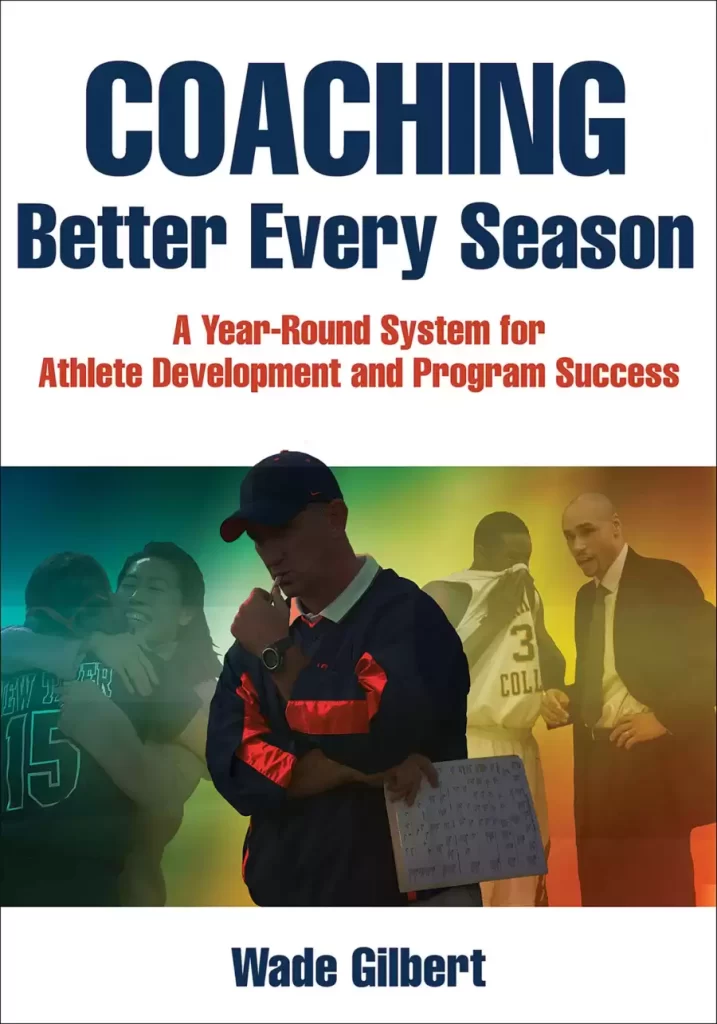
Coaches are often assessed by standings, but the quality of their work depends on decisions made when there is no scoreboard. In Coaching Better Every Season: A Year-Round System for Athlete Development and Program Success, Wade Gilbert turns that problem into a practical framework. His book, published by Human Kinetics in 2016, organizes coaching responsibilities around the preseason, competition period, end-of-season evaluation and offseason. It addresses purpose, values, teaching, practice design and the way coaches learn from experience. That structure makes it unusually relevant to people who manage programs as well as individual teams. A technical director cannot improve a club by delivering a motivational speech in August if recruitment, staff development and athlete support have been neglected since the previous season ended.
The Shelf · Books
Coaching Better Every Season
A winning season is not built during the weeks when games are played. Wade Gilbert's Coaching Better Every Season treats coaching as a year-round cycle of design, development, evaluation and renewal.
The Gist
Why it caught our attention
The Details
Quick facts
- Format
- Book
- Author
- Wade Gilbert
- Published
- 2016
- Genre
- Non-Fiction

At A Glance
A winning season is not built during the weeks when games are played. Wade Gilbert's Coaching Better Every Season treats coaching as a year-round cycle of design, development, evaluation and renewal.

About This Shelf Item
About Coaching Better Every Season
Gilbert's framework begins with defining a coaching philosophy and building relationships before competition intensifies. Preseason planning establishes what the program values, how performance will be assessed and which outcomes are realistic. In-season chapters move toward training environments, athlete learning, game preparation and decisions made under time pressure. End-of-season evaluation then asks coaches to look beyond a final result and analyze how the program operated. The offseason provides an opportunity to renew methods and prepare for another cycle. The approach is not tied to a single sport, which makes its managerial implications broad. It can be applied to a school team with limited resources or a sophisticated program that employs specialists in strength, nutrition and analysis, provided the goals fit the organization.

Why It Belongs
The Sport Connection
One strength of the book is its insistence that coaching improvement must be deliberate. A coach can spend twenty years repeating the same season without truly accumulating twenty years of learning. Program leaders need routines that turn daily experiences into evidence. Did a practice create the decisions athletes later faced in competition? Were newer participants receiving meaningful feedback? Did the stated values show up in selection decisions? Asking those questions during the season makes later evaluation less dependent on memory and emotion. A director should help coaches establish manageable records and development conversations, not bury them beneath paperwork. The task is to create information that changes behaviour. An observation system that never influences training or support is only another administrative burden.

Our Recommendation
Why Read Coaching Better Every Season
Gilbert's seasonal structure also clarifies responsibility for athlete welfare. Fatigue, injury management, academic pressures and family commitments do not disappear when competitive objectives become urgent. Managers must decide when workload needs adjusting and whether support remains available to athletes outside the starting lineup. Those questions should be anticipated during planning rather than treated as interruptions. The book encourages an approach in which performance and personal development are not entirely separate departments. A player who trusts the environment is better placed to communicate problems early, and a coach with clear expectations can address issues without improvising discipline. This does not mean every decision will satisfy every participant. It means standards can be explained and consistently applied.
It is also useful for evaluating coach education itself. If a workshop does not change practice planning or athlete feedback, administrators should question the investment. Gilbert's seasonal structure gives development officers natural checkpoints to see whether learning has reached the training ground.
Final Thoughts
Arash's Final Thoughts
Coaching Better Every Season is particularly valuable because it replaces the vague instruction to become a better coach with a sequence of actual responsibilities. Define, teach, observe, evaluate and improve. Its usefulness extends to club administrators deciding how to support coaches across different teams and age groups. Winning may remain an important outcome, but the book argues through its structure that a program's quality should also be visible in its learning environment and the way it prepares for the next season.
Related organizations

Keep Exploring
Similar Books on The Shelf










Stay in the loop
Follow SPMA
New jobs, interviews and sport-industry news in your feed.






77236313 new jobs in sport this week
Teams, leagues, agencies and brands in Canadain the USAin Canada & the USA are hiring. Find your next role, or let new ones come to you.
Just posted
 Digital Content & Social Media InternSport Management Hub · Toronto, ON★ Featured
 Executive DirectorClimbing Escalade Canada5 hours ago
 Operations Coordinator, Short TrackSpeed Skating Canada · Montreal, QC5 hours ago

- Digital Content & Social Media InternSport Management Hub · Toronto, ON★ Featured
- Executive DirectorClimbing Escalade Canada5 hours ago
- Operations Coordinator, Short TrackSpeed Skating Canada · Montreal, QC5 hours ago
