The Shelf · Books

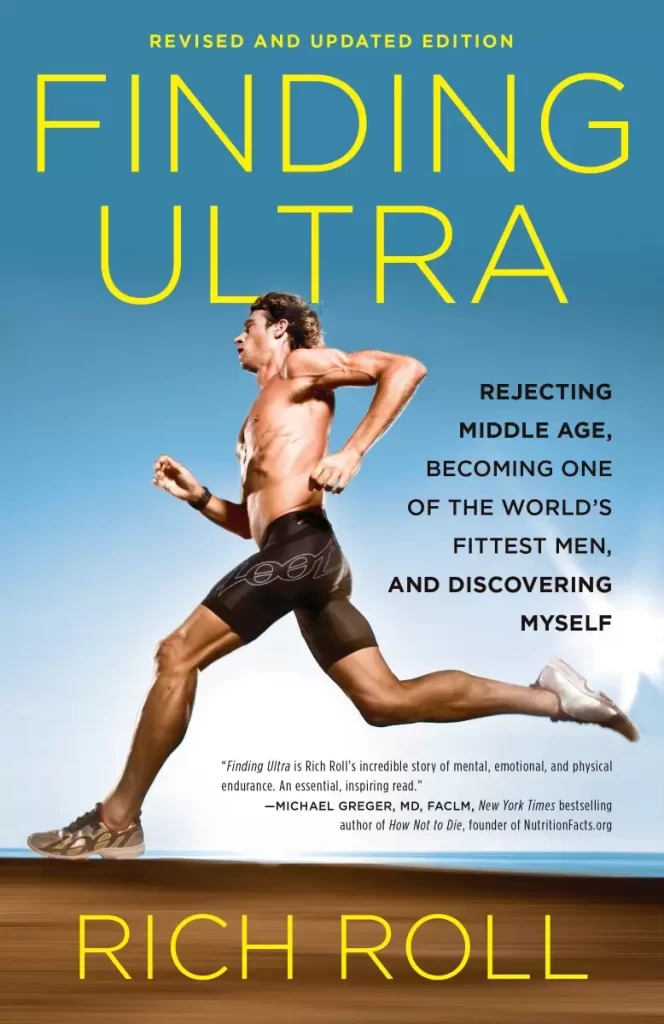
Finding Ultra: Rejecting Middle Age, Becoming One of the World's Fittest Men, and Discovering Myself

By Rich RollReleased 2012Curated by SPMA Hub because sport culture lives beyond the field.

The turning point in Finding Ultra happens before an intimidating race, when an ordinary flight of stairs forces Rich Roll to confront his condition. His memoir follows the uneasy distance between recognising a problem and changing a life, with addiction, recovery and endurance sport occupying the same personal history.

Arash Sayed
Covered by Arash Sayed
The Shelf
Finding Ultra: Rejecting Middle Age, Becoming One of the World’s Fittest Men, and Discovering Myself

The Gist

Why it caught our attention

Originally published in 2012, Finding Ultra describes Roll's return to demanding athletic activity around the age of forty. Swimming, cycling and running become the visible evidence of a larger attempt to change the way he lives. His earlier struggles with alcohol give the account a history that cannot be explained by a before-and-after photograph.

The revised edition expands the story and its practical material. Roll has explained that he wanted to include what happened after the original book and to describe the practices behind his transformation more fully. Readers therefore encounter both the initial memoir and a later effort to interpret its consequences.

The Details

Quick facts

Format
Book
Author
Rich Roll
Published
2012
ISBN
9780307952202
Relevant Sport
Running

At A Glance

The turning point in Finding Ultra happens before an intimidating race, when an ordinary flight of stairs forces Rich Roll to confront his condition. His memoir follows the uneasy distance between recognising a problem and changing a life, with addiction, recovery and endurance sport occupying the same personal history.

About This Shelf Item

About Finding Ultra: Rejecting Middle Age, Becoming One of the World's Fittest Men, and Discovering Myself

The book's most recognisable sporting destinations are Ultraman and the EPIC5 challenge. The first combines three endurance disciplines across an exceptionally demanding distance; the second involved five iron-distance triathlons on five Hawaiian islands in less than a week. These experiences supply scale, but their significance comes from the narrator's earlier sense that his possibilities were narrowing.

Roll connects his training to a plant-based way of eating and to changes in attention, priorities and routine. The combination is central to his interpretation of what happened. His account is most useful when read with that first-person perspective intact. It describes how one athlete understands his recovery and performance, with all the individuality that a memoir entails.

The expanded version also complicates the apparent finish line of transformation. Publishing a successful account of change does not mean that the work of living is complete. By returning to the manuscript, Roll makes room for a question that many inspirational sporting stories leave behind: what follows the accomplishment that once seemed capable of resolving everything?

Why It Belongs

The Sport Connection

Finding Ultra is relevant to recreation and endurance businesses because its central participant is returning to sport with an existing adult life. The motivations in this story are different from those of a young athlete progressing through a development pathway. Identity, time, family and a desire to change direction are already part of the starting conditions.

For programme designers, that perspective supports a useful discussion about how sporting organisations speak to adults who feel that opportunity has passed. Roll's extreme events are exceptional, yet the anxiety about beginning again is familiar. The management lesson comes from understanding that motivation, rather than promising every customer the same dramatic physical transformation.

The memoir also shows how a personal sporting story can grow into publishing, public speaking and a media identity. Readers interested in athlete communication can examine how experience becomes a public message, while keeping the athlete's narrative separate from universal claims about performance.

Our Recommendation

Why Read Finding Ultra: Rejecting Middle Age, Becoming One of the World's Fittest Men, and Discovering Myself

This is a strong choice for readers drawn to accounts of recovery, midlife change and long-distance sport. Roll's athletic goals give the story momentum, but the earlier difficulties provide its emotional stakes. The expanded edition is particularly relevant for readers interested in what happened beyond the original breakthrough.

Sport students can use it to discuss adult participation and the commercial language of personal transformation. It rewards attention to the process as well as the spectacular events, because the daily reconstruction of a life is the material that gives those events meaning.

Arash Sayed

Final Thoughts

Arash's Final Thoughts

Finding Ultra is most persuasive as a story about reopening possibilities. Its value does not depend on treating an extreme triathlon schedule as the correct ambition for everyone. Roll's more durable contribution is the account of choosing a direction after years of feeling caught in one, then discovering that change needs continued attention.