



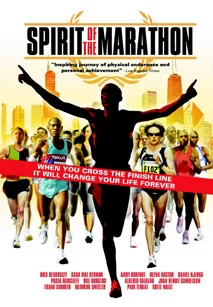
First shown in 2007, Spirit of the Marathon follows the buildup to the 2005 Chicago Marathon. Its subjects include elite runners Deena Kastor and Daniel Njenga alongside recreational participants with very different personal circumstances. Director Jon Dunham was himself a runner, and the documentary feels informed by the ordinary details of training: the repeated routes, the fatigue carried into the rest of the day and the way a scheduled long run can reorganize family life. Chicago supplies a vast event and a recognizable finish line, but Dunham's attention is not reserved for the fastest athletes. He builds a parallel narrative in which a professional pursuing an important result and an amateur trying to finish a first marathon both have something substantial at stake, though not the same thing.
The Shelf · Movies
Spirit of the Marathon
Jon Dunham follows runners preparing for the Chicago Marathon, from international contenders to amateurs whose reasons for entering cannot be measured by their finishing positions. Spirit of the Marathon takes the familiar spectacle of a major road race and moves attention back to the long, uncertain months when nobody can yet be sure of reaching the line.
The Gist
Why it caught our attention
The Details
Quick facts
- Format
- Movie
- Released
- 2007
- Genre
- Documentary
- Relevant Sport
- Running

At A Glance
Jon Dunham follows runners preparing for the Chicago Marathon, from international contenders to amateurs whose reasons for entering cannot be measured by their finishing positions. Spirit of the Marathon takes the familiar spectacle of a major road race and moves attention back to the long, uncertain months when nobody can yet be sure of reaching the line.

About This Shelf Item
About Spirit of the Marathon
The film cuts between preparation and reflection, showing the event before it becomes an image of thousands of people streaming through city streets. Kastor's elite career demands precision, physiological planning and the ability to compete against rivals for whom the difference between success and failure may be measured in seconds. Other participants have to accommodate training around work, relationships, uncertain bodies and doubts that cannot be eliminated by a good plan. Historical voices, including established marathon figures, provide perspective on the distance's appeal and the development of the sport. Dunham resists turning the entire race into a demonstration that desire overcomes every obstacle. Weather, injury, imperfect preparation and the sheer relentlessness of 26.2 miles remain part of the equation. His film is affectionate and at times celebratory, but the strongest sequences are observational: somebody starting a run in ordinary surroundings, a runner reassessing a goal, the accumulation of miles that television coverage usually skips. Chicago's roads become meaningful because the audience has watched the work required to reach them.

Why It Belongs
The Sport Connection
Mass-participation running creates an unusual sport-business model. Elite performance brings credibility, media attention and record ambitions, while thousands of paying entrants sustain an event with extensive logistical demands. Registration, sponsorship, medical provision, street closures, volunteer coordination and broadcasting all have to function together, even though most participants are not racing for prize money. The documentary does not break down the Chicago Marathon's finances, and it would be misleading to treat it as an operational case study. It does make visible the different definitions of value held by organizers, elite athletes and recreational runners. A personal-best time may matter more to one participant than a televised winner does to another. That distinction is central to understanding why destination races retain such broad appeal and why participants judge their experience by more than an official result.

Our Recommendation
Why Watch Spirit of the Marathon
Runners will recognize the combination of anticipation and tedium that occupies most of a training cycle. Non-runners may be surprised by how little the film depends on professional celebrity. Its structure creates room for the audience to care about a finish far outside the lead pack, without pretending that elite and amateur goals are identical. Dunham's documentary is a useful complement to performance-focused sports films because it gives time to preparation, doubt and the everyday people who make a major event possible. The race-day footage carries emotion precisely because the preceding months have not been erased.
Final Thoughts
Arash's Final Thoughts
Spirit of the Marathon understands that the start and finish lines are only the public boundaries of a much longer undertaking. Chicago can crown winners, record times and stage a citywide celebration, but it cannot assign one meaning to every runner's journey. Dunham's most enduring achievement is to let those meanings coexist. It is a film about a race that makes its strongest case for watching the people before the race arrives.
Keep Exploring
Similar Movies on The Shelf








Stay in the loop
Follow SPMA
New jobs, interviews and sport-industry news in your feed.






6872140 new jobs in sport this week
Teams, leagues, agencies and brands in Canadain the USAin Canada & the USA are hiring. Find your next role, or let new ones come to you.
Just posted
 Content Creation InternSport Management Hub · Toronto, ON★ Featured
 Marketing InternLUG Sports Group · Remote1 hour ago
 Sales & Business Development InternWager Chatter · Toronto, ON1 hour ago
 Inside Sales Representative (Seasonal Position)Myrtle Beach Pelicans · Myrtle Beach, SC1 hour ago
 Director, FinanceFront Office Sports · New York, NY21 hours ago
 Staff Engineer, Balance and Ledger - CoreFanatics Betting & Gaming · New York, NY23 hours ago
- Content Creation InternSport Management Hub · Toronto, ON★ Featured
- Inside Sales Representative (Seasonal Position)Myrtle Beach Pelicans · Myrtle Beach, SC1 hour ago
- Marketing InternLUG Sports Group · Remote1 hour ago
