Patrick Musico brings a former player’s perspective to his work as Manager, Video & Content Production with the Saint John Sea Dogs. His responsibilities stretch from game coverage and community events to sponsor content and video resources that support player evaluation. After injuries brought his playing career to an end, Musico built experience in digital marketing, developed his own creative business and returned to the organization in a media role. His story explores the transition from athlete to content professional, the organization required to keep pace with a hockey season and the creative challenge of giving fans access to moments they would not otherwise see.
Industry Profile
From Sea Dogs Player to Behind the Camera
Patrick MusicoManager, Video & Content Production · Saint John Sea Dogs

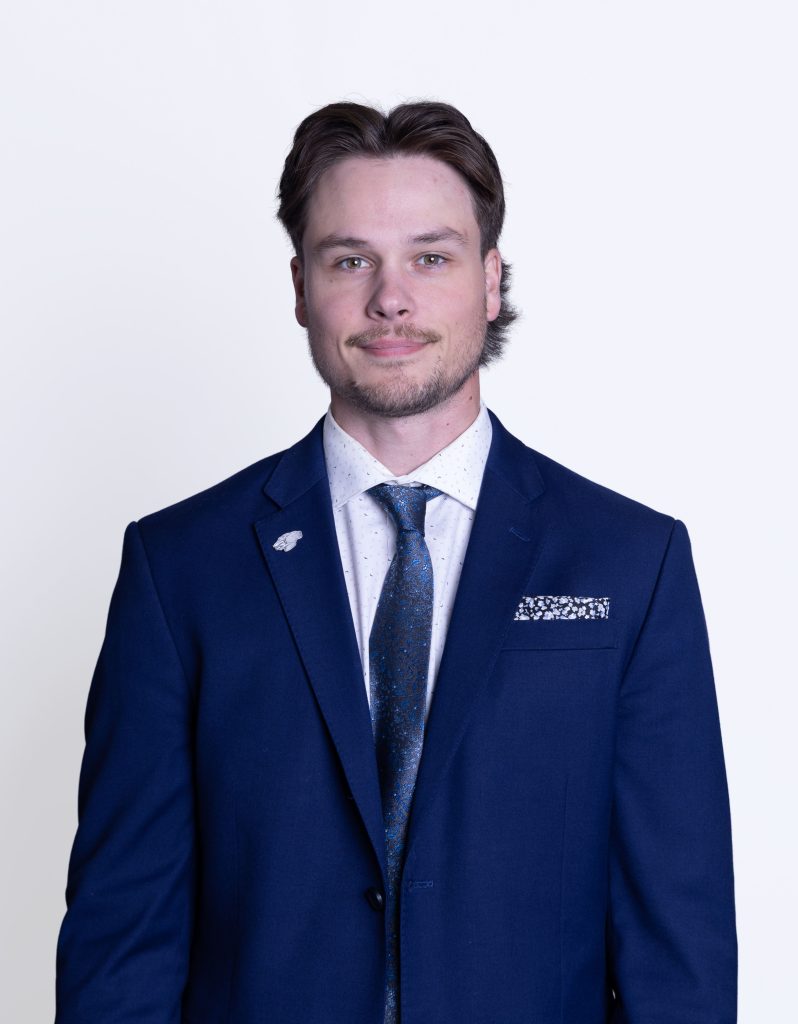
I look at content as more than just something to post online.
Introduction
The Conversation
Inside The Role
As Manager, Video & Content Production with the Saint John Sea Dogs, my role involves capturing, creating, and producing photo and video content across all aspects of the organization. This includes game-day coverage, behind-the-scenes content, player features, team events, community initiatives, and promotional material for our social media platforms.
A big part of what I bring to the organization is my understanding of social media and what kind of content resonates with audiences and generates engagement. I look at content as more than just something to post online. It’s an important tool for growing the team’s brand, connecting with fans, increasing awareness, helping drive ticket sales, and creating additional value for our corporate sponsors.
Another important aspect of my role is supporting our players and their development. NHL scouts and other organizations often request game footage, highlight reels, and other video resources when evaluating prospects. Being able to provide that content is another way our department supports the players and helps create opportunities for them moving forward.
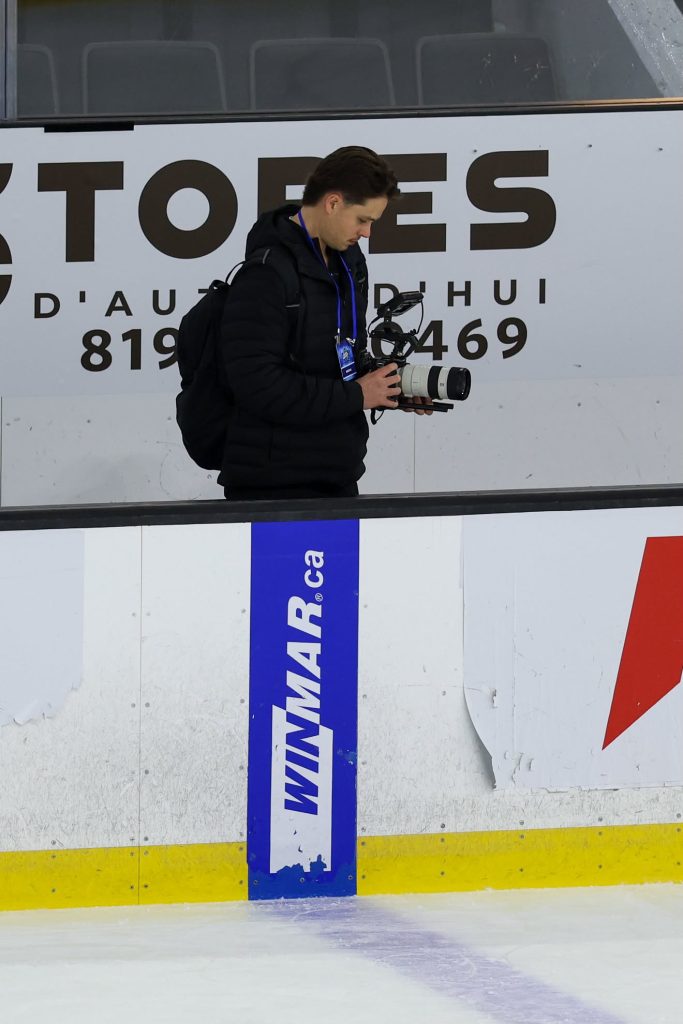
During the hockey season, my day-to-day responsibilities involve capturing content across all areas of the organization. This includes player appearances at local schools, sponsor events, community initiatives such as our work with the food bank, and creating promotional videos and social media content, including TikTok trends and other engaging concepts with the players.
Game days are where my workflow becomes much more fast-paced. I’m usually one of the first people at the rink, arriving approximately three and a half to four hours before puck drop. I start by capturing player arrival photos and videos, which are passed along to our Marketing Manager to get posted on social media. From there, I focus on gathering additional behind-the-scenes footage and B-roll before moving into warmup and game coverage, capturing both photos and video throughout.
If we have special guests or activations happening during a game, I also focus on creating engaging content around those experiences and getting it edited and posted as quickly as possible while the moment is still relevant.
After the game, the content depends on what happens that night. Following a win, I’ll often capture the coaches’ post-game speech and footage of the game’s MVP. Other nights might involve player interviews, milestone celebrations, such as a player’s first career goal, or other notable moments worth highlighting.
I typically finish by editing a game recap reel and organizing and transferring all of the day’s footage onto my external hard drive. Staying organized is a big part of the job, especially during the season when content is needed almost daily and there’s always another game, event, or story to capture.
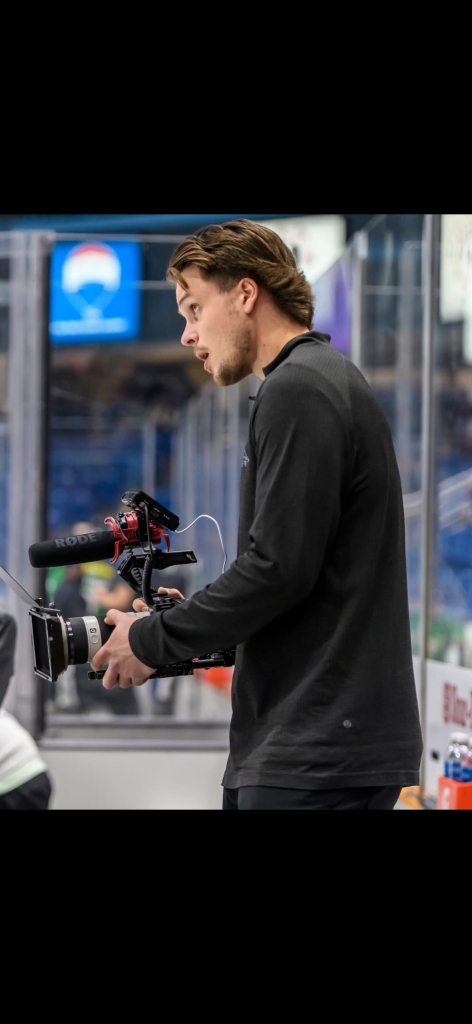
My path into sports video and content production actually started as a player with the Saint John Sea Dogs. I was a free-agent signing who moved to Saint John from Ontario at 18 years old. During my second season, I started creating and posting TikTok content, which gained a lot of traction. I eventually grew my account to over 20,000 followers, with one video reaching more than one million views. That was really when I first realized that I could integrate social media into a career.
My playing career came to an end at 20 years old after tearing my ACL during COVID. Having also dealt with several serious concussions throughout my career, I felt it was the right time to step away from contact sports. It was a difficult transition initially, as hockey had been such a big part of my life, but it also gave me an opportunity to pursue something new while staying connected to the game.
I eventually landed a job with a digital marketing agency, where I gained approximately two and a half years of valuable experience in content creation, social media strategy, and marketing. During that time, I also continued building my own personal brand and started Musico Media, allowing me to develop my skills in photography, videography, editing, and working with different clients.
When the opportunity came up to join the Sea Dogs in a media role, I had several people reach out encouraging me to apply, as they felt it would be a great fit given my background with the organization and my experience in marketing and content creation. Fortunately, I was given the opportunity, and I’ve been working to grow both professionally and creatively ever since.
I think some of the most valuable skills I’ve developed along the way are understanding social media trends, knowing how to create content that connects with an audience, being adaptable, and having a good understanding of the sports environment from both a player’s and a media perspective. I’m grateful to be able to turn my experience as a player into a career behind the camera, and I continue to work toward my long-term goal of one day working with an NHL organization.
One project I’m particularly proud of is producing a full YouTube recap of the QMJHL Draft in Halifax. I was responsible for capturing everything on-site and editing the entire video myself. I remember feeling pretty nervous going into it. I knew how important the event was for the organization and wanted to make sure I didn’t miss any of the big moments. Once the draft got underway, though, the adrenaline kicked in and I was ready to go.
It ended up being an incredibly exciting experience, especially with the number of blockbuster trades we made throughout the draft. One of the highlights was having our General Manager mic’d up, which allowed me to capture some of the conversations and behind-the-scenes moments that fans wouldn’t normally get to see.
The experience was also special on a personal level. Having played in the QMJHL myself, I was never actually drafted, so getting to experience the draft from the other side was something unique. I got to capture everything from player interviews and trade discussions to the team celebrating our draft picks over a meal. I also had the opportunity to reconnect with some former teammates, which made the experience even more memorable.
On top of that, my father and brother were able to make the trip to Halifax, so having them there to experience it with me made it even more special. Overall, it was a project that challenged me creatively and professionally, and one I’m proud of because it allowed me to tell such an important story for the organization while experiencing it firsthand.
Final Thoughts
Alex's Final Thoughts
Musico’s experience offers a practical lesson for aspiring sport content professionals: knowing the game matters, but so does learning how to serve an audience. His path combines personal experimentation on social media with agency experience and independent client work, showing how skills developed outside a team can support a return to sport. His game-day routine also highlights the less visible discipline behind creative output, particularly timely editing and careful footage management. For those building a similar career, the takeaway is to develop both sides of the craft: recognizing a compelling moment and maintaining the workflow needed to deliver it.
Your next step
Want a career like Patrick's?
Find open roles across teams, leagues and sport organizations, or keep learning from the people already doing the work.

Connect With Patrick Musico
Related organizations


Continue Reading
Related Industry Stories
Stay in the loop
Follow SPMA
New jobs, interviews and sport-industry news in your feed.






Hiring now on Sports Hired
48230278 new jobs in sport this week
Teams, leagues, agencies and brands in Canadain the USAin Canada & the USA are hiring. Find your next role, or let new ones come to you.
3691,0161,385 open jobs3,8368,17912,015 organizations
Just posted
 Digital Content & Social Media InternSport Management Hub · Toronto, ONFeatured
 Sport Administration InternSoftball Canada · Ottawa, ON3 hrs ago
 Customer Service and Event Coordinator Intern (Winter/Summer 2027)Canada Running Series · Burnaby, BC9 hrs ago
 Minor League Performance Nutrition CoordinatorChicago White Sox · Glendale, AZ9 mins ago
 Associate Implementation ConsultantHudl · Lincoln, NE30 mins ago
 Special Events Account ExecutiveHouston Astros · Houston, TX1 hr ago
- Digital Content & Social Media InternSport Management Hub · Toronto, ONFeatured
- Associate Implementation ConsultantHudl · Lincoln, NE30 mins ago
 Florida Operations Assistant - Pirate CityPittsburgh Pirates · Bradenton, FL2 hrs ago
Copied