The Shelf · Movies

Ice Princess

Released 2005Curated by SPMA Hub because sport culture lives beyond the field.

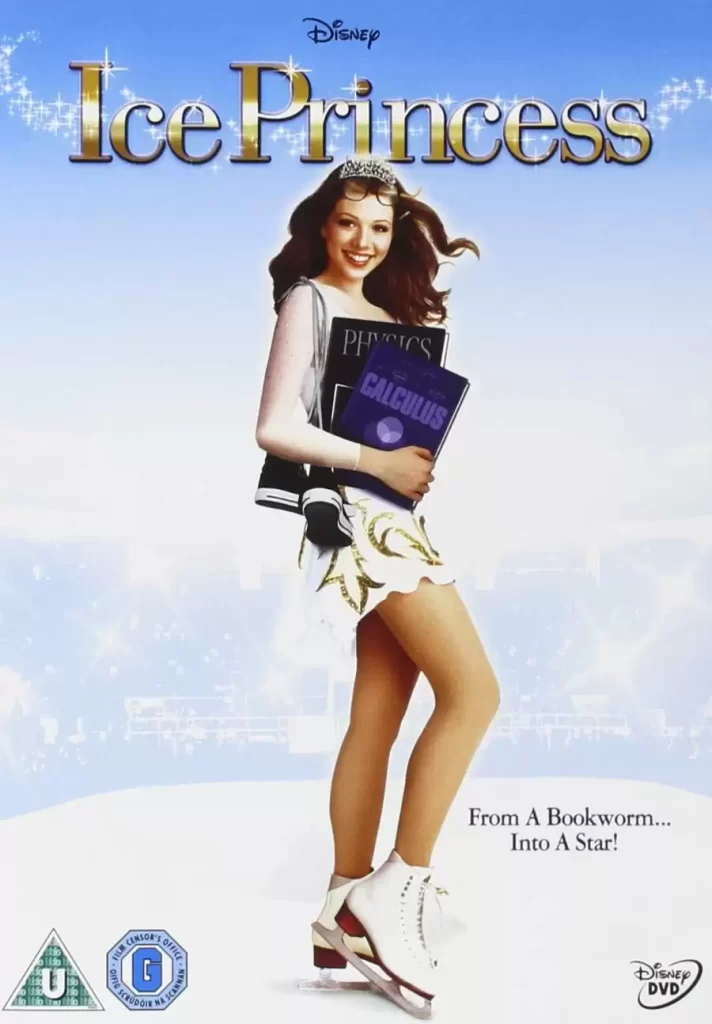
Casey Carlyle begins by studying figure skating as a physics problem and ends up wanting to compete herself. Her discovery unsettles her mother, who has planned a more conventional academic future, and the rink's coach, whose own daughter's career depends on careful preparation. Ice Princess turns a familiar coming-of-age story into a dispute about expertise, opportunity and the price of a dream.

Arash Sayed
Covered by Arash Sayed
The Shelf
Ice Princess

The Gist

Why it caught our attention

Disney released Ice Princess in 2005, directed by Tim Fywell. Michelle Trachtenberg plays Casey, a gifted student whose research brings her into contact with figure skating. Joan Cusack plays her academic-minded mother, Kim Cattrall is rink coach Tina Harwood, and Hayden Panettiere plays Tina's daughter, Gen, an established young competitor. The film's central invention is Casey's belief that understanding the mechanics of a jump might help her learn it.

It is an appealing premise because it makes Casey's intelligence useful outside the classroom without asking her to abandon thinking altogether. But athletic achievement proves less tidy than a formula. She needs ice time, equipment, coaching and the confidence to perform in front of people. Her new interest becomes a challenge not only to her mother but also to the hierarchy of athletes who have already devoted years to the sport.

The Details

Quick facts

Format
Movie
Released
2005
Genre
Drama

At A Glance

Casey Carlyle begins by studying figure skating as a physics problem and ends up wanting to compete herself. Her discovery unsettles her mother, who has planned a more conventional academic future, and the rink's coach, whose own daughter's career depends on careful preparation. Ice Princess turns a familiar coming-of-age story into a dispute about expertise, opportunity and the price of a dream.

About This Shelf Item

About Ice Princess

The film takes genuine pleasure in the visual grammar of figure skating: repeated jumps, edges, rotations and the split-second changes in balance that separate a controlled landing from a fall. Its physics explanation is simplified for a family audience, and Casey's progress is far too quick to be mistaken for a realistic development pathway. What the story gets right is the embarrassment of beginning. A talented student in one environment must become a novice in another.

Cusack makes Casey's mother more complicated than a stock opponent of joy. She has built her understanding of security around educational achievement and worries that an uncertain athletic future could throw it away. Her desire to protect Casey is not meaningless simply because the film wants the girl to skate. Cattrall's Tina represents a different kind of adult ambition. She knows what competition requires and has her own daughter on the ice, making the distinction between coaching, parenting and favoritism difficult to maintain.

Gen is crucial to the story's moral balance. She has years of work invested in a sport Casey suddenly appears able to master, and the newcomer threatens not only rankings but the family expectations surrounding them. The film occasionally relies on familiar rivalry and sabotage devices, yet it also recognizes that Gen's unhappiness is not evidence of a weak character. The girls are responding to systems of evaluation built by adults and judges.

Why It Belongs

The Sport Connection

Figure skating combines athletic selection with assessed presentation, making access to high-quality coaching and regular ice time essential. Casey's apparent talent cannot advance without resources and someone prepared to invest in her. Her story therefore raises an ordinary development question beneath the extraordinary timetable: how do programmes recognize late starters without dismissing the athletes already committed to the pathway?

Tina's position adds the complication of coaching one's child. Technical expertise does not remove conflicts of interest, and a skater's welfare can become entangled with the adult's reputation. The film is light in tone, but that overlapping authority is a serious issue in youth and judged sport.

Our Recommendation

Why Watch Ice Princess

Watch for Trachtenberg's likeable curiosity and for the more nuanced maternal conflict carried by Cusack and Cattrall. The movie has a bright Disney finish and the narrative confidence of a story in which an ambitious teenager can reorganize her life in a single season. Its science is more metaphor than training guidance, and the speed of Casey's progress should be treated as fantasy.

Still, it offers a useful entry point for young viewers interested in skating or in careers that cross conventional boundaries between academic and athletic talent. Its strongest claim is that curiosity can open a new world, while belonging there requires more than a clever theory.

Arash Sayed

Final Thoughts

Arash's Final Thoughts

Casey's problem is not choosing between being intelligent and being athletic. It is convincing the adults around her that her abilities do not have to remain within the futures they selected. Ice Princess resolves that conflict rather neatly, but the competing expectations ring true. The film earns its place on the Shelf by showing that a skater's journey is shaped by coaches, parents, access and the difficult right to decide what to pursue.