The Shelf · Movies

The Last Game

Released 2002Curated by SPMA Hub because sport culture lives beyond the field.

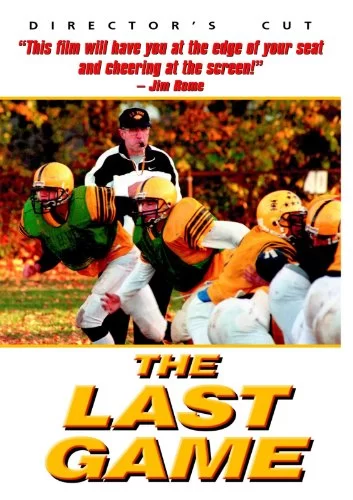
This documentary follows Pennsylvania football coach Mike Pettine during his final season at Central Bucks West High School. The filmmakers gain their drama from circumstances, not a screenplay's ability to arrange a convenient final opponent. A father's impending retirement and his son's opposing team give the season an unusual emotional charge.

Arash Sayed
Covered by Arash Sayed
The Shelf
The Last Game

The Gist

Why it caught our attention

His storied program eventually faces North Penn, coached by his son Mike Pettine Jr., turning a local rivalry into a family confrontation.

The documentary's intimacy changes how the audience hears a coach's ordinary instruction. On a storied high-school team, correction is not simply about the next play; it carries the weight of an institution's traditions and a coach's own sense of what he has built. Pettine is neither reduced to a tyrant nor polished into an infallible mentor. The film lets relationships grow uncomfortable and still remain affectionate. That makes the game against his son's team especially affecting, because a family rivalry arrives in a space where everyone is expected to compete with professional seriousness.

The Details

Quick facts

Format
Movie
Released
2002
Relevant Sport
Hockey

At A Glance

This documentary follows Pennsylvania football coach Mike Pettine during his final season at Central Bucks West High School. The filmmakers gain their drama from circumstances, not a screenplay's ability to arrange a convenient final opponent. A father's impending retirement and his son's opposing team give the season an unusual emotional charge.

About This Shelf Item

About The Last Game

Direct observation complicates the legend of the stern, successful coach by showing tension, anger and affection around the team.

Director T. Patrick Murray was allowed inside a high-school football culture whose successes had become a civic identity. Mike Pettine Sr.'s Central Bucks West program carried the weight of many previous seasons, and his impending retirement changes the meaning of every ordinary exchange with the players. The climactic prospect of facing a team coached by his son gives the family relationship an unusual public stage. What is compelling is not simply a father-son contest. It is the way coaching routines, criticism and affection get folded into a local institution whose followers expect dominance as a normal condition.


The documentary can be unsettling because the coach is accustomed to expressing care through the same hard language he uses to demand better football. The film does not always tell viewers how to interpret that mixture, which is a virtue rather than an omission. It gives athletic directors a chance to consider whether a program's celebrated traditions genuinely serve the teenagers who inherit them. His son's opposing team also brings a private relationship into a public competitive space where neither man is free simply to play the expected family role.

Why It Belongs

The Sport Connection

High-school coaching authority, parental investment and the culture of dominance behind a winning record deserve close attention.

A high-school team does not have professional salaries, yet it can have the reputational machinery of a much larger organization. Winning becomes the measure by which a teacher's authority is granted and questioned. The documentary is particularly useful when considering what young athletes owe a program and what adults owe them in return. It observes a successful coach whose personality is a large part of the institution, then asks what happens to that institution when the personality leaves. A school athletic department cannot solve succession simply by preserving a familiar playbook.

Our Recommendation

Why Watch The Last Game

The filmmakers gain their drama from circumstances, not a screenplay's ability to arrange a convenient final opponent.

A season's ending carries a different weight when there is no guarantee that this particular group of players will assemble again. The documentary's strength is its patience with relationships and routines rather than a search for a heroic speech. Watch for the ordinary work surrounding the games: the shared expectations of a school, the pressure applied by adults and the uncertain future beyond the final whistle.

Arash Sayed

Final Thoughts

Arash's Final Thoughts

The Last Game is worth watching for the ambiguity of its central figure. Success has given Pettine authority, but the documentary does not ask viewers to accept every use of it. His departure also makes the hidden fragility of a personality-led program visible. A school's athletic culture may outlast its coach, yet the routines and loyalties built around that coach can take years to replace. The film offers a more honest portrait of that transition than a standard account of an undefeated season could.