
The Shelf · Books

A Great Game

By Stephen HarperReleased 2013Curated by SPMA Hub because sport culture lives beyond the field.

A Great Game looks behind the familiar history of Toronto hockey to a period when professionalisation was still being contested. Stephen Harper examines early teams, ambitious businesspeople and arguments about who should control a sport whose popularity was already creating valuable opportunities.

Alex Bennett
Covered by Alex Bennett
The Shelf
A Great Game
A Great Game
The Gist Of A Great Game

The Gist

Why it caught our attention

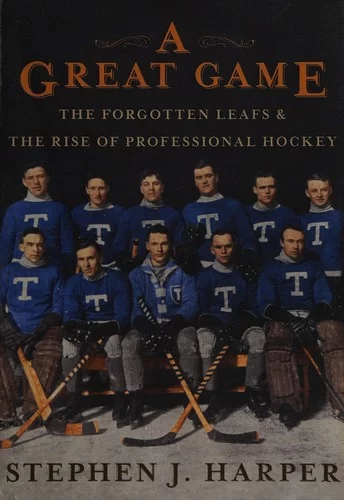
Published in 2013, the book focuses on the foundations of professional hockey in Toronto. Its subjects include the Toronto Professionals of 1908 and the Toronto Blue Shirts of 1914, teams that belong to the city's hockey history without fitting neatly into the most familiar modern franchise story.

The historical frame is important. Harper's subject is not the contemporary Maple Leafs, and the book should not be approached as a guide to their present operations. It investigates an earlier sporting world through archival material, newspaper accounts and the disputes that accompanied hockey's commercial growth.

The Details

Quick facts

Format
Book
Author
Stephen Harper
Published
2013
Relevant Sport
Hockey

At A Glance

A Great Game looks behind the familiar history of Toronto hockey to a period when professionalisation was still being contested. Stephen Harper examines early teams, ambitious businesspeople and arguments about who should control a sport whose popularity was already creating valuable opportunities.

About This Shelf Item

About A Great Game

Amateurism supplies one of the central arguments. The question of whether players should be paid was also a question about power: who could define legitimate participation, control competition and benefit from the audience the game attracted? The distinction between playing for love and playing for money becomes less innocent when other people are already making decisions around the player.

Early Toronto teams give that argument a local shape. A city can possess strong enthusiasm for a sport before it has a stable professional structure. Teams rise and disappear, arrangements change and supporters' loyalties develop amid uncertainty. The modern appearance of permanence can obscure that unstable beginning.

The pursuit of the Stanley Cup connects local ambition with a wider competitive world. A club's success can give a city recognition, while the possibility of that recognition strengthens the commercial appeal of building a team. Civic pride and business interest do not have to be opposites; they can reinforce each other while still producing conflicts.

The book's attention to disputes also challenges a purified image of early hockey. Questions about contracts, rough play and newspaper coverage were not invented by later commercialisation. Their presence near the sport's professional beginnings suggests that managing hockey has long involved negotiating between competing ideas of fairness, spectacle and authority.

Why It Belongs

The Sport Connection

A Great Game is especially relevant to Canadian sport management because it treats institutional arrangements as historical choices. Professional structures can seem natural once they are established. Looking at their formation reveals that other groups resisted them, proposed alternatives or understood the sport differently.

The amateur-professional conflict also offers a way to examine who gets to define a sport's values. A claim to protect tradition may express a sincere principle while also protecting the authority of the people making the claim. Readers can ask both questions without assuming that every participant acted from a single motive.

For clubs using heritage in their public identity, the Toronto focus is instructive. A city's sporting past is larger than its most prominent surviving organisation. Preserving that wider history can produce a more accurate account of local attachment and give overlooked teams their place in the record.

Our Recommendation

Why Read A Great Game

This book suits readers interested in hockey's foundations and in Toronto's sporting development. The early setting offers a useful change of scale for anyone accustomed to histories organised around modern stars and championship seasons.

Harper's public identity may draw initial attention, but the relevant question for this shelf entry is the historical subject he investigates. Readers can assess the account through its use of evidence, its selection of conflicts and the explanation it offers of professional hockey's emergence.

Alex Bennett

Final Thoughts

Alex's Final Thoughts

A Great Game earns its place by showing that the business of hockey was contested from the start. Its early Toronto teams reveal ambition, instability and competing claims to authority behind the later appearance of tradition. For SPMA readers, that history makes a familiar sport less inevitable and its organisational foundations much easier to question and understand.