
The Shelf · Books

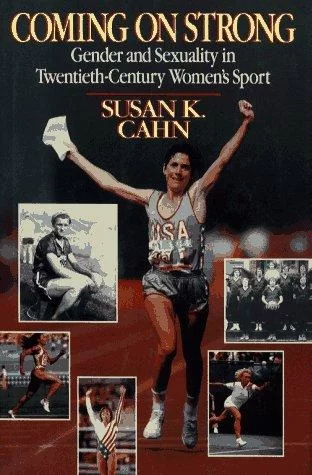
Coming on Strong

By Susan K. CahnReleased 1994Curated by SPMA Hub because sport culture lives beyond the field.

Coming on Strong examines what happens when women's athletic ability challenges a society's expectations of femininity. Susan K. Cahn treats sport as a place where gender, sexuality, race and class are actively negotiated. Participation is only part of the story; the meanings attached to the participating athlete matter just as much.

Alex Bennett
Covered by Alex Bennett
The Shelf
Coming on Strong
Coming on Strong
The Gist Of Coming on Strong

The Gist

Why it caught our attention

First published in 1994, the book studies women's sport in the United States across the twentieth century. Its historical approach moves beyond a simple chronology of expanding opportunities. Cahn asks how institutions and cultural expectations shaped which activities women could pursue and how their achievements were interpreted.

A later edition adds discussion of the Title IX era. Readers should distinguish that expanded treatment from the scope of the original publication. Across editions, the central concern is the relationship between athletic participation and the social boundaries that determine whose physical confidence appears acceptable.

The Details

Quick facts

Format
Book
Author
Susan K. Cahn
Published
1994

At A Glance

Coming on Strong examines what happens when women's athletic ability challenges a society's expectations of femininity. Susan K. Cahn treats sport as a place where gender, sexuality, race and class are actively negotiated. Participation is only part of the story; the meanings attached to the participating athlete matter just as much.

About This Shelf Item

About Coming on Strong

The book's attention to sexuality is particularly important. Women athletes have not only faced restrictions on access; they have also faced assumptions about what athletic competence reveals about identity. Those assumptions can influence how athletes are presented, how they understand belonging and what institutions expect them to conceal or perform.

Race and class complicate any account that treats women as a single group with an identical sporting experience. Access to facilities, leisure and institutional support has never been evenly distributed. A history attentive to those differences can show why progress for some participants does not automatically describe progress for everyone.

Cahn's approach also changes the meaning of respectability. Efforts to make women's sport acceptable can open opportunities while imposing conditions on appearance, behaviour or public identity. An institution may welcome athletic participation on the understanding that it will not disturb other social expectations too much.

This creates a more demanding history than a sequence of barriers overcome. Gains can be substantial and still incomplete. New opportunities may coexist with old assumptions in altered forms, making it necessary to examine how inclusion operates rather than simply counting the moment at which a door was officially opened.

Why It Belongs

The Sport Connection

For sport administrators, Coming on Strong offers a framework for looking beyond participation totals. Numbers can show who enters a program, but not necessarily whose presence is supported without qualification. Policies, imagery, language and everyday responses all contribute to the experience of belonging.

The history is also relevant to marketing. Presenting an athlete primarily through conventional femininity may appear commercially reassuring while quietly narrowing what audiences are encouraged to value. Cahn's subject invites organizations to consider whether their promotional choices celebrate sporting accomplishment or make it acceptable only under particular social conditions.

A further implication concerns institutional memory. Programs often describe themselves through milestones and pioneering figures. Those stories are valuable, but they can leave out the participants whose experiences complicate a clean narrative of progress. A fuller account should preserve conflict and uneven access alongside legitimate achievements.

Our Recommendation

Why Read Coming on Strong

This is a useful choice for readers who want a historical foundation for conversations about gender and sport. It asks for more sustained attention than a celebratory collection of athlete profiles, because the individual participant is situated within a larger structure of expectations and power.

The American focus should remain explicit. Readers working elsewhere can draw comparative questions from the book without assuming that another country's institutions developed in exactly the same way. The value is in the quality of the historical inquiry as well as the particular setting it describes.

Alex Bennett

Final Thoughts

Alex's Final Thoughts

Coming on Strong shows that the right to participate and the freedom to be recognized on one's own terms are connected but distinct achievements. Cahn makes that distinction visible through the history of women's sport. The book's relevance lies in its insistence that opportunity must be examined together with the conditions attached to it.