The Shelf · Books

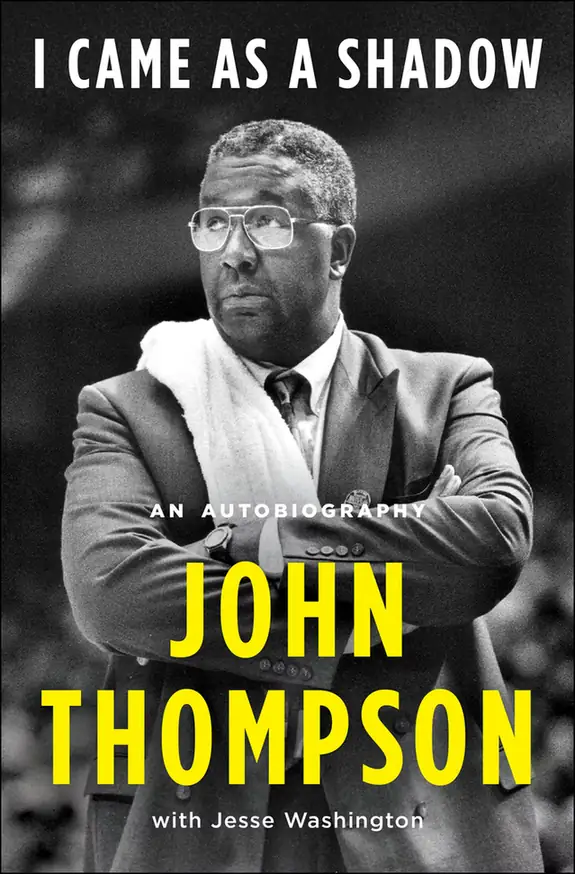
I Came As a Shadow: An Autobiography

By John Thompson & Jesse WashingtonReleased 2020Curated by SPMA Hub because sport culture lives beyond the field.

John Thompson's authority began with basketball, but he refused to let the job description determine the limits of his responsibility. I Came As a Shadow follows his life from segregated Washington, DC, to Georgetown and the national stage. Written with Jesse Washington, the autobiography connects a coach's decisions with the racial and educational questions he confronted throughout his life.

Arash Sayed
Covered by Arash Sayed
The Shelf
I Came As a Shadow: An Autobiography

The Gist

Why it caught our attention

Published in 2020, the autobiography draws together Thompson's experiences as a son, player, coach and influential voice in American sport. Georgetown's success gives the story a familiar sporting centre, including the 1984 national championship. The account reaches further back to explain the family and circumstances that shaped the man on the sideline.

Thompson's parents provide an essential starting point. His mother's opportunities to teach were constrained by racism, while his father worked in a cement factory without being able to read. Education consequently carries a meaning that extends beyond an eligibility requirement or an institution's promotional claim.

The Details

Quick facts

Format
Book
Author
John Thompson & Jesse Washington
Published
2020
ISBN
9781250619358
Relevant Sport
Basketball

At A Glance

John Thompson's authority began with basketball, but he refused to let the job description determine the limits of his responsibility. I Came As a Shadow follows his life from segregated Washington, DC, to Georgetown and the national stage. Written with Jesse Washington, the autobiography connects a coach's decisions with the racial and educational questions he confronted throughout his life.

About This Shelf Item

About I Came As a Shadow: An Autobiography

The basketball stories span his time around Red Auerbach and the Boston Celtics, the development of Georgetown and his relationships with players including Patrick Ewing and Allen Iverson. These are encounters across different kinds of authority: a young player learning, a coach directing a programme and an older man deciding when protection requires intervention.

One of the clearest examples is Thompson's protest against the NCAA's Proposition 42. He walked off the court in opposition to a rule that threatened access to financial aid for athletes who did not meet its academic standards. The episode puts his public standing at the service of a disagreement about who receives an opportunity to study.

His confrontation with a Washington drug figure who had entered his players' orbit makes the responsibility more immediate. The account places the coach between young men and pressures beyond the gym. It also complicates the image of Georgetown as a sealed sporting world: the programme remained connected to the city and its dangers.

Thompson's work on Nike's board adds another setting in which influence had to be exercised. Across these different rooms, the memoir returns to a man who understood that being admitted to an institution did not require agreement with all its habits. Success gave him a platform, and he was prepared to use it.

Why It Belongs

The Sport Connection

The Proposition 42 episode makes this an especially substantial book for college sport leaders. Thompson's objection concerned the relationship between academic standards and educational access. His protest asks administrators to examine the people affected by a policy, including those whose circumstances are least visible when the rule is described in abstract terms.

The player relationships also give coaching a demanding definition. Thompson's reputation for toughness cannot be separated from his willingness to stand beside the athletes in his care. Authority becomes credible through decisions that demonstrate whose interests matter when public opinion or institutional convenience points elsewhere.

For sport management students, the movement from Georgetown to a corporate boardroom widens the discussion of leadership. The same person can occupy several influential roles, each with different duties and incentives. Thompson's autobiography provides a concrete life through which to consider how values travel between those settings.

Our Recommendation

Why Read I Came As a Shadow: An Autobiography

Basketball readers will recognise many of the names, but the family history and political convictions give those encounters their weight. The book is particularly rewarding for anyone interested in Georgetown, the development of Black leadership in college sport or the relationship between coaching and education.

It also belongs in conversations among coaches and university administrators. Thompson offers decisions with consequences, including the willingness to interrupt a game to challenge a governing body. That makes his account more demanding than a collection of comfortable leadership principles.

Arash Sayed

Final Thoughts

Arash's Final Thoughts

I Came As a Shadow leaves a portrait of a coach whose achievements cannot be counted entirely in victories. Thompson's larger contribution rests in the opportunities he defended and the assumptions he challenged. The autobiography preserves that argument in his own account of a life, making basketball the place from which he spoke with authority about much more.