
The Shelf · Books

Golden Days

By Jack McCallumReleased 2018Curated by SPMA Hub because sport culture lives beyond the field.

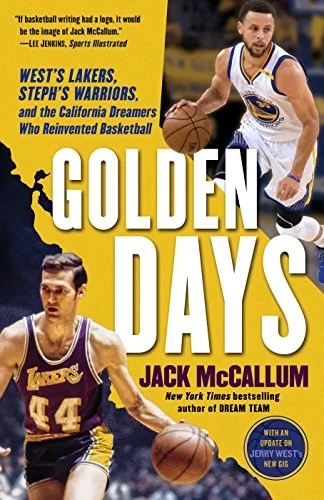
Golden Days connects two California basketball eras through Jerry West. Jack McCallum moves between the early-1970s Los Angeles Lakers and the Golden State Warriors of the 2010s, using West's changing role to examine what excellence looks like across a transformed NBA.

Alex Bennett
Covered by Alex Bennett
The Shelf
Golden Days
Golden Days
The Gist Of Golden Days

The Gist

Why it caught our attention

The book brings together a player whose competitive intensity helped define one team and an executive whose judgement contributed to another. That link is more substantial than a shared geography. It allows McCallum to consider how basketball knowledge travels from performing on the court to helping construct the group that performs there.

The Lakers and Warriors belong to markedly different sporting environments. Their styles, public reach and business circumstances cannot be collapsed into a single era. The comparison works because the differences remain visible alongside the recurring problems of talent, ambition and collective success.

The Details

Quick facts

Format
Book
Author
Jack McCallum
Published
2018
Relevant Sport
Basketball

At A Glance

Golden Days connects two California basketball eras through Jerry West. Jack McCallum moves between the early-1970s Los Angeles Lakers and the Golden State Warriors of the 2010s, using West's changing role to examine what excellence looks like across a transformed NBA.

About This Shelf Item

About Golden Days

West's presence gives the narrative continuity without requiring every other figure to become secondary. The earlier Lakers include towering personalities such as Wilt Chamberlain and Elgin Baylor. The Warriors bring Stephen Curry, Kevin Durant and Steve Kerr into a different arrangement of skill and leadership.

The contrast between playing and evaluating is particularly revealing. A great player knows competition from the inside, but that knowledge does not automatically solve the problems of recruitment or organisational judgement. The executive must consider how another person's abilities will function within a group and under conditions he cannot fully control.

The two-team structure also resists the idea that basketball greatness has one visual form. Different combinations of talent can produce dominant performance. A later team does not need to reproduce an earlier champion's methods to belong in the same serious discussion.

California provides a wider setting for the comparison. The NBA's relationship with celebrity, media and commercial ambition changes across the decades, while teams continue to depend on performances that cannot be entirely scripted. The sport becomes a larger cultural enterprise without losing the immediate vulnerability of a contested possession.

Why It Belongs

The Sport Connection

Golden Days is useful for sport management because it distinguishes continuity of purpose from continuity of method. An experienced leader can remain intensely committed to winning while changing how he contributes to it. West's movement between roles gives that idea a specific human example.

The book also encourages caution when organisations hire famous former players. Reputation may open the door, but effective executive work requires judgement suited to a different task. Understanding performance and assembling the conditions for performance overlap without being identical capabilities.

For heritage and communications work, the comparative structure offers another lesson. A club's past can illuminate the present without requiring a claim that nothing important has changed. Good historical storytelling identifies meaningful connections and preserves the differences that make each period distinctive. That is richer than placing two championship photographs beside one another and calling them equivalent.

Our Recommendation

Why Read Golden Days

Readers who enjoy NBA history across generations will find a useful bridge between teams often discussed in separate conversations. West provides a consistent point of reference, while the surrounding personalities keep the comparison from becoming merely theoretical.

The book is especially appealing to readers interested in the relationship between on-court excellence and front-office judgement. It asks what an experienced basketball mind can recognise across changing conditions, while leaving room for the new skills and circumstances that each generation introduces.

Alex Bennett

Final Thoughts

Alex's Final Thoughts

Golden Days gains its force from a career that cannot be contained within one role. Through West, McCallum links the urgency of playing with the uncertainty of building a team for others to play on. The Lakers and Warriors become part of a longer inquiry into basketball intelligence: what can be carried forward, what must be relearned and why achievement never eliminates the need for judgement.